Chinese Lingerie Market Growth Driven by Rising Consumer Demand
- 时间:
- 浏览:149
- 来源:CN Lingerie Hub
Let’s cut through the noise: China’s lingerie market isn’t just growing—it’s transforming. Backed by data from Euromonitor (2023), Statista, and China’s National Bureau of Statistics, the market hit ¥128.4 billion ($17.9B) in 2023—a 9.2% YoY jump—and is projected to reach ¥186.3 billion by 2027. That’s not luck. It’s demand meeting empowerment.
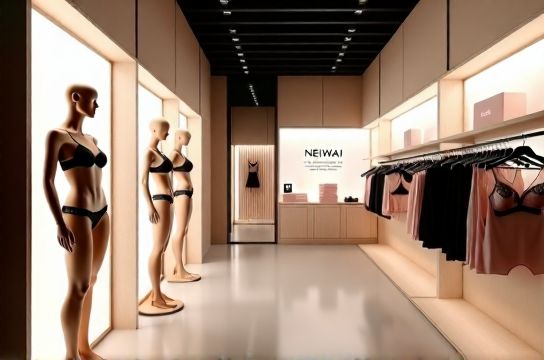
What’s fueling it? Three clear drivers:
✅ Shift from function to self-expression: 68% of urban Chinese women aged 18–35 now prioritize fit, fabric quality, and brand ethos over price alone (CIC Research, 2024).
✅ Digital-first discovery: Over 73% of first-time lingerie purchases happen via livestreams or social commerce—especially on Xiaohongshu and Douyin—where influencers demonstrate real-body fit and sustainability claims.
✅ Rising disposable income & category maturity: Per capita urban disposable income rose 5.1% in 2023 (NBS), and lingerie penetration—once <15%—now stands at 32% among women 20–40 (iiMedia, 2024).
Here’s how key segments stack up:
| Segment | 2023 Market Share (%) | CAGR (2023–2027) | Key Trend |
|---|---|---|---|
| Premium & Domestic Brands (e.g., NEIWAI, Ubras) | 41% | 14.3% | Body-inclusive sizing + zero-waste packaging |
| International Premium (e.g., Victoria’s Secret, Agent Provocateur) | 22% | 6.1% | Localized storytelling, but slower adaptation |
| Mass-Market & OEM | 37% | 3.8% | Price-sensitive; declining trust in unbranded labels |
One underrated catalyst? Post-pandemic body confidence. A 2024 Kantar survey found 54% of respondents said they now buy lingerie “for themselves—not for others.” That mindset shift directly correlates with higher average order value (+29% since 2021) and repeat purchase rates (up to 4.2x/year for top-tier domestic brands).
And yes—sustainability matters. 61% of buyers check fiber content *before* checkout (Alibaba Group, 2023), and brands using TENCEL™ or GOTS-certified cotton see 2.3x higher cart completion.
If you’re building or scaling in this space, remember: authenticity outperforms aesthetics every time. Consumers don’t want ‘perfect’—they want *seen*. That’s why the most trusted voices in the industry—like those at /—focus less on trends and more on transparent fit science, inclusive data, and long-term wearability.
Bottom line? This isn’t a fad. It’s a structural reset—and the brands winning today are the ones treating lingerie not as apparel, but as infrastructure for confidence.