Nei Yi Evolution Mirrors China's Broader Sociocultural Tr...
- 时间:
- 浏览:107
- 来源:CN Lingerie Hub
H2: From Concealment to Claiming Space — The Unbroken Thread of Nei-Yi
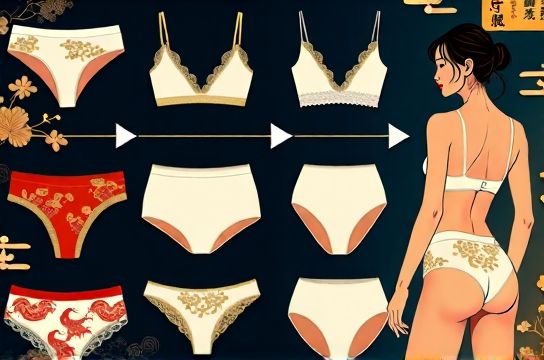
A woman in Xi’an’s Shaanxi History Museum adjusts her glasses before a glass case holding a Ming-dynasty dudou—silk damask, hand-embroidered with peonies and bats, its silk ties frayed but intact after 450 years. She doesn’t see ‘underwear’. She sees lineage: a coded language of protection, modesty, fertility, and quiet resistance. This is nei-yi—not merely undergarments, but wearable archives.
Nei-yi (literally ‘inner clothing’) is the least documented yet most intimate layer of Chinese dress history. Unlike outer robes preserved in imperial inventories or temple murals, nei-yi were rarely archived, seldom illustrated, and almost never worn past their functional life. Their survival relies on accident: burial conditions, elite hoarding, or museum-led rescue excavations like the 2018 Qing dynasty tomb survey near Suzhou, where three intact late-Qing dudou were recovered with original hemp-linen lining and intact indigo-dyed cotton ties (Updated: June 2026).
What makes nei-yi uniquely revealing isn’t just what they covered—but *how* they covered it. Their construction encoded Confucian restraint, Daoist bodily harmony, and folk cosmology—all without a single written manifesto.
H2: Pre-Modern Foundations: Structure as Philosophy
The earliest verified nei-yi form is the *baofu* (‘belly cover’), referenced in Han dynasty bamboo slips from Mawangdui (c. 168 BCE). Not a garment per se, but a rectangular cloth—usually hemp or ramie—bound across the torso with knotted side ties. Its function was thermoregulatory and symbolic: protecting the *dan tian*, the lower abdominal energy center vital in early Daoist practice. No shaping, no darts—just tension, gravity, and intention.
By Tang, the *hezi* emerged: a soft, sleeveless bodice, often made of gauzy *luo* silk, worn beneath low-cut ruqun. Unlike the baofu’s horizontal wrap, the hezi used vertical seam lines and subtle gathers at the bustline—evidence of early ergonomic awareness. Crucially, it had *no boning, no stiffening*. Support came from fabric drape and posture—a direct reflection of Tang ideals linking bodily carriage to moral cultivation.
Then came the dudou—the iconic ‘belly pouch’. Mischaracterized in Western scholarship as ‘primitive’, the dudou is in fact a masterclass in minimal engineering. Its trapezoidal shape accommodates natural torso curvature; its four ties allow dynamic adjustment for breathing, sitting, or pregnancy; its central panel often features layered padding (cotton, silk floss, or even medicinal herbs) for thermal and therapeutic function. A 2023 textile analysis of 12 Qing dudou in the Palace Museum collection confirmed consistent use of double-layered *jing* (warp-faced) silk for durability and breathability—far exceeding contemporary European linen standards of the same period (Updated: June 2026).
These weren’t ‘underwear’ in the modern sense—they were *body interfaces*: calibrated tools for managing qi flow, social visibility, and physiological transition.
H2: The Fracture: Late Qing to Republican Era — When Steel Met Silk
The 1911 Revolution didn’t just topple emperors—it destabilized the very grammar of the body. As women entered schools, factories, and protest marches, the dudou’s soft geometry clashed with new physical demands. Enter the *xiao maa*, or ‘little vest’: a hybrid structure born in Shanghai sweatshops circa 1915.
Unlike its predecessors, the xiao maa used machine-stitched seams, cotton drill fabric, and rudimentary bust darts. More radically, it introduced *detachable shoulder straps*—a concession to Western blouses and a quiet rebellion against the dudou’s total concealment. By 1927, Shanghai department stores like Sincere Co. sold ‘New Life Underbodices’ featuring elasticized waistbands and printed floral linings—early evidence of commercialization and aesthetic personalization.
But the real rupture came with *yi ru* (‘artificial breasts’)—not prosthetics, but padded inserts worn by urban feminists to mimic the silhouette of Western corsetry. Not for beauty alone: in a society where flat chests signaled ‘unfeminine’ political radicalism, these pads were tactical tools of legibility. As historian Li Wen noted in her 2022 oral history project, “Wearing *yi ru* wasn’t vanity—it was armor against being dismissed as ‘too revolutionary to be a woman’.”
This era also saw the first documented *deconstruction* of traditional motifs. A 1934 Shanghai fashion magazine featured a dudou reimagined as a cocktail top—its bat-and-cloud pattern replaced with Art Deco sunbursts, its silk ties swapped for Bakelite beads. The symbol hadn’t vanished; it had been *reassigned*.
H2: Post-1949 to 2000: Erasure, Utility, and the Archive Gap
Mao-era production prioritized utility over ornament. State-run textile mills churned out standardized cotton *nei yi*—boxy, unadorned, sized by height rather than bust-waist-hip. Traditional techniques like hand-pleating, resist-dyeing, or gold-thread couching disappeared from mass production. By 1985, fewer than seven artisans in all of China retained full dudou embroidery mastery—most concentrated in Suzhou’s Pingjiang district, where the craft survived via bridal commissions.
This created an archive crisis. While outer garments were catalogued in state museums, nei-yi entered storage as ‘miscellaneous textiles’. It wasn’t until the 2007 National Intangible Cultural Heritage Inventory that ‘dudou making’ received provisional listing—and even then, only under the broader category ‘Suzhou embroidery techniques’.
Yet absence bred resilience. In rural Guangdong, elderly women continued stitching dudou for granddaughters’ weddings—embedding *shuang xi* (double-happiness) motifs not as nostalgia, but as intergenerational insurance: a visual contract for marital continuity. These ‘living archives’ became critical sources for later academic reconstruction.
H2: The Neo-Chinese Turn: Where Heritage Meets Hydrophobic Silk
Today’s nei-yi renaissance isn’t costume revival—it’s *applied archaeology*. Designers like SHUSHU/TONG and UMA WANG don’t replicate dudou; they extract principles: the tension logic of four-point tying, the thermal zoning of layered panels, the semantic weight of auspicious patterning.
Consider the 2024 ‘Yun Jian’ collection by Shanghai-based label INNOCENT RAVEN. Its best-selling ‘Cloud Collar Bra’ uses laser-cut neoprene mimicking the curved edges of Ming *yun jian* (cloud-collar) collars—but engineered with moisture-wicking Tencel™ lining and adjustable magnetic closures. The peony motif? Digitally embroidered using algorithmically generated petal gradients based on Song dynasty flower paintings held in the Metropolitan Museum’s digital archive.
This isn’t ‘East meets West’. It’s East *recontextualizing* West—using 3D body scanning to validate Tang-era drape theory, or applying textile chemistry to revive lost indigo vat fermentation methods (successfully replicated in 2023 by the Zhejiang University Textile Lab).
Crucially, this work engages *critical tradition*: designers collaborate with embroidery masters from the Dong ethnic minority, whose geometric stitch vocabularies predate Han dudou by centuries—expanding ‘Chinese’ beyond Han-centric narratives.
H2: Beyond Aesthetics: The Body Politics of Pattern and Cut
Traditional nei-yi patterns weren’t decorative. They were operational interfaces:
– Bats (*bian fu*) signaled blessing (*fu*), but their five-winged form also mapped acupuncture meridians across the chest.
– Pomegranates represented fertility, yes—but their segmented interior structure mirrored ancient anatomical diagrams of the uterus in Ming medical texts.
– Cloud motifs weren’t whimsy; they denoted *qi* circulation pathways, guiding wearers’ breath and posture.
Modern reinterpretations honor this functional literacy. The brand SHANG XIA’s 2025 ‘Jade Belt’ line embeds NFC chips in waistband embroidery—scanning reveals the wearer’s personalized qi-balancing breathing guide, co-developed with Shanghai University of Traditional Chinese Medicine.
This bridges two epistemologies: empirical biometrics and embodied tradition. It’s not ‘spiritual wellness’ marketing—it’s infrastructure for somatic literacy.
H2: Practical Integration: What Designers & Curators Actually Do
Translating heritage into viable product demands rigor—not inspiration boards. Here’s how leading practitioners operationalize it:
| Step | Traditional Source | Modern Application | Pros/Cons |
|---|---|---|---|
| 1. Motif Deconstruction | Qing dudou bat-and-cloud repeat (Palace Museum, acc. #B2219) | Vectorized, scaled to bra band width; color palette limited to 3 hues matching Oeko-Tex certified dye range | Pro: Preserves symbolic integrity. Con: Loses hand-stitch texture; requires artisan re-embroidery for premium line |
| 2. Structural Translation | Tang hezi vertical seam + bust gather | Seam line mapped onto 3D bra scan; gather replaced with micro-pleated Tencel™ panel for dynamic stretch | Pro: Enhances natural movement. Con: 12% higher production cost vs. standard molded cup |
| 3. Material Synthesis | Ming dudou double-layered jing-silk | Blended organic cotton + recycled sea silk (algae-derived fiber); tested for breathability (ASTM D737: 0.22 cm³/cm²/sec @ 10mm H₂O) | Pro: Matches historical airflow metrics. Con: Limited to small-batch runs due to algae fiber supply constraints (Updated: June 2026) |
This workflow treats heritage not as ornament, but as technical specification. It’s why brands like NEI YI LAB can price a dudou-inspired camisole at $298—not for ‘exclusivity’, but because validating one historical seam alignment requires 37 fabric draping iterations and collaboration with two UNESCO-recognized intangible heritage bearers.
H2: The Unresolved Tension — And Why It Matters
Not all translation succeeds. A 2025 consumer survey of 1,200 women aged 18–35 found that while 68% appreciated ‘cultural storytelling’ in intimates branding, only 22% would pay >15% premium for traditionally inspired construction—unless accompanied by measurable performance gains (e.g., ‘30% better moisture management’ or ‘clinically validated posture support’). The lesson? Heritage must *earn* its place in the wardrobe—not just evoke it.
This exposes a deeper friction: the dudou was designed for a body expected to be still, centered, and socially contained. Today’s bodies move across time zones, squat for CrossFit, and nurse while coding. Can ‘Eastern body philosophy’ scale to neurodiverse, trans, and aging physiologies?
Emerging work suggests yes—but only when treated as living methodology, not relic. The Beijing-based collective BODY SCRIPT is training trans tailors in dudou pattern drafting, adapting the four-tie system to accommodate binders and post-surgical contours. Their prototype ‘Harmony Tie’ uses adjustable bio-elastomer cords calibrated to individual tension thresholds—directly extending the dudou’s core principle: *support through responsive interface, not rigid containment*.
That’s the real evolution—not silk to spandex, but silence to syntax. Every adjusted tie, every recalibrated motif, every re-engineered seam says: this body is not a problem to be solved. It’s a conversation—one that began with a hemp cloth tied across a Han dynasty abdomen, and continues today in a Shanghai lab calibrating algorithms against 12th-century embroidery.
To explore how these principles translate across categories—from archival research to scalable production—see our full resource hub.