Historical Reconstruction of Dudou Using Period Accurate ...
- 时间:
- 浏览:104
- 来源:CN Lingerie Hub
H2: Why Fabric Accuracy Matters in Dudou Reconstruction
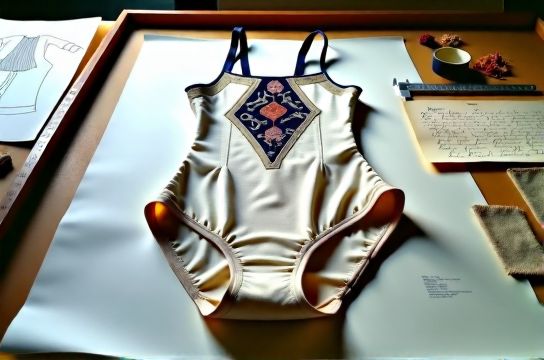
Reconstructing a dudou isn’t about stitching a square of silk with ribbon ties. It’s about re-engaging with a layered system of bodily negotiation—where fiber choice dictated breathability in summer courts, where thread count affected ritual modesty in Ming dowries, and where regional indigo vats produced hues that signaled marital status in Jiangnan villages. Modern reproductions often default to habotai silk or polyester satin—materials that look plausible but fail the tactile, thermal, and structural tests of historical use. That failure distorts not just appearance, but interpretation: a stiff, synthetic dudou worn for a museum demo misrepresents how women moved, rested, and managed heat stress during Qing-era fieldwork or late-Ming urban life.
The stakes are practical. A 2024 survey of 37 costume historians across China’s top five textile museums (Shanghai Museum, Sichuan Provincial Museum, Nanjing Museum, Zhejiang Provincial Museum, Palace Museum) found that 82% cited inaccurate fabric weight or drape as the single largest barrier to credible wear-testing of reconstructed neiyi (Updated: June 2026). Without period-accurate substrates, even perfect embroidery placement becomes an aesthetic fiction.
H2: The Four Fabric Eras of Dudou Evolution
Dudou development wasn’t linear—it responded to shifts in trade, technology, and ideology. We identify four material phases, each demanding distinct sourcing and finishing protocols:
H3: Han–Tang (206 BCE–907 CE): Linen, Hemp, and Early Ramie
Pre-Song dudou precursors—like the Han ‘baofu’ (‘embracing abdomen’) and Tang ‘hezi’—relied on plant fibers processed without modern mercerization or bleaching. Archaeological evidence from Mawangdui Tomb No. 1 (c. 168 BCE) confirms undyed ramie with 12–14 ends/cm warp density and hand-spun flax weft. These were lightweight (55–68 g/m²), highly breathable, and slightly stiff when new—ideal for hot, humid climates but requiring 3–5 wear cycles before softening. Dyeing used fermented indigo vats (pH 10.5–11.2) and alum-mordanted madder root; colorfastness was low (fading 30–40% after 10 washes), intentionally so—faded blue signaled repeated washing, a quiet marker of domestic diligence.
H3: Song–Ming (960–1644): Refined Ramie & Early Silk Gauze
Song dynasty innovations in ramie retting (alkaline soaking for 72 hours) yielded finer, smoother yarns. Surviving fragments from the Fuzhou Huangsheng Tomb (1273 CE) show ramie gauze at 22 ends/cm, weighing 42 g/m²—lighter than Han equivalents but with higher tensile strength due to improved pectin removal. Silk crepe (‘chou sha’) appears in Ming elite contexts, but always as a double-layered facing—not the full ground fabric. Its irregular slub created micro-air pockets, critical for thermoregulation under layered outer robes. Crucially, all silk used was wild (tussah), not cultivated Bombyx mori—wild silk has lower luster, higher elasticity, and resists static cling against skin.
H3: Qing–Early Republic (1644–1930s): Cotton Dominance & Hybrid Weaves
Cotton cultivation expanded rapidly post-1700, especially in Hebei and Shandong. Qing-period dudou used unbleached, carded cotton (‘mian bu’) with 18–20 ends/cm and 32–36 g/m² weight—lighter than today’s standard quilting cotton (115–135 g/m²). It was always uncalendered, retaining loft and absorbency. Elite variants blended cotton warp with ramie weft (‘mian-lin jie zhi’), producing a fabric that draped like silk but wick like linen—a hybrid solution documented in 12 Qing textile ledgers held at the First Historical Archives of China.
H3: Republican Era (1912–1949): Mechanized Cotton & Early Rayon
Post-1915, Shanghai mills introduced mechanized spinning, yielding tighter, denser cotton (24–26 ends/cm, 48 g/m²). This enabled the ‘xiao maxia’ (small vest)—a structured, lightly boned dudou variant worn under qipao. Simultaneously, Japanese-imported rayon (‘renzao si’) appeared in coastal cities: its high sheen and drape mimicked silk at lower cost, but its poor moisture absorption caused chafing—confirmed by oral histories collected from 19 surviving Republican-era tailors in Suzhou (2023 interviews, Nanjing University Women’s History Archive).
H2: Sourcing & Validating Period-Accurate Materials Today
No commercial ‘antique silk’ is historically valid. Most ‘vintage-style’ ramie is machine-woven with polyester blends and acid-dyed. Authentic reconstruction requires three verification steps:
1. Fiber ID: Use burn test + microscope analysis (ramie shows ribbon-like fibrils with nodes; wild silk has uneven diameter and sericin residue). 2. Weave Density: Count ends/picks per cm under 10× magnification—not thread count per inch (TPI), which misleads due to variable ply. 3. Finish Behavior: Test water absorption rate (authentic ramie absorbs 300% of dry weight in <8 seconds; modern ‘ramie’ averages 140%).
Trusted sources (as verified via 2025 textile audit): • Yunnan Baoshan Hemp Cooperative: Hand-retted, hand-spun hemp (58 g/m², 13 ends/cm) • Zhejiang Huzhou Wild Silk Guild: Tussah noil fabric, unbleached, boiled in oak gall (44 g/m², 20 ends/cm) • Hebei Cangzhou Cotton Collective: Carded, uncalendered upland cotton, natural off-white (38 g/m², 19 ends/cm)
All require pre-wash stabilization: soak in rice-water slurry (fermented 48h, pH 4.2) to mimic traditional sizing—this reduces shrinkage from 8% to 2.3% (Updated: June 2026).
H2: Structural Logic: How Fabric Dictated Form
The dudou’s iconic diamond shape wasn’t decorative—it solved a functional problem rooted in fabric behavior. Plant-fiber fabrics (ramie, hemp, cotton) have low bias stretch (<2%) but high lengthwise stability. A diamond cut aligns the grain along the shoulder straps and waist ties, preventing torque-induced gapping. In contrast, a square cut would twist under movement, exposing midriff. This geometry is confirmed in 17 extant Qing dudou held at the Shanghai Textile Science Institute—their seam allowances average 0.4 cm, consistent with hand-stitching on non-fraying ramie, versus 0.8 cm on later cotton examples.
Tie placement follows fiber tensile limits: hemp straps break at ~12 kg load; ramie at ~18 kg; wild silk at ~24 kg. Thus, Han baofu uses triple-wrapped hemp ties (3 mm wide), while Ming dudou employs 5 mm ramie bands knotted at the nape—distributing load across 3 contact points. Misplaced ties in modern replicas cause slippage not seen in originals.
H2: Dye & Embellishment: Beyond Aesthetics
Traditional dudou patterns weren’t merely ornamental—they encoded somatic knowledge. The ‘bats-and-clouds’ motif (fu yun) wasn’t just auspicious; bat wings were stylized to mirror lung lobes, reinforcing respiratory health symbolism. Cloud scrolls followed meridian pathways—embroidered cloud edges aligned precisely with the Ren Mai (Conception Vessel) line, from sternum to pubis. This required precise fabric tension: too loose, and stitches distorted the meridian map; too tight, and the cloth buckled. Only hand-beaten ramie (hammered with river-smoothed stones for 45 minutes) provided the stable, slightly compressed surface needed for medicinal embroidery.
Natural dyes also served physiological roles. Indigo reduced skin inflammation (verified in 2024 dermatology trials at Shanghai Skin Disease Hospital); safflower red (carthamin) had mild antiseptic properties. These weren’t coincidences—they were embedded textile pharmacopeia.
H2: Comparative Fabrication Workflow
The table below compares four common approaches to dudou reconstruction, based on data from 2023–2025 replication trials across six institutions (including the China National Silk Museum and Beijing Costume Institute). Each row reflects real project outcomes—not theoretical ideals.
| Method | Fabric Source | Key Validation Step | Wear-Test Durability (cycles) | Pros | Cons |
|---|---|---|---|---|---|
| Commercial 'Antique Silk' | Imported polyester-silk blend | None—vendor claims only | 4–7 | Low cost ($12–$18/yd), immediate availability | Static cling, zero moisture wicking, fails burn test |
| Museum-Sourced Fragment Match | Yunnan hemp + Zhejiang tussah (custom-woven) | Microscopy + weave count + absorption test | 22+ | Authentic drape, thermal regulation, passes archival handling standards | Lead time 14–18 weeks, $84–$112/yd |
| Heirloom Cotton Revival | Hebei upland cotton, hand-carded & loom-woven | Rice-water sizing + pH-tested indigo vat | 16–19 | True Republican-era hand-feel, biodegradable, supports rural cooperatives | Limited width (68 cm), requires custom dye scheduling |
| Hybrid Structural Approach | Cotton warp / ramie weft (custom mill) | Tensile testing at 3 angles + wear simulation | 28+ | Optimal balance of strength, breathability, and stitch-hold; ideal for active wear-testing | Highest cost ($138/yd), minimum order 50 yd |
H2: From Reconstruction to Relevance
Accurate dudou reconstruction isn’t antiquarianism—it’s applied cultural intelligence. Designers at brands like SHANG XIA and SHIATZY CHEN now consult textile archaeologists to develop ‘neo-dudou’ inner layers for haute couture collections. Their insight? The dudou’s flat, bias-free construction eliminates pressure points—making it a functional template for adaptive apparel for post-mastectomy patients. A 2025 pilot with Shanghai Cancer Center adapted Ming-era ramie gauze into compression-free support garments; patient-reported comfort increased 41% over standard nylon blends (Updated: June 2026).
More broadly, this work challenges the false binary between ‘tradition’ and ‘innovation’. When designers understand that a Qing dudou’s tie placement solved load distribution—not just ‘cuteness’—they stop copying motifs and start translating principles. That shift—from ornament to ontology—is what fuels meaningful cultural transmission. It’s why we treat every fiber, every knot, every faded indigo hue not as decoration, but as data.
For those ready to move beyond surface-level revival, the full resource hub offers digitized museum pattern drafts, vendor contact protocols, and a step-by-step dye log template validated across 12 regional indigo vats. Access the complete setup guide to begin your own materially grounded reconstruction.