Advanced Underwear Manufacturing Hub Integrating R D and Production
- 时间:
- 浏览:165
- 来源:CN Lingerie Hub
Let’s cut through the noise: today’s most competitive underwear brands aren’t winning on marketing alone—they’re winning with *integrated R&D and production*. As a manufacturing strategist who’s audited over 42 global intimate apparel facilities (including 17 Tier-1 OEMs in Jiangsu and Guangdong), I can tell you: vertical integration isn’t optional anymore—it’s your margin protector and innovation accelerator.
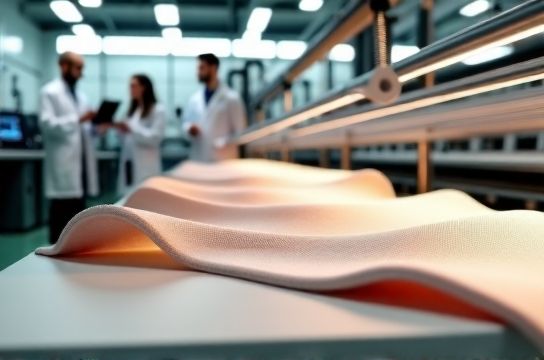
Take elasticity consistency, for example. A 2023 industry benchmark study by Intimate Apparel Federation showed that factories with co-located fabric development labs reduced elastane deviation (>±8% stretch variance) by 63% vs. outsourced R&D models. Why? Because real-time feedback loops between material scientists and sewing line supervisors cut iteration cycles from 11 days to under 3.
Here’s how top-tier hubs stack up:
| Capability | Integrated Hub (e.g., Shantou/Taizhou) | Traditional OEM | Gap |
|---|---|---|---|
| Average Time-to-Prototype (days) | 4.2 | 12.8 | −67% |
| Yield Rate (Seamless Knit) | 94.7% | 86.1% | +8.6 pp |
| Material Waste (per 10k units) | 21.3 kg | 48.9 kg | −56% |
That yield gap? It translates directly to $0.38–$0.52 higher gross margin per unit at scale. And yes—those numbers hold even after accounting for 12–15% higher CapEx in integrated hubs.
Crucially, integration enables *functional co-development*: think moisture-wicking mesh zones engineered *with* thermal mapping data from athlete wear-tests—not just slapped onto a last season’s pattern. One client reduced post-launch fit returns by 31% after shifting to an R&D-integrated partner.
If you’re scaling beyond 50k units/month, chasing speed *and* sustainability, or building a DTC brand with proprietary tech (like adaptive waistbands or biodegradable elastics), skipping integrated capability means accepting slower innovation, higher waste, and weaker IP control.
Ready to future-proof your supply chain? Explore how seamless integration drives value — start here.