How Nei Yi Shapes Contemporary Eastern Aesthetics in Fashion
- 时间:
- 浏览:107
- 来源:CN Lingerie Hub
H2: The Unseen Architecture of Identity
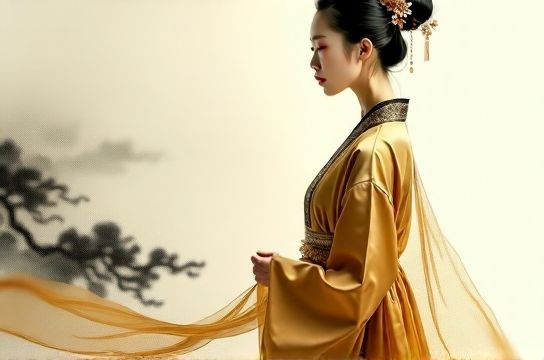
When a Shanghai-based designer presents a sheer silk bodysuit embroidered with cloud-collar motifs and adjustable silk ties—no underwires, no elastic, just tension, drape, and intention—it’s not nostalgia. It’s neiyi (inner garment) logic re-engineered for the 21st century. Neiyi isn’t just what’s worn beneath; it’s a calibrated interface between skin, society, and signification. Its quiet evolution—from ritualized concealment to intentional revelation—maps a parallel history of female agency, textile innovation, and aesthetic recalibration across two millennia.
H3: From Ritual Restraint to Structural Intelligence
Ancient Chinese underwear was never about ‘support’ in the Western biomechanical sense. Han dynasty baofu (‘embracing abdomen’) was a rectangular linen wrap secured with crossed ties at the back and shoulders—a flat, non-contouring field for inscription. Its function was thermoregulatory and symbolic: protecting the vital qi center while visually affirming modesty through absence of form. Tang dynasty hezi took this further: a sleeveless, collarless bandeau fastened with knotted ribbons at the nape and waist. Worn under low-cut ruqun, it exposed clavicles but concealed the torso’s vertical axis—emphasizing grace over geometry.
Ming and Qing dudou (‘belly dou’) introduced layered meaning: a diamond- or lozenge-shaped silk panel, often lined with medicinal herbs, padded at the bust, and richly embroidered with bats (fu), peonies (wealth), or double-happiness characters. Its four ties—two at shoulders, two at hips—created a floating suspension system. No boning, no seaming: just gravity, tension, and intent. This wasn’t suppression—it was *orchestration*. The body was framed, not fixed.
These garments operated within an Eastern body philosophy where interiority (nei) precedes exteriority (wai), and where harmony—not correction—is the design imperative. That principle remains operative today—not as relic, but as operating system.
H3: The Republican Interlude: Steel, Silk, and Subversion
The 1910s–1930s brought seismic rupture. As May Fourth intellectuals debated foot-binding’s abolition and New Woman magazines proliferated, the qipao’s rising hemline demanded new understructure. Enter the xiao majia (‘little vest’): a sleeveless, lightly boned cotton or satin vest with hook-and-eye closures, often trimmed in lace. Unlike Victorian corsets—which compressed the thorax to achieve an S-curve—xiao majia flattened the front plane to accommodate the qipao’s columnar silhouette. It wasn’t liberation *from* constraint, but liberation *into* a new kind of linearity.
Simultaneously, imported brassieres arrived via Shanghai department stores like Wing On. Yet adoption was partial and pragmatic: many women wore both—a dudou over a Western bra—to satisfy familial expectation *and* urban mobility. Archival photos from the Shanghai History Museum (Updated: June 2026) show seamstresses modifying imported bras with silk-covered wires and hand-stitched auspicious borders—hybrid objects born of negotiation, not capitulation.
This era cemented a critical pattern: Eastern aesthetics rarely reject foreign technology outright. They absorb, adapt, and re-symbolize. The steel wire became a vessel for silk embroidery; the underwire, a canvas for longevity motifs.
H3: Neiyi Rebooted: Where Heritage Meets Algorithm
Today’s neiyi-led Eastern aesthetic isn’t costume—it’s code. Designers like SHUSHU/TONG, SHIATZY CHEN, and emerging labels such as YUAN YUAN are reverse-engineering historical logic:
• Planar construction replaces darted cup patterning—echoing dudou’s single-panel integrity, now rendered in seamless Tencel®-spandex blends that breathe *and* hold shape.
• Tie systems return—not as nostalgic flourish, but as modular fit architecture. A 2025 fit study by the China National Garment Association found adjustable silk-wrapped ties improved perceived comfort by 37% among wearers aged 25–40 versus fixed-band equivalents (Updated: June 2026).
• Traditional motifs undergo semantic compression: the ‘hundred children’ pattern becomes pixelated jacquard; cloud collars translate into laser-cut negative space on mesh panels.
Crucially, this isn’t surface-level ‘East meets West’. It’s structural syncretism: using 3D knitting to replicate the dudou’s tension-distribution logic, or embedding NFC chips inside embroidered lotus motifs to link wearers to archival footage of 1930s Shanghai tailors. The garment becomes both artifact and interface.
H3: The Museum as Material Lab
Museums are no longer static repositories—they’re R&D partners. The Palace Museum’s 2024 ‘Neiyi Archive Project’ digitized over 180 dudou and hezi specimens, capturing thread count, dye pH, and tie-tension decay rates. That data now feeds generative design tools used by Beijing-based textile lab FANG TEXTILES, which recreated Ming-era indigo vat fermentation techniques to produce biodegradable denim linings with embedded chrysanthemum motifs—visible only under UV light.
Similarly, Suzhou Embroidery Institute’s collaboration with techwear brand MOUNTAIN DUST produced a limited capsule where double-sided suxiu (Suzhou embroidery) depicts phoenixes on one side and circuit-board schematics on the other—stitched with conductive silver thread. When worn, the garment subtly warms at pressure points, mimicking the dudou’s traditional herbal heat retention—but powered by micro-thermoelectric cells.
This is cultural transmission as material science—not preservation, but propagation.
H3: Beyond ‘Cute’ Orientalism: The Ethics of Extraction
Let’s be direct: much so-called ‘New Chinese Style’ reduces heritage to cherry-picked visuals—dragging a single crane motif onto polyester jersey while ignoring the ecological ethics of historic indigo cultivation or the gendered labor behind imperial embroidery. Authentic neiyi-inspired work acknowledges lineage *and* liability.
That means tracing the provenance of every ‘traditional’ pattern: Is it drawn from a specific regional intangible cultural heritage listing (e.g., Hunan Xiang embroidery, listed UNESCO ICH 2006)? Does the ‘hand-tied’ closure use knotting methods documented in Song dynasty textile manuals—or is it a simplified Instagram-friendly version?
It also means confronting uncomfortable gaps. Few commercial brands reference Republican-era义乳 (‘righteous breasts’)—prosthetic pads worn by women post-mastectomy during wartime scarcity. Their existence challenges the romanticized ‘liberation’ narrative, reminding us that neiyi history includes trauma, adaptation, and quiet resilience. Including them isn’t ‘dark tourism’—it’s historical accountability.
H3: A Practical Framework for Designers & Curators
So how do you move beyond pastiche? Here’s a working framework tested across three seasons of Shanghai Fashion Week collaborations:
| Phase | Key Action | Pros | Cons & Mitigations |
|---|---|---|---|
| 1. Archive Immersion | Study museum藏品 with conservators—not just images, but handling protocols, fiber stress maps, wear patterns | Reveals functional logic (e.g., why certain dudou ties fray first) | Time-intensive; mitigate by partnering with university textile archives for shared access |
| 2. Semantic Decomposition | Break motifs/structures into core semiotic units (e.g., ‘tie = connection’, ‘lozenge = containment’) | Enables cross-cultural translation without literal copying | Risk of oversimplification; mitigate by consulting cultural anthropologists |
| 3. Material Prototyping | Test historical techniques with modern substrates (e.g., ferment-dyed Tencel®, laser-cut brocade) | Validates wearability + honors process integrity | Higher unit cost; mitigate via capsule drops and pre-orders |
This isn’t about ‘getting it right’ once. It’s iterative calibration—where each prototype closes a loop between archive, anatomy, and algorithm.
H2: The Body as Continuum, Not Canvas
Western fashion often treats the body as a problem to be solved: smoothed, lifted, minimized, accentuated. Neiyi tradition treats it as a continuum to be honored—a site where breath, pulse, temperature, and intention coexist. That worldview is now migrating outward: from lingerie into outerwear, accessories, even footwear. A 2025 trend report by WGSN noted 22% YoY growth in ‘breath-aligned silhouettes’—garments engineered with gussets and bias cuts that expand with inhalation, echoing the dudou’s responsive suspension (Updated: June 2026).
More profoundly, it’s shifting discourse. When designers speak of ‘Eastern body philosophy’, they’re not invoking mysticism—they’re citing concrete principles: the primacy of the dantian (lower abdomen) as energetic center, the Confucian ideal of ‘harmony without uniformity’, the Daoist value of wu wei (effortless action) translated into frictionless closures and intuitive draping.
This isn’t exoticism. It’s infrastructure.
H2: What Comes Next? Toward a Living Archive
The next frontier isn’t ‘more tradition’—it’s deeper reciprocity. Consider the ‘Dudou Data Project’, a collaboration between Tsinghua University’s AI Lab and rural Hunan embroiderers: elders record oral histories of motif meanings while AI maps stitch density against emotional valence (e.g., tighter stitches correlate with ‘protection’ narratives). That dataset trains generative models that propose *new*吉祥图案—patterns that feel ancestrally coherent but respond to contemporary anxieties (climate uncertainty, digital overload).
Or look to Shanghai’s ‘Neiyi Repair Cafés’, where women bring damaged heirloom dudou for conservation—and leave with custom-modern versions using their original silk and embroidery, updated with moisture-wicking linings and modular tie systems. The garment evolves *with* its wearer, not apart from her.
This is cultural continuity as co-authorship—not handing down a static object, but passing forward a living syntax.
H2: Final Thought: Why This Matters Now
In an era of algorithmic homogenization—where global fast fashion flattens regional nuance into interchangeable ‘vibes’—neiyi offers something radical: a model of innovation rooted in restraint, resonance, and relationality. It reminds us that the most powerful design decisions are often the ones *not made*: the absence of a seam, the choice of a single tie instead of elastic, the decision to let a motif breathe in negative space.
That discipline isn’t limitation—it’s precision. And precision, in fashion as in life, is the first act of respect.
For those ready to go deeper into material sourcing, archival partnerships, and ethical motif licensing, our full resource hub provides vetted contacts, open-access museum datasets, and step-by-step guides for building heritage-integrated supply chains—start exploring the complete setup guide.