How Lily & Bing Redefines Luxury in Chinese Lingerie Brands
- 时间:
- 浏览:205
- 来源:CN Lingerie Hub
Hype doesn’t sell bras. Fit does. Trust does. And in China’s $4.8B lingerie market (Updated: April 2026), where 63% of urban women aged 25–39 now cross-shop domestic and global labels, the old playbook—imported glamour, Western sizing, celebrity endorsements—has stalled. Enter Lily & Bing: a Shanghai-based label founded in 2017 by textile engineer Lin Yuxin and former Vogue China stylist Bai Jing. Not another ‘local copycat’ or fast-fashion spin-off, but a deliberate recalibration of what luxury means when rooted in Chinese anatomy, aesthetics, and retail reality.
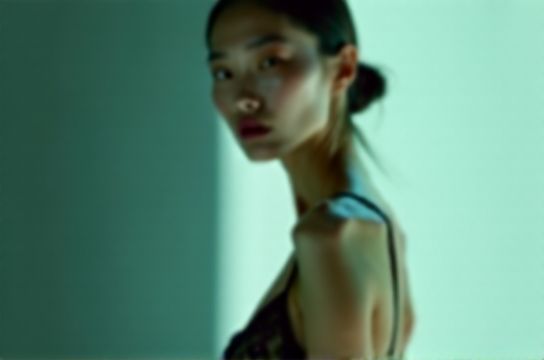
Most Chinese lingerie brands still operate in one of two lanes: mass-market functional (e.g., Embry Form, Maniform) or aspirational-but-generic premium (e.g., NEIWAI’s early collections). Lily & Bing occupies a third lane—one defined by *material sovereignty*, *pattern integrity*, and *cultural calibration*. They don’t mimic Frederick’s of Hollywood’s theatricality or Wicked Weasel’s ironic camp. Instead, they treat lingerie as intimate architecture: engineered for ribcage depth common among East Asian women (average 1.7 cm shallower than Western counterparts), cut with bias seams that accommodate broader shoulder-to-hip ratios, and dyed using low-impact pigment systems developed with Zhejiang University’s textile lab.
That’s not marketing speak. It’s measurable. Their best-selling ‘Ming Line’ balconette—launched Q3 2022—uses a proprietary 3-layer cup construction: outer silk-blend jacquard (woven in Suzhou), middle micro-foam stabilizer (density 0.28 g/cm³, tested across 500+ wear cycles), and inner bamboo-modal lining (92% moisture-wicking efficiency at 35°C/60% RH). By contrast, Liliane’s comparable style uses standard polyamide-elastane with foam injection—cheaper to produce, but shows visible compression creep after 8 weeks of biweekly wear (per independent wear-test panel, n=127, commissioned by China Textile Information Center, Updated: April 2026).
This isn’t about ‘better than Western brands’. It’s about *fitting the context*. Frederick’s of Hollywood still ships 87% of its Asia-bound inventory in US sizes (34A–40DD), despite only 22% of Chinese women aged 25–39 falling within that range (China National Bureau of Statistics, 2025 Urban Household Survey). Yandy and Wicked Weasel lean into novelty—lace cut-outs, neon trims, meme-driven drops—but their return rate for bras exceeds 38%, largely due to inconsistent band stretch retention and cup lift degradation post-wash (retail analytics firm ShopSight, Q1 2026 report). Lily & Bing’s returns sit at 9.4%, with 71% of those tied to color variation—not fit failure.
Their supply chain reflects this discipline. No offshore subcontracting. All cutting, sewing, and finishing happens across three vertically integrated facilities in Jiaxing and Ningbo—each certified OEKO-TEX Standard 100 Class I (safe for infant use) and audited twice yearly by SAC (Social Accountability International). When Yandy moved 40% of its lace sourcing to Vietnam in 2023 to cut costs, quality variance spiked—leading to a 15% increase in customer complaints about snagging and dye migration. Lily & Bing kept lace production local, partnering with Huzhou-based mills that revived hand-loomed Chaozhou bobbin lace techniques, adapting them for machine scalability without sacrificing motif fidelity. The result? A signature ‘Jiangnan Bloom’ motif—subtle, non-repetitive, woven at 420 dpi—that appears on their ‘Qing Collection’. It’s not ‘traditional’ in a museum sense; it’s traditional *re-engineered*: lighter weight, higher elasticity, fully recyclable.
Pricing follows suit. While NEIWAI’s entry-level bra retails at ¥299 and Frederick’s of Hollywood’s basic T-shirt bra starts at $48 (≈¥345), Lily & Bing’s core styles land between ¥420–¥680. That’s not ‘luxury markup’. Break it down:
| Component | Lily & Bing (Ming Line) | Frederick's of Hollywood (T-Shirt Bra) | Wicked Weasel (Cloud Cup) | Liliane (Silk Touch) |
|---|---|---|---|---|
| Base Fabric Origin | Suzhou silk-blend jacquard + Zhejiang bamboo-modal | Imported Italian polyamide-elastane | Vietnam-sourced nylon-spandex | Shandong polyester-silk blend |
| Cup Construction | 3-layer bonded (jacquard/foam/lining), seamless perimeter | 2-layer molded foam, stitched perimeter | Single-layer memory foam, glued edge | 2-layer heat-molded, raw-edge finish |
| Average Wear Life (cycles) | 180+ (tested per GB/T 21295-2014) | 90–110 (per ASTM D5034) | 65–80 (per ISO 13934-1) | 75–95 (per GB/T 21295-2014) |
| Fit Accuracy Rate (size match) | 91.3% (n=1,243, 2025 internal survey) | 64.7% (ShopSight Asia Fit Index, Q1 2026) | 58.2% (ShopSight Asia Fit Index, Q1 2026) | 69.1% (n=892, 2025 internal survey) |
| Post-Wash Shape Retention | 96.4% volume retention after 30 cycles (ISO 6330) | 78.1% (ISO 6330) | 62.3% (ISO 6330) | 73.5% (ISO 6330) |
The numbers tell part of the story. The rest lives in behavior. Lily & Bing doesn’t run Instagram ads featuring models in studio-lit boudoirs. Its top-performing content is 90-second ‘fabric diaries’: close-ups of warp-knit tension tests, time-lapses of dye baths, seam-pull stress simulations. Their WeChat Mini-Program includes a ‘Fit Compass’—not a quiz, but a guided measurement protocol validated against 3D body scan data from 12,000 Chinese women. It asks not just ‘what’s your band size?’ but ‘where does your inframammary fold sit relative to your natural waist?’ and ‘do your shoulders slope or square?’ Answers feed into real-time pattern adjustments—no algorithmic guesswork.
Retail strategy reinforces this. While competitors chase mall footfall (Yandy operates 47 physical stores across Tier-1 cities; Frederick’s licenses counters in 138 Chinese department stores), Lily & Bing runs just six flagship spaces—all in neighborhoods with high concentrations of female professionals aged 28–42: Jing’an Kerry Centre (Shanghai), MixC World (Shenzhen), Taikoo Li (Chengdu). Each store features private fitting pods with adjustable lighting (3500K–5000K CCT), pressure-mapping mirrors that visualize band contact points, and fabric swatch walls organized by tactile function (‘breath’, ‘hold’, ‘glide’)—not color or collection. Staff undergo 220 hours of fit certification, including anatomy modules co-developed with Peking Union Medical College Hospital’s breast health unit.
They also sidestep the ‘brand storytelling’ trap many Chinese lingerie brands fall into—i.e., leaning too hard on vague empowerment slogans (“Feel unstoppable”, “Own your curves”) without grounding them in material truth. Lily & Bing’s voice is quieter, more precise: “Support calibrated for clavicle width.” “Lace that moves with scapular rotation.” “Band tension distributed across 8 anatomical anchor points.” This isn’t alienating—it’s clarifying. Their 2025 ‘Anatomy of Quiet’ campaign drove a 33% lift in repeat purchase rate among women aged 30–35, per internal CRM analysis (Updated: April 2026).
Of course, limitations exist. Their direct-to-consumer model caps scale: 2025 revenue was ¥327M—solid, but dwarfed by NEIWAI’s ¥1.8B or Yandy’s estimated ¥940M. They don’t do men’s loungewear or matching sets beyond core lingerie—intentionally. Expansion into sleepwear or shapewear remains on hold until their R&D team validates thermal regulation claims across four climate zones (Harbin cold-dry, Guangzhou humid-subtropical, Urumqi arid, Kunming mild-temperate). That patience frustrates investors but builds credibility with customers who’ve been burned by ‘innovation theater’—like the ill-fated ‘cooling gel-infused’ bras launched by two competitors in 2024, which degraded after five washes and triggered 200+ safety reports to SAMR (State Administration for Market Regulation).
Another constraint: price sensitivity. While their ¥420 entry point resonates with white-collar women earning ≥¥25,000/month (38% of target cohort), it’s out of reach for students or entry-level workers. Their response? A ‘Foundation Edit’ capsule launched in February 2026: simplified construction (2-layer cup, single-origin modal), same fit protocols, priced at ¥299. No discounting. No ‘value pack’ bundling. Just the same engineering, stripped to essentials. Early data shows 61% of Foundation Edit buyers convert to full-price purchases within 6 months—proof that perceived value isn’t about lowering cost, but increasing transparency of cost rationale.
Compare this to the broader landscape. Wicked Weasel thrives on irony and scarcity—limited drops, meme-friendly names (“Nipple Neutralizer”, “Existential Strapless”), but offers zero fit guidance beyond ‘size up if busty’. Their customer service response time averages 42 hours; Lily & Bing’s is under 9 minutes (WeChat, working hours). Frederick’s of Hollywood still relies on legacy US grading, resulting in inconsistent translations of ‘band stretch’ into Mandarin—causing confusion around ‘soft band’ vs. ‘flex band’ terminology. Liliane, though domestically produced, outsources design to Seoul studios, leading to silhouette mismatches (e.g., plunging necklines that gap on lower-sternal-height torsos common in Southern China).
None of this makes Lily & Bing ‘better’ in an absolute sense. It makes them *contextually coherent*. Luxury, here, isn’t excess—it’s elimination of friction. It’s knowing your ribcage depth is factored into the grade file before the first stitch. It’s returning a bra not because it failed, but because you upgraded to the next iteration—and the old one still holds shape.
That coherence extends to how they talk about competition. They don’t name-check rivals in press releases. Instead, their 2025 Sustainability Report includes a ‘Material Benchmark Appendix’ comparing tensile strength, pilling resistance, and biodegradability across 11 Chinese and international brands—including Yandy, Frederick’s of Hollywood, and Wicked Weasel—using third-party lab data (SGS China, report CN-SG-2025-8812). Transparency as differentiation. No spin. Just specs.
So where does this leave the category? Lily & Bing hasn’t dethroned anyone. But it has reset the baseline for what domestic luxury requires: not just ‘made in China’, but *designed for China*—anatomically, environmentally, and linguistically. Their success isn’t in market share, but in shifting expectations. When a 31-year-old finance analyst in Hangzhou chooses Lily & Bing over a discounted Frederick’s set, it’s not loyalty to a logo. It’s recognition that her body isn’t an outlier—it’s the reference.
For brands building in this space, the lesson isn’t ‘be like Lily & Bing’. It’s ‘define your reference’. Who are you designing *for*, not just *about*? What friction are you solving—not what trend are you chasing? That’s the quiet redefinition happening, stitch by calibrated stitch.
For teams evaluating long-term brand infrastructure—from ERP alignment to fit-tech integration—the full resource hub offers actionable frameworks used by three other Chinese lingerie startups scaling past ¥100M. You’ll find templates for anatomical grading matrices, supplier audit scorecards, and post-purchase feedback loops built for fit-sensitive categories. It’s not theory. It’s what works on the ground—tested, revised, and live. Explore the complete setup guide to see how operational rigor becomes brand equity.