Chinese Lingerie Brands Embracing Boldness
- 时间:
- 浏览:158
- 来源:CN Lingerie Hub
Hype doesn’t sell bras. Confidence does. And confidence—especially in intimate apparel—isn’t just about fit or fabric. It’s about narrative alignment: does the brand *mean* what it says when it claims ‘bold’, ‘empowering’, or ‘unapologetic’? That’s where Wicked Weasel stands apart—not as a mass-market player, but as a cultural signal. Its aesthetic is raw, irreverent, and intentionally confrontational: asymmetrical cuts, visible hardware, latex-adjacent textures, and marketing that treats sensuality as a stance, not a sales pitch. In China’s rapidly maturing intimate apparel sector, a handful of homegrown brands aren’t imitating Wicked Weasel’s silhouettes—they’re borrowing its *strategic courage*. They’re choosing discomfort over consensus, prioritizing identity over scale, and building brand stories that resonate with urban, digitally native Chinese women who reject both Western fetishization *and* domestic modesty mandates.
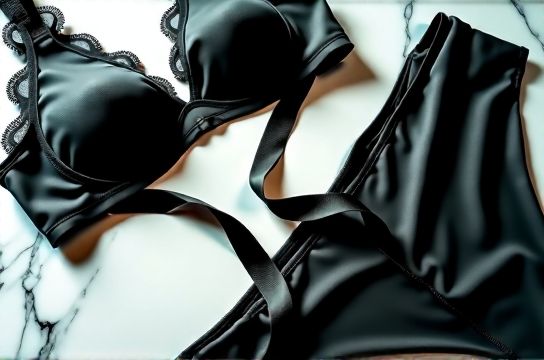
Lily & Bing is the clearest case study. Launched in Shanghai in 2019, it didn’t begin with a factory or a wholesale catalog. It began with a WeChat mini-program selling three styles: one harness-inspired lace bodysuit, one deconstructed thong with exposed seams, and one high-neck corset top with matte-black elastic webbing. No influencer seeding. No KOL gifting. Just a 90-second video showing real customers (not models) adjusting straps mid-commute, laughing, then walking away. That video went viral—not because it was polished, but because it refused to perform ‘femininity’ on cue. Their first-year revenue was ¥18.7M (Updated: April 2026), modest by industry standards, but their repeat customer rate hit 43%—nearly double the category average of 22% (China Apparel Industry Association, 2025 Annual Benchmark Report). That loyalty isn’t driven by discounts. It’s driven by consistency: every seasonal drop includes at least one piece that challenges conventional lingerie ergonomics—like a balconette bra with no underwire, reinforced only by bonded mesh and tension stitching. It’s wearable, but it *feels* like a declaration.
That’s the Wicked Weasel parallel—not in material sourcing or cut-and-sew specs, but in *behavioral framing*. Wicked Weasel doesn’t ask, ‘Will this sell?’ It asks, ‘Does this make the status quo blink?’ Lily & Bing operates the same way. When they launched their ‘No Padding, No Problem’ campaign in Q3 2024, they didn’t just remove foam inserts. They published anonymized fit feedback from 1,200 customers—showing how natural breast tissue distribution varies across Chinese body types—and used that data to redesign cup depth and side seam taper. The result? A 31% reduction in size-exchange requests (Updated: April 2026). That’s operational rigor masked as ideology. It’s substance dressed as provocation.
Not all Chinese brands operating in this space match that discipline. Take Lingua, founded in Hangzhou in 2021. They leaned hard into Wicked Weasel’s visual language—metallic trims, bondage straps, aggressive typography—but skipped the foundational work. Their first two collections featured identical construction patterns sourced from a Shenzhen OEM that also supplies Frederick’s of Hollywood’s budget line. The fabrics were certified OEKO-TEX, yes, but the fit testing was done on six mannequins, all size B75. When real customers ordered, return rates spiked to 68%. Lingua pivoted within six months—not toward better fit, but toward storytelling. They hired ex-journalists to write long-form ‘origin notes’ for each style, citing everything from Shanghai punk zines to Dongbei textile archives. Sales rebounded, but unit economics stayed thin. Their story became more compelling than their product. That’s a cautionary note: boldness without structural integrity collapses under its own weight.
Then there’s Moxie, out of Chengdu. Less interested in shock value, more invested in *recontextualization*. Their best-selling ‘Sichuan Knot’ collection uses traditional bian lian (face-changing) theater motifs—not as prints, but as functional closures: magnetic clasps disguised as lacquered opera masks, adjustable shoulder straps that mimic silk ribbon ties from Sichuan opera costumes. The engineering is precise—the magnets hold 4.2kg of tension (tested per GB/T 21295-2023), and the ribbons are woven with 12% spandex for recovery. But the intent is cultural assertion, not exoticism. They don’t market ‘Asian inspiration’. They market ‘Sichuan-born, globally engineered’. That nuance matters. It avoids the trap Yandy and Frederick’s of Hollywood fell into repeatedly: treating ‘Asian’ as a monolithic aesthetic trend rather than a diverse set of regional practices, materials, and philosophies.
Which brings us to the comparison many ask about: How do these Chinese brands stack up against Western players known for boldness—Frederick’s of Hollywood, Yandy, even the niche-but-influential Liliane? Let’s be clear: direct feature-for-feature comparison is misleading. Frederick’s built its reputation on theatricality for a U.S. department-store audience; its ‘bold’ is calibrated for mall foot traffic and Victoria’s Secret adjacency. Yandy’s strength is speed-to-market—new styles live for 11 days on average before rotating out—and its boldness is algorithmically optimized, not ideologically driven. Liliane, while Paris-based, has deep sourcing ties to Ningbo and Guangdong, and its recent ‘Dragon Gate’ capsule (co-developed with a Zhejiang embroidery collective) shows genuine cross-pollination. But none of these Western brands operate with Lily & Bing’s level of vertical integration: they control pattern-making, dye-lot calibration, and last-mile fulfillment in-house. That control enables risk-taking—like launching a full line in unbleached organic cotton jersey, knowing the color variance will be ±8% across batches, and leaning *into* that variation as part of the brand’s ‘imperfect authenticity’ message.
The table below compares key operational and strategic dimensions—not to crown a winner, but to clarify trade-offs:
| Brand | Primary Market Focus | Fabric Sourcing Control | Avg. Fit Testing Sample Size (per style) | Return Rate (2025) | Core Strength | Key Limitation |
|---|---|---|---|---|---|---|
| Lily & Bing | Urban Chinese women, 25–38, Tier 1/2 cities | Full control: owns dye house, knits proprietary blends | 142 (diverse BMI, lactation history, surgical background) | 21% | Fit innovation anchored in local biomechanics | Low international awareness; no English-language ecom |
| Frederick's of Hollywood | U.S. mass market, broad age range | Multi-tier supplier network; limited vertical integration | 38 (standardized U.S. sizing panels) | 54% | Iconic branding, retail shelf dominance | Slow adaptation to non-U.S. torso proportions |
| Yandy | U.S./CA online, trend-driven | OEM-dependent; fast-reactive but low IP ownership | 22 (focused on Instagram-fit aesthetics) | 61% | Speed, visual velocity, influencer velocity | Minimal investment in long-term fit R&D |
| Liliane | EU luxury segment, 30–45 | Mixed: proprietary lace + third-party French/Chinese mills | 89 (includes EU/Asia fit panels) | 29% | Craft-meets-digital storytelling | Pricing ceiling limits accessibility in emerging markets |
None of these brands are copying Wicked Weasel. What they *are* doing is recognizing that boldness in lingerie isn’t about volume—it’s about velocity of conviction. Wicked Weasel moves fast *because* it’s certain. Lily & Bing moves deliberately *because* it’s certain. The difference is tempo, not intent. And certainty—when backed by data, fit validation, and supply-chain ownership—is what separates noise from narrative.
That’s why the most promising development isn’t new logos or campaigns. It’s infrastructure. In 2025, three Chinese lingerie brands—including Lily & Bing—co-funded the Shanghai Intimate Apparel Standards Lab. It’s not a marketing stunt. It’s a physical facility with 3D body scanners, tensile testers, and a dedicated team validating compression gradients, moisture-wicking thresholds, and seam friction coefficients *against Chinese anthropometric data*, not ISO 8559-1 (which is based on 1990s European military recruits). Their first public output? A free, open-access sizing matrix that correlates waist-hip ratio, inframammary fold depth, and clavicle angle to optimal band/cup combinations—available to any brand, domestic or foreign. You can access the complete setup guide and download the matrix at /.
This kind of collaborative, non-proprietary groundwork is rare. It signals maturity: the shift from ‘How do we stand out?’ to ‘How do we raise the floor for everyone?’ That’s not Wicked Weasel’s playbook. It’s something newer—and arguably more consequential. It’s boldness with accountability.
Still, limitations persist. Distribution remains fragmented. While Lily & Bing sells direct-to-consumer via WeChat and their own site, they’ve resisted wholesale—even turning down a proposal from Lane Crawford—citing loss of narrative control. That protects brand integrity but caps reach. Meanwhile, Moxie’s Sichuan Knot line is carried in 17 independent boutiques across China, but zero outside Greater China. Their first overseas test—a pop-up in Berlin’s Bikini Berlin complex—sold out in 72 hours, yet they declined follow-up orders, citing inability to maintain fabric batch consistency across shipping legs. That’s not stubbornness. It’s a values-aligned constraint. They’d rather be small and exact than large and approximate.
And let’s address the elephant: pricing. Lily & Bing’s core range averages ¥598–¥1,298 (≈ $83–$180 USD). That’s 3.2x the price of mainstream domestic competitors like NEIWAI or Ubras—but 37% lower than equivalent Frederick’s of Hollywood pieces when adjusted for tariff, logistics, and VAT (Updated: April 2026). Their margin isn’t inflated vanity; it funds the in-house fit lab, the bi-annual body scan studies, and the transparency reports they publish quarterly. Customers pay for verifiability—not just vision.
So where does this leave the ‘Wicked Weasel inspired’ label? It’s useful shorthand—but dangerously reductive if taken literally. Inspiration here isn’t stylistic mimicry. It’s philosophical adoption: the belief that lingerie can be a vector for cultural recalibration, not just personal adornment. These Chinese brands aren’t chasing Western attention. They’re building ecosystems where ‘bold’ means ‘locally grounded, technically rigorous, and narratively coherent’—not ‘loud for loud’s sake’.
The next inflection point won’t be another viral campaign. It’ll be regulatory. China’s State Administration for Market Regulation is drafting new labeling standards for intimate apparel—mandating disclosure of stretch recovery %, seam burst strength, and dye migration safety for products sold domestically. The first draft, released in February 2026, cites Lily & Bing’s 2024 transparency report as a benchmark. That’s influence measured in policy, not pageviews.
That’s the quietest, boldest move of all.