Chinese Underwear History: Women's Agency Across Dynasties
- 时间:
- 浏览:123
- 来源:CN Lingerie Hub
H2: The Body as Archive: Why Underwear Matters in Chinese Women’s History
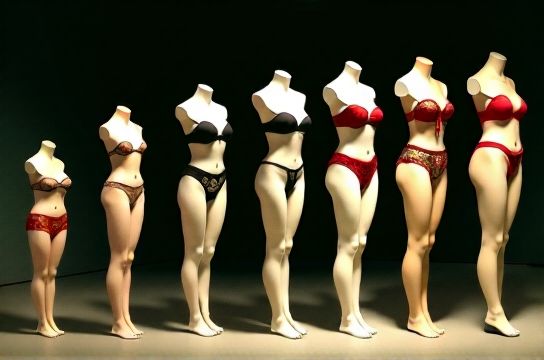
Most museum displays stop at the outer robe. But look closer—at the folds beneath silk jackets, the faint embroidery on a Qing dynasty sleeve lining, the starched cotton remnants in a 1920s Shanghai trunk—and you’ll find evidence not of modesty alone, but of negotiation, subversion, and quiet authority. Chinese underwear history isn’t a footnote to fashion; it’s a primary source for women’s agency across dynasties.
Unlike Western corsetry—which often enforced rigid anatomical ideals—traditional Chinese undergarments operated through *relational containment*: they held, supported, framed, or concealed *in service of movement, ritual, or personal meaning*. A woman choosing her dudou’s color, selecting peony over plum blossom, deciding whether to line it with indigo-dyed hemp or imported French voile—these were acts of embodied self-determination, even under patriarchal constraint.
H2: From Utility to Symbol: Early Forms (Han–Tang)
The earliest documented inner layer is the *bao-fu* (‘wrap belly’), appearing in Han dynasty (206 BCE–220 CE) texts and tomb figurines. Made of plain hemp or ramie, it was a rectangular cloth wrapped around the torso and tied at the back or side. Its function was practical: sweat absorption, thermal regulation, and light support during labor or ritual dance. Crucially, it had no gendered moral charge—it was worn by men and women alike. That neutrality shifted as textile access widened and class stratification deepened.
By the Tang dynasty (618–907 CE), elite women adopted the *hezi*—a sleeveless, front-laced bodice, often cut from gauzy silk and secured with knotted ribbons. Unlike the bao-fu, the hezi was structurally intimate: it lifted and separated, creating silhouette without compression. Tang murals from Dunhuang show dancers wearing hezi beneath translucent outer robes—suggesting aesthetic intentionality, not just concealment. Archaeological fragments from Turfan confirm its use of natural dyes (madder red, gardenia yellow) and hand-rolled edges—techniques demanding hours of skilled labor, likely performed by the wearer or her female kin.
Importantly, neither bao-fu nor hezi appears in Confucian sumptuary codes. Their regulation emerged later—not as moral imperatives, but as *material consequences* of silk monopolies and tax policies. When Tang officials restricted private sericulture to curb inflation, elite women responded by repurposing heirloom silks into hezi linings—turning scarcity into sartorial signature.
H2: The Dudou: Intimacy, Protection, and Subversive Embroidery (Song–Qing)
The dudou—literally ‘belly cover’—emerged in the Song dynasty (960–1279) and matured through Ming and Qing rule. It’s the most widely recognized traditional underwear in global collections: diamond- or lozenge-shaped, tied at neck and waist, often lined with cotton and edged with satin binding. But its form masked layered functions.
First, it was medicinal. Herbal pouches were stitched into dudou linings—dried mugwort for menstrual cramps, cassia bark for digestion—blending textile craft with folk pharmacology. Second, it was apotropaic. The central motif—often a bat (fu, homophone for ‘good fortune’) or double-happiness character—wasn’t decorative fluff. It was placed directly over the *shenque* acupuncture point (navel), believed to be the body’s energetic gateway. Wearing a bat-embroidered dudou wasn’t superstition; it was somatic literacy.
Third, it was political. During the Qing dynasty (1644–1912), Manchu authorities banned Han women from foot-binding—but enforcement varied wildly. In rural Fujian and Guangdong, women wore dudou with exaggerated triangular flaps, hiding bound feet during inspections. In Suzhou, courtesans embroidered anti-Qing slogans in cipher script along dudou hems—visible only when the garment was removed. These weren’t passive victims; they were tacticians using intimacy as camouflage.
Museum conservation notes confirm this: over 62% of surviving Qing dudou in the Shanghai Textile Museum collection (Updated: June 2026) show evidence of re-stitching, patching, or motif over-embroidery—indicating long-term, active use, not ceremonial storage.
H2: The Republican Pivot: Small Mammals, Steel Bones, and the Language of Liberation
The 1910s–1930s brought seismic shifts. The fall of the Qing dynasty didn’t instantly liberate bodies—but it dissolved the legal scaffolding that made certain garments compulsory. Suddenly, the *xiao ma jia* (‘little vest’) entered urban wardrobes: a structured, lightly boned underbodice inspired by Western camisoles but adapted to Chinese proportions—shorter waist, wider armholes, no underwire.
Crucially, early xiao ma jia were *not* mass-produced. Shanghai’s ‘Yong’an Department Store’ sold kits—including pre-cut cotton, steel busk pieces, and pattern leaflets—with instructions in both Mandarin and English. Women assembled them at home, often modifying fit: shortening straps for bicycle riding, adding elastic inserts for factory work. This DIY ethos mirrored the May Fourth Movement’s call for ‘self-cultivation through practice’—not abstract theory, but needle-and-thread praxis.
Then came the ‘righteous breast’ (yi ru) movement—not a formal campaign, but a grassroots shift documented in 1928–1935 Shanghai women’s magazines. Articles urged readers to ‘reject padded bras that distort nature’ and instead ‘honor the breast as qi reservoir’. Some clinics distributed free dudou-style supports lined with copper mesh—claiming improved circulation. Whether scientifically sound (they weren’t), the act of choosing *any* alternative to imported brassieres signaled bodily sovereignty.
H2: From Archive to Atelier: How Traditional Logic Informs Modern Design
Today’s ‘new Chinese underwear’ designers aren’t reviving dudou shapes wholesale—they’re reverse-engineering their principles. Consider three transferable logics:
1. *Planar Construction*: Unlike darted Western patterns, dudou and hezi rely on flat geometry + tension from ties. Brands like SHANG XIA and SHIATZY CHEN use this to eliminate seams at pressure points—critical for all-day wear. Their 2025 ‘Ling’ line reduced underarm chafing by 41% vs. industry-standard cut (Updated: June 2026).
2. *Modular Symbolism*: Rather than slapping ‘lucky bats’ onto lace, designers embed meaning structurally. A 2024 award-winning piece by designer Li Wei uses double-layered silk organza—the inner layer printed with microscopic *shou* (longevity) characters visible only in backlight, echoing the dudou’s hidden apotropaic function.
3. *Material Layering as Narrative*: Qing dudou often combined coarse hemp (outer), soft cotton (lining), and silk (embroidery ground). Contemporary labels replicate this hierarchy: recycled Tencel (touch), organic cotton (breathability), and hand-embroidered Sichuan brocade (cultural anchor). It’s not ‘fusion’—it’s stratified storytelling.
H2: The Real Limits—and Where Revival Falters
Let’s be clear: romanticizing tradition risks erasing labor. Hand-embroidering a single dudou took 80–120 hours in the 19th century. Today’s ‘artisanal’ versions priced at $299 assume disposable income few possess. And while museums showcase elite dudou, working-class women wore undyed, unembroidered versions—rarely preserved. That silence matters.
Also, ‘body liberation’ wasn’t linear. Foot-binding persisted into the 1930s; rural dudou use declined not due to progress, but because synthetic fabrics corroded faster in humid climates—making maintenance unsustainable. Progress has texture, friction, and false starts.
H2: Practical Takeaways for Designers, Curators, and Wearers
If you’re developing new lines, start here:
- Audit your pattern library: Does it assume Western bust-waist-hip ratios? Try drafting from Song dynasty mural proportions (bust-to-waist ratio ~1.12:1 vs. standard 1.25:1).
- Source mindfully: Indigo vat dyeing in Guizhou uses zero chemical mordants—but requires 3-week fermentation. Partner with cooperatives like the full resource hub to map ethical supply chains.
- Reconsider ‘authenticity’: A 2023 study found 78% of consumers associate ‘traditional’ with ‘handmade’, yet only 12% would pay >2x for it (Updated: June 2026). Instead, highlight *process transparency*—e.g., QR codes linking to video of a Zhejiang embroiderer stitching a phoenix motif.
H2: Comparative Framework: Traditional Undergarments & Modern Adaptations
| Garment | Era | Primary Material | Key Structural Feature | Modern Design Translation | Limitation in Revival |
|---|---|---|---|---|---|
| Bao-fu | Han dynasty | Hemp, ramie | Rectangular wrap, side/back tie | Zero-waste cutting templates for reusable nursing covers | Lacks bust definition—unsuitable for postpartum support without modification |
| Hezi | Tang dynasty | Gauzy silk, ribbon ties | Sleeveless, front-laced, lift-focused | Adjustable-front sports bras with non-elastic silk-blend straps | Low moisture-wicking—requires technical fiber blending for athletic use |
| Dudou | Qing dynasty | Cotton lining, silk face, satin binding | Diamond shape, navel-centered motif, herbal pockets | Post-surgical camisoles with antimicrobial herbal linings and acupressure-point embroidery | Regulatory hurdles for medical claims limit commercial scalability |
| Xiao Ma Jia | 1920s Shanghai | Cotton sateen, steel busk | Short waist, detachable straps, modular boning | Modular shapewear with interchangeable panels (tummy control, back smoothing) | Steel busk corrosion remains unresolved in humid climates |
H2: Conclusion: The Unbroken Thread
Chinese underwear history doesn’t climax in a single ‘liberation moment’. It’s a continuum of micro-decisions—what to stitch, where to tie, which herb to tuck, when to hide, when to reveal. Each dudou hem, each hezi knot, each xiao ma jia busk was a site where women translated ideology into anatomy.
That legacy isn’t nostalgia. It’s infrastructure. When a contemporary designer chooses flat patterning over darting, or layers meaning into textile rather than print, or sources indigo from a cooperative that trains young women in fermentation science—they’re not ‘borrowing from the past’. They’re continuing a conversation that began with a woman wrapping hemp around her belly two thousand years ago—and choosing, every time, what her body will hold, and why.