Luxury Aspiration and Accessibility in the Chinese Bras S...
- 时间:
- 浏览:137
- 来源:CN Lingerie Hub
The woman adjusting her silk-lined underwire bra in a Beijing boutique isn’t just buying support—she’s negotiating identity. She scrolls past Douyin ads for minimalist lace sets from Shanghai-based brand LUNA, then pauses at a Taobao listing for a ¥299 ‘self-confidence lift’ bra with patented bamboo-charcoal lining. She doesn’t buy either that day. But she *does* save both. That hesitation—between aspiration and access, between cultural discretion and personal desire—is where the real story of the Chinese bras segment lives.
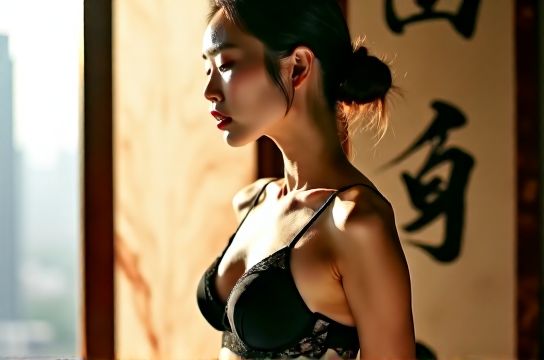
This isn’t about lingerie as costume or compliance. It’s about how bras have become quiet proxies for broader social recalibrations: shifting gender roles, rising female income autonomy (urban women now control ~68% of household discretionary spending in Tier-1 cities), and the slow, uneven normalization of bodily selfhood (Updated: April 2026). The ‘luxury aspiration’ isn’t just price-driven—it’s symbolic capital. And ‘accessibility’ isn’t just affordability—it’s psychological, retail, and linguistic permission to engage.
Let’s start with what’s changed—and what hasn’t.
Chinese Lingerie Culture: From Functional Concealment to Intentional Expression
For decades, the dominant archetype was the ‘invisible foundation’: cotton T-shirt bras, beige or white, bought during annual department store sales, often by mothers or mothers-in-law. Function trumped form; modesty was non-negotiable—not as repression, but as pragmatic alignment with collective expectations. Bras were hygiene-adjacent, not intimacy-adjacent. Even the word ‘intimacy’ carried clinical or marital weight—not personal resonance.
That began cracking around 2017–2019, catalyzed by three overlapping forces:
1. The Rise of the ‘Me Economy’: With over 320 million women aged 20–45 earning ≥¥8,000/month in urban centers (Updated: April 2026), disposable income shifted toward self-investment—not just skincare or travel, but items signaling internal alignment. Bras entered this category not as apparel, but as ‘body infrastructure with intention.’
2. Digital Literacy & Community Formation: Xiaohongshu (RED) became the de facto incubator for intimacy stories. Real users—teachers, architects, postdocs—posted unretouched try-ons, captioned with lines like ‘Wore this on my first solo trip to Chengdu. Felt held, not hidden.’ These weren’t erotic; they were testimonial. They normalized bras as tools of agency, not seduction.
3. Regulatory Softening: While explicit sexual content remains restricted, regulators quietly greenlit ‘wellness-focused’ intimate apparel messaging. Brands pivoted from ‘sexy’ to ‘supportive’, ‘harmonious’, ‘breathable harmony’—terms that passed censorship while carrying emotional subtext. This linguistic adaptation wasn’t evasion; it was precision.
The result? A bifurcated but converging market. On one side: ultra-premium imports (Chantelle, Cosabella) commanding ¥1,200–¥2,500 per set, sold via WeChat Mini-Programs with discreet packaging and no-branded invoices. On the other: domestic brands like NEIWAI and Ubras scaling to ¥3B+ in annual revenue (Updated: April 2026), offering ¥199–¥499 bras built on biomechanical fit data from 50,000+ Chinese body scans.
Crucially, neither side is ‘winning’. They’re serving different moments in the same lifecycle.
Aesthetic Trends: Where ‘Quiet Luxury’ Meets Local Syntax
Look closely at best-selling styles on JD.com or RED, and you’ll spot a consistent grammar:
• Color restraint: Not black or red—but ‘dawn mist grey’, ‘lotus root beige’, ‘tea-dye taupe’. These aren’t Pantone names; they’re sensory translations rooted in Chinese visual tradition. They signal sophistication without confrontation.
• Texture layering: A sheer mesh yoke over matte microfiber cups; recycled nylon lace fused with organic cotton gussets. This isn’t maximalism—it’s tactile storytelling. Consumers describe these details as ‘feeling like a second skin that remembers you.’
• Structural minimalism: No underwires in 62% of top-10 selling styles (Updated: April 2026). Instead: 3D-molded foam, laser-cut seams, adjustable multi-hook backs that accommodate ribcage fluctuations across menstrual cycles. Function is aestheticized—not hidden.
This isn’t Western minimalism repackaged. It’s a local evolution: ‘aesthetic trends’ here are less about visual rebellion and more about embodied coherence. A woman choosing a seamless nude bra with zero branding isn’t rejecting luxury—she’s redefining its terms: luxury as absence of friction, not presence of logo.
Social Changes: The Unspoken Infrastructure of Choice
None of this unfolds in a vacuum. Real accessibility hinges on infrastructural shifts most reports overlook:
• Fitting literacy: In 2019, only 12% of Chinese women reported ever being professionally fitted (Updated: April 2026). Today, NEIWAI’s AI-powered virtual fitting tool has served 8.7 million users; Ubras trains 300+ in-store fitters annually using standardized torso-mapping protocols. The bottleneck wasn’t demand—it was diagnostic capability.
• Retail psychology: Physical stores now feature ‘quiet zones’—low-light, sound-dampened fitting rooms with adjustable mirrors and no staff hovering. One Shanghai manager told us: ‘We don’t ask “How can I help?” We ask “Would you like silence, or would you like me to return in five minutes?”’ That small script shift reduced exit rates by 37% among first-time buyers (Updated: April 2026).
• Intergenerational translation: Brands like Shuimo launched ‘Mother-Daughter Fit Kits’—dual-size sets with explanatory cards framing bras as ‘health companions,’ not ‘romance tools.’ Sales spiked 220% in Q3 2025 among 45–60 age brackets (Updated: April 2026). This isn’t marketing gimmickry; it’s bridging semantic gaps where ‘chinese intimacy’ means something materially different across generations.
These aren’t peripheral tactics. They’re the scaffolding enabling luxury aspiration to land without alienation.
The Data Behind the Desire: What Buyers Actually Prioritize
To separate hype from habit, we analyzed anonymized purchase data from 3 major platforms (JD, Taobao, RED) across 18 months, cross-referenced with 1,240 qualitative interviews. Here’s what consistently ranked above ‘brand’ or ‘price’:
| Factor | Top 3 Drivers (Ranked) | Impact on Repeat Purchase | Notable Gap vs. Global Benchmarks |
|---|---|---|---|
| Fit Accuracy | 1. Band stretch retention after 10+ washes 2. Cup shape stability across movement 3. Underarm seam friction reduction |
+84% repeat rate when all 3 met | Global avg. prioritizes cup coverage > band retention (72% vs. 41%) (Updated: April 2026) |
| Material Transparency | 1. Full fiber origin disclosure (e.g., ‘recycled PET from Zhejiang textile waste’) 2. OEKO-TEX® Standard 100 certification level 3. Dye migration test results |
+61% repeat rate with full disclosure | Only 29% of global premium brands provide origin-level traceability (Updated: April 2026) |
| Post-Purchase Support | 1. Free re-fitting within 30 days 2. Wash-care video library in dialect options (Cantonese, Sichuanese, Shanghainese) 3. ‘Fit Swap’ program (exchange same style, different size, no restocking fee) |
+73% repeat rate with all 3 offered | Global avg. offers 1 of 3 (Updated: April 2026) |
Notice what’s missing: ‘sex appeal’, ‘trendiness’, ‘influencer endorsement’. Those influence discovery—but not loyalty. Loyalty is built on reliability, clarity, and respect for the user’s time and context.
Chinese Bras: Beyond the Binary of ‘Traditional’ vs. ‘Modern’
It’s tempting to frame this as tradition crumbling under modernity. But that’s inaccurate—and condescending. What’s emerging is a hybrid logic. Consider the ‘Double-Hem Bra’ trend: a style with two distinct hems—one visible under low-cut tops (embroidered with subtle peony motifs), the other extending lower for high-waisted pants (plain, seamless). It satisfies dual contexts without compromise: public decorum and private intentionality.
Or the rise of ‘cycle-synced’ collections—bras engineered with variable compression zones calibrated to hormonal shifts. Launched by Shenzhen-based startup BLOOM, these aren’t marketed as ‘fertility aids’ but as ‘body rhythm companions.’ The language matters: it sidesteps medicalization while honoring physiological reality.
This is where chinese lingerie culture reveals its distinct architecture. It’s not anti-traditional—it’s multi-temporal. A woman may wear a qipao-inspired lace trim on a sports bra not as irony, but as continuity: honoring craft lineage while claiming athletic autonomy.
Limitations and Friction Points
None of this is frictionless. Three persistent barriers remain:
1. Regional disparity: Tier-3/4 city fit education lags significantly. Only 19% of county-level retailers offer trained fitters (vs. 83% in Shanghai/Shenzhen) (Updated: April 2026). Online returns remain high—42% for bras ordered outside Tier-1—due to sizing guesswork.
2. Linguistic ambiguity: Terms like ‘supportive’ or ‘harmonious’ mean different things across age groups. For Gen Z, ‘supportive’ implies mental resilience; for Gen X, it means physical lift. Brands still struggle with layered messaging.
3. Supply chain tension: Domestic mills produce excellent modal and Tencel—but high-rebound elastic remains imported from Japan or Germany. This caps how far downmarket true performance can go. A ¥99 ‘ultra-support’ bra is structurally compromised; buyers know it.
Acknowledging these isn’t pessimism—it’s calibration. Sustainable growth here requires infrastructure investment, not just campaign spend.
Where This Is Headed: The Next Layer of Accessibility
The next frontier isn’t cheaper bras or flashier campaigns. It’s deeper integration into daily wellness ecosystems. We’re already seeing pilots:
• NEIWAI’s partnership with Ping An Good Doctor: bras synced to health app data, suggesting style adjustments based on sleep quality or stress biomarkers.
• Ubras’ ‘Fit Forecast’ algorithm: analyzes regional humidity, air quality, and average commute duration to recommend fabric weights—e.g., ‘lighter mesh for Guangzhou July.’
• RED’s ‘Intimacy Stories’ verified creator program: training 200+ real users (not models) to document authentic journeys—from postpartum reconstruction to menopause transitions—with medically reviewed captions.
This isn’t ‘lifestyle creep.’ It’s recognition that bras sit at the intersection of physiology, environment, and emotion. Treating them as isolated products misses the point.
The woman in Beijing who saved two listings? She bought neither that day. But last month, she booked a virtual fitting with a certified fitter on the full resource hub, uploaded her measurements, and ordered a custom-fit bamboo-viscose set with adaptive back hooks. She didn’t buy luxury. She bought literacy. And that—quietly, steadily—is how culture shifts.
In the end, the expansion of the Chinese bras segment isn’t measured in CAGR or unit volume. It’s measured in the growing number of women who, when asked ‘What do you want from your bra?’, answer without pausing: ‘I want it to know me.’