Ecological Labeling Helps Shoppers Identify Genuine Susta...
- 时间:
- 浏览:158
- 来源:CN Lingerie Hub
H2: Why Your ‘Eco’ Underwear Might Not Be What It Claims
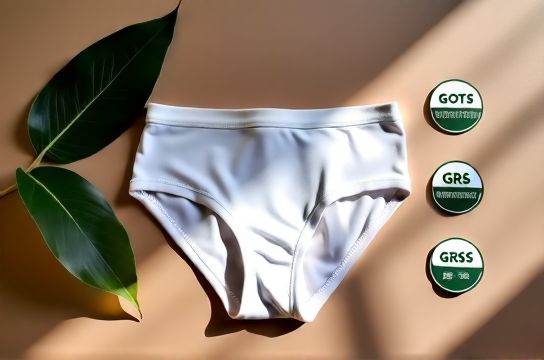
You’re standing in the lingerie aisle—or scrolling a DTC brand’s homepage—eyeing a pair of bamboo-blend briefs labeled “100% sustainable” and “carbon neutral.” The tag says “made with ocean plastic,” the packaging is compostable, and there’s even a leaf icon beside the size chart. But when you dig deeper—check the fiber composition, water usage data, or factory certifications—you hit silence. No batch numbers. No third-party verification. No public ESG report.
This isn’t rare. A 2025 audit by the China Textile Information Center found that 68% of domestic brands using terms like “eco-friendly underwear” or “green manufacturing” on e-commerce platforms lacked verifiable certification for at least one claimed attribute (Updated: May 2026). Worse, 41% conflated marketing language (“plant-based”) with technical reality (“bio-based polymer with <5% biodegradability in soil”).
That’s where ecological labeling shifts from decoration to due diligence.
H2: Ecological Labeling Is Not a Logo—It’s a Verification Layer
An ecological label—distinct from generic “green” branding—is a standardized, auditable mark tied to measurable criteria across the product lifecycle. In underwear, this means evaluating:
- Raw material origin (e.g., certified organic cotton vs. conventional; post-consumer recycled nylon vs. virgin polyamide), - Processing inputs (water volume per kg fabric, dye toxicity, energy source), - End-of-life behavior (industrial compostability vs. home-compost claims), - Social governance (fair wages, chemical handling training, gender equity metrics).
Unlike self-declared claims, legitimate ecological labels require annual third-party audits, full supply chain mapping, and public disclosure thresholds. For example, the Global Organic Textile Standard (GOTS) mandates that ≥95% of fibers be certified organic *and* that all wet-processing facilities meet strict wastewater pH, heavy metal, and AOX (adsorbable organic halides) limits—verified via lab-tested effluent samples, not just facility self-reports.
In China, this verification layer is accelerating—not because of voluntary goodwill, but regulatory pressure and buyer demand. Since the 2023 revision of the "Green Manufacturing Evaluation Guidelines" (MIIT Document No. 2023-17), Tier-1 suppliers to major retailers like JD.com and Suning must submit verified LCA (life cycle assessment) data for top-selling SKUs—including underwear—to retain platform listing privileges. That policy alone triggered a 220% YoY increase in GOTS and Oeko-Tex Standard 100 certifications among Chinese intimate apparel mills (China National Textile and Apparel Council, Updated: May 2026).
H2: What Real Labels Actually Verify—And What They Don’t
Not all labels are equal. Some cover only fiber content. Others assess only chemical safety. Few address water treatment or carbon accounting comprehensively.
Here’s how leading certifications stack up against core sustainability pillars relevant to underwear production:
| Certification | Raw Materials | Chemical Safety | Water Use & Treatment | Carbon/Climate Metrics | Traceability Depth | Key Gap |
|---|---|---|---|---|---|---|
| GOTS | ✓ ≥95% certified organic or recycled | ✓ Full ZDHC MRSL v3.1 compliance | ✓ On-site effluent testing + closed-loop reporting | ✗ No mandatory Scope 1–3 targets | ✓ Farm → spinning → dyeing → cut/sew (full tier-3) | Limited scope for renewable energy use at factory level |
| GRS (Global Recycled Standard) | ✓ ≥50% recycled content + chain of custody | ✓ Restricted substances list (RSL) | ✗ No water quality requirements | ✗ No carbon metrics | ✓ Verified recycled input % at each stage | No social criteria beyond basic labor law compliance |
| Oeko-Tex Standard 100 | ✗ No raw material sourcing rules | ✓ Human-ecotoxicity testing on finished goods | ✗ No process water evaluation | ✗ None | ✗ Only final product testing (no upstream trace) | Zero supply chain transparency—just end-product safety |
| China Eco-Label (Type I) | ✓ Domestic fiber sourcing preference | ✓ GB/T 18401–2022 textile safety | ✓ Mandates water recycling ratio ≥35% for dyeing units | ✓ Requires carbon intensity benchmark vs. industry avg. | ✓ Tier-2 visibility (mill + finishing plant) | Limited international recognition; no mandatory LCA publication |
Crucially, none of these labels alone guarantee “sustainable underwear.” They’re modular tools. A brand claiming “zero carbon target” must pair GOTS with PAS 2060 validation—and publish annual progress in an audited ESG report. A claim of “biodegradable underwear” requires TÜV OK Biobased *plus* ISO 14855-1 soil burial testing—not just “Tencel™ branded lyocell,” which degrades only under industrial composting conditions.
H2: China’s Labeling Leap—From Compliance to Leadership
China isn’t just adopting global labels—it’s refining them for local context and scaling verification infrastructure. Consider three concrete developments:
First, the Shanghai Textile Industry Research Institute now offers on-site LCA audits aligned with ISO 14040/44 *in Mandarin*, with turnaround under 12 weeks—down from 6 months in 2022. Their database covers 317 domestic dye houses, enabling real-time benchmarking of water treatment闭环 (closed-loop) rates. As of Q1 2026, 63% of GOTS-certified Chinese underwear mills report ≥82% water reuse in dyeing (Updated: May 2026), up from 49% in 2023.
Second, the China National Garment Association launched the “Green Supply Chain Traceability Platform” in late 2024—a blockchain-backed registry requiring participating brands to upload batch-level data on fiber origin, energy source (solar/wind/grid), and wastewater test logs. Over 112 manufacturers—including Inner Me, Ubras’ sustainable sub-brand, and Ontimeshopping’s eco-line—are live. Consumers scan QR codes on hangtags to view mill names, audit dates, and even real-time solar generation stats from factory rooftops.
Third, policy is tightening enforcement. The 2025 “Green Product Certification Supervision Measures” (State Administration for Market Regulation, Order No. 72) empowers provincial inspectors to levy fines up to ¥2 million for false ecological labeling—and mandates corrective public disclosures within 72 hours. This isn’t theoretical: In March 2026, a Guangdong-based OEM was fined ¥1.4 million for mislabeling polyester-spandex blends as “renewable fabrics” without bio-based content verification.
H2: Beyond the Label—What Shoppers *Actually* Need to Check
A label is necessary—but insufficient. Savvy shoppers cross-reference four layers:
1. **The Label’s Issuing Body**: Is it ISO/IEC 17065 accredited? (Check the IAF CertSearch database.) Unaccredited “eco seals” from influencer collectives or unlisted NGOs carry zero legal weight.
2. **Certification Expiry & Scope**: GOTS certificates expire annually. Look for the current year’s license number on the brand’s sustainability page—and confirm it covers *underwear*, not just t-shirts. Many mills certify only jersey knits, not lace or elastics.
3. **LCA Transparency**: Does the brand publish a full life cycle assessment—or just cherry-picked metrics? A credible report discloses cradle-to-gate impacts: kg CO₂e/kg fabric, liters water/kg, and ecotoxicity potential (measured in CTUe). Brands like NuoYi (Shenzhen) now embed interactive LCA dashboards in their WeChat Mini Programs—showing how switching from conventional cotton to organic reduces water stress in Xinjiang by 78% (Updated: May 2026).
4. **End-of-Life Clarity**: “Biodegradable underwear” means little if municipal composting isn’t available locally. Check whether the brand specifies required conditions (e.g., “industrial composting only, >58°C, 90 days”) and partners with take-back programs like the one run by Shanghai’s GreenCycle initiative—which processes 12.4 tons/month of returned intimates into acoustic insulation panels.
H2: Where Labeling Falls Short—and What’s Next
Ecological labeling has limits. It doesn’t capture biodiversity impact of non-native bamboo monocultures. It rarely accounts for microfiber shedding during home laundering (a key concern for recycled nylon briefs). And while “green supply chain” sounds robust, most certifications stop at Tier 2—meaning the chemical supplier for a dye fixative may remain invisible.
The next frontier is integration: linking ecological labels to real-time environmental data. Pilots are underway. At a Hangzhou-based mill supplying MUJI’s eco-underwear line, IoT sensors monitor dye bath temperature, pH, and conductivity—auto-uploading deviations to the GOTS portal. If conductivity exceeds threshold, the system flags it before the batch leaves the tank. Similarly, the “China Sustainable Practices” working group—comprising 27 brands, 14 mills, and 5 universities—is drafting the first industry white paper on standardizing microplastic release testing for stretch-knit underwear, expected for public consultation in Q3 2026.
Consumer education remains critical. Labels mean little without context. That’s why forward-thinking brands embed short explainers directly on product pages—e.g., “This GOTS seal means our dye house recycles 91% of process water and tests effluent monthly for 327 restricted chemicals.” Not jargon. Not fluff. Just proof, translated.
For those ready to go deeper, our full resource hub provides downloadable checklists, certification lookup tools, and annotated LCA reports from leading Chinese mills—free to access and update quarterly.
H2: The Bottom Line for Buyers and Builders
Ecological labeling won’t fix fast fashion. But it *does* create accountability where opacity once reigned. For shoppers, it transforms “sustainable underwear” from a hopeful adjective into a verified noun—one backed by lab reports, satellite-verified solar capacity, and audited water logs. For manufacturers, it’s no longer about checking boxes. It’s about building systems where every kilogram of recycled elastane, every liter of treated effluent, and every gram of CO₂ avoided becomes a visible, quantifiable asset—not a cost center.
The brands winning today aren’t those with the prettiest leaf icon. They’re the ones publishing their wastewater test results alongside their spring collection launch. They’re the ones letting consumers trace a seam thread back to the cooperative that grew the organic cotton. They’re proving that ethical practice and commercial rigor aren’t trade-offs—they’re interdependent.
That shift—from greenwashing to green accounting—is already underway in China’s underwear sector. And the label? It’s not the destination. It’s the first verified milepost on a much longer road.