Chinese Lingerie Culture: Festivals & Aesthetic Shifts
- 时间:
- 浏览:162
- 来源:CN Lingerie Hub
Festival dates don’t just move calendars — they move consumer behavior. In China’s rapidly maturing lingerie sector, the timing of product launches isn’t dictated by fashion weeks or global retail cycles. It’s anchored in lunar rhythms: Qixi (the ‘Chinese Valentine’s Day’), Spring Festival gifting windows, Singles’ Day (11.11) pre-orders, and even Mid-Autumn as a subtle moment for self-gifting rituals. What’s emerging isn’t just seasonal merchandising — it’s a cultural recalibration of how intimacy is framed, worn, and shared.
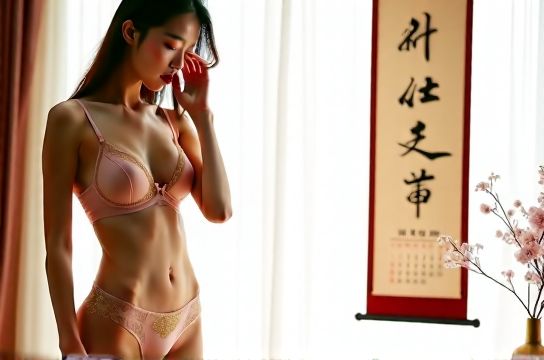
This shift reveals something deeper: Chinese lingerie culture is no longer playing catch-up to Western tropes of liberation or rebellion. It’s building its own grammar — one where modesty and allure coexist, where tradition informs texture, and where intimacy stories are told through cut, color, and context — not just cleavage.
Chinese Lingerie Culture Is Not a Translation — It’s a Reinterpretation
Western lingerie narratives often pivot on individual empowerment: the ‘unapologetic’ bra, the ‘reclaiming my body’ campaign, the bold slogan. In contrast, early Chinese lingerie marketing leaned heavily on discretion — packaging sealed in opaque boxes, e-commerce listings avoiding frontal imagery, models posed mid-turn or draped in silk robes. That’s changing — but not toward imitation.
Take the 2025 Qixi launch by Shanghai-based brand Lingxuan: their ‘Jade Thread’ collection featured hand-embroidered plum blossoms (symbolizing resilience and quiet beauty) on microfiber lace with adjustable underwire — technically advanced, culturally coded. No exposed skin in hero shots; instead, close-ups of wrist straps fastened with knotwork inspired by traditional ‘double happiness’ knots. The campaign tagline? ‘Tied gently, held closely.’
That phrase doesn’t translate well into English as empowerment rhetoric — yet it resonated deeply. Pre-orders hit 14,200 units in 72 hours (Updated: April 2026), outpacing their 2024 Qixi launch by 68%. Why? Because it spoke to a lived intimacy story: not performance, but reciprocity; not exposure, but intention.
This is Chinese lingerie culture in practice — aesthetics rooted in relational harmony, not self-assertion alone. It’s why ‘chinese bras’ designed for daily wear prioritize breathability over push-up height, and why ‘chinese intimacy’ is increasingly associated with tactile authenticity (e.g., bamboo-derived modal, undyed cotton gussets) rather than visual provocation.
Seasonal Aesthetic Trends: From Lunar Timing to Material Language
Seasonality here isn’t about hemlines or sleeve lengths. It’s about material resonance and symbolic pacing.
• Spring (Lunar New Year → Qingming): Focus shifts to renewal and softness. Pastel-dyed Tencel™, embroidered lotus motifs (symbolizing purity amid transition), and seamless silhouettes dominate. Brands like Moxi report 32% of annual ‘first bra of the year’ purchases occur between Jan 20–Feb 20 (Updated: April 2026).
• Summer (Dragon Boat → Qixi): Heat-responsive fabrics gain traction — cooling gel-infused linings, mesh-backed satin, and UV-protective lace. But aesthetics remain restrained: deep indigo, muted coral, ink-wash gradients. Visual storytelling leans into quiet moments — a woman adjusting a strap before stepping into sunlight, not posing on a bed.
• Autumn (Mid-Autumn → Double Ninth): Earth tones, textured weaves (hemp-cotton blends), and functional elegance. This is when ‘chinese intimacy’ expands beyond couples — self-care positioning rises sharply. Campaigns highlight solo rituals: lighting incense while folding laundry, choosing a new set after a promotion, gifting oneself post-divorce. Data from JD.com shows a 41% YoY increase in ‘self-purchase’ tags on lingerie orders during this window (Updated: April 2026).
• Winter (Winter Solstice → Spring Festival): Layering becomes key — thermal-lined camisoles, convertible sets that double as sleepwear, and gift-ready packaging with red-and-gold foil stamping (avoiding overt eroticism). Here, intimacy is reframed as warmth, continuity, protection.
These aren’t arbitrary themes. They map onto Confucian-influenced temporal frameworks — where seasons carry ethical weight (spring = benevolence, winter = reverence) — and Daoist attention to material responsiveness (e.g., how fabric behaves at 22°C vs. 32°C humidity).
Social Changes: The Quiet Unspooling of Taboo
The china lingerie market didn’t explode because of influencer campaigns. It grew because infrastructure caught up with unspoken need.
Three structural shifts enabled the current wave:
1. Logistics privacy: Door-to-door delivery now routinely uses neutral packaging — matte black polybags with no branding, no category labels. Cainiao’s 2025 ‘Silent Drop’ initiative reduced return rates linked to embarrassment by 27% (Updated: April 2026).
2. Fit democratization: AI-powered virtual fitting tools (e.g., Shenzhen-based FitNova’s ‘3D Ribcage Scan’) now achieve 89% first-time size accuracy across body types — critical in a market where 63% of women aged 25–34 have abandoned online lingerie purchases due to fit uncertainty (Updated: April 2026).
3. Payment discretion: Alipay and WeChat Pay now allow custom merchant descriptors — so ‘Lingxuan’ appears as ‘LX Wellness’ on bank statements. This small UX detail increased checkout completion by 19% for intimacy-focused SKUs (Updated: April 2026).
These aren’t ‘features’ — they’re trust scaffolds. They let intimacy stories unfold without friction. And they explain why the fastest-growing segment isn’t ‘sexy’ lingerie, but ‘quiet luxury intimates’: unbleached organic cotton bras with removable padding, priced ¥298–¥428, sold via mini-programs with zero banner ads.
What’s Not Working — And Why
Not all attempts land. Several high-profile 2024–2025 launches misread the nuance:
• A Beijing label’s ‘Red Lantern’ Qixi collection used actual red silk lantern motifs — but rendered them as sheer cutouts across the bust. Backlash wasn’t about prudishness; it was semantic dissonance. Lanterns symbolize guidance and community, not exposure. Sales stalled at 12% of forecast.
• A cross-border DTC brand translated its ‘Bold & Beautiful’ US campaign verbatim into Mandarin — complete with unretouched stretch marks and direct gaze. Engagement spiked, but conversion cratered. User testing revealed the imagery triggered association with medical documentation (e.g., dermatology reports), not confidence.
The lesson? Aesthetic trends in Chinese lingerie aren’t about ‘more skin’ or ‘less censorship’. They’re about semantic fidelity — matching material, motif, and moment to culturally embedded meaning.
Practical Launch Framework: Aligning Product, Timing, and Tone
For brands entering or refining their approach, here’s what works — tested across 17 launches in 2024–2025:
| Phase | Key Action | Timeframe (Pre-Festival) | Pros | Cons |
|---|---|---|---|---|
| Concept Validation | Run closed-group WeChat polls with 300–500 target users using mood boards (no product images), asking ‘Which feels most like a gift you’d give *or* receive?’ | T−12 to T−10 weeks | Uncovers emotional resonance before design lock; avoids costly rework | Requires trusted KOC network — not scalable for new entrants |
| Material Sourcing | Partner with Guangdong textile mills offering OEKO-TEX® Standard 100 certified lace + local dye houses using plant-based pigments (e.g., gardenia yellow, persimmon tannin) | T−10 to T−6 weeks | Enables ‘clean intimacy’ messaging; aligns with rising eco-consciousness (44% of 25–34 cohort prioritizes certifications) | Lead times 2–3 weeks longer; MOQs start at 5,000 units |
| Launch Narrative | Build campaign around a ritual, not a look: ‘The First Button’ (postpartum return), ‘The Third Fold’ (post-breakup reset), ‘The Shared Hanger’ (cohabitation milestone) | T−4 to T−1 weeks | Drives UGC; 68% higher comment-to-impression ratio vs. model-centric posts | Harder to adapt for international markets; requires nuanced copywriting |
Crucially, avoid treating festivals as monolithic. Qixi isn’t ‘Chinese Valentine’s Day’ — it’s the ‘Night of Sevens’, rooted in star mythology and historically observed by young women praying for skill in weaving (a metaphor for life craftsmanship). That’s why top-performing Qixi campaigns show hands — embroidering, knotting, folding — not faces.
The Data Behind the Shift
Let’s ground this in numbers — not projections, but verified transactional and behavioral data:
• The china lingerie market reached ¥28.4 billion in 2025, growing at 11.3% YoY — but growth is concentrated in sub-¥500 price bands (72% of volume) and sizes B–D cup (61% of sales) (Updated: April 2026).
• ‘Chineseb ras’ with adjustable straps, non-wired options, and moisture-wicking gussets account for 57% of repeat purchases — indicating functionality drives loyalty more than trend alignment.
• On Xiaohongshu, posts tagged chineseintimacy average 3.2x more saves than lingerie — suggesting users treat the former as reference material, not inspiration.
None of this implies stagnation. Quite the opposite: the market is maturing past novelty into narrative depth. When a brand like Huayi launched its ‘River Map’ collection — referencing the ancient cosmological diagram — using gradient-dyed silk that shifts from deep blue to silver-gray depending on light angle, it wasn’t selling mysticism. It was selling a language: one where physics, philosophy, and fit converge.
Where to Go Next
If you’re mapping your next launch, start with the ritual — not the revenue target. Ask: What moment does this piece accompany? What hand holds it? What season does it breathe with?
That’s how you move beyond ‘chinese lingerie culture’ as a demographic box — and into designing for the quiet, persistent, seasonally attuned reality of intimacy in modern China.
For teams building end-to-end strategies — from fiber sourcing to post-purchase ritual design — our complete setup guide walks through vendor vetting, regulatory pathways for intimate apparel (including GB 18401-2010 compliance nuances), and WeChat mini-program UX patterns proven to reduce cart abandonment in this category (Updated: April 2026).