Sustainable Underwear: China's Ethical Shift
- 时间:
- 浏览:173
- 来源:CN Lingerie Hub
H2: When Lingerie Meets Lifecycle Accountability
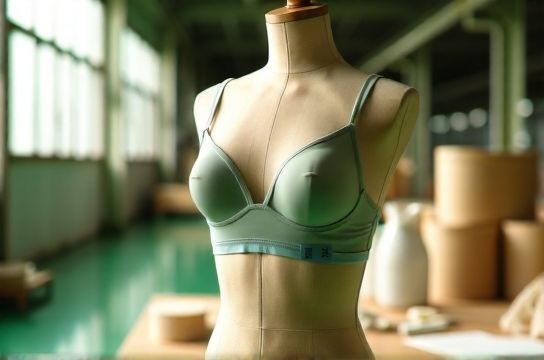
It’s no longer enough for a bra to lift — it must also disclose its carbon footprint, trace its cotton to the farm, and decompose without leaching microplastics. In China’s $12.4 billion lingerie market (Updated: May 2026), environmental advocacy isn’t a marketing sidebar — it’s rewriting procurement policies, R&D roadmaps, and even factory floor protocols.
This shift didn’t emerge from corporate goodwill alone. It was catalyzed by tightening enforcement of China’s 14th Five-Year Plan for Ecological Civilization, the Ministry of Ecology and Environment’s 2023 Guidance on Green Textile Production, and rising consumer demand: 68% of urban Chinese shoppers aged 25–39 now consider sustainability a decisive factor in intimate apparel purchases (CIC Data, Updated: May 2026). Crucially, NGOs like Friends of Nature and the Shanghai-based Green Supply Chain Initiative have pressured brands with public ESG scorecards — forcing transparency where voluntary reporting once stalled.
H2: From Fiber to Factory Floor: The Three-Layer Transformation
The most consequential change isn’t visible on the hanger — it’s embedded in the material science, scaled in the production line, and verified across the supply chain.
H3: Layer 1 — Material Innovation Beyond ‘Greenwashing’ Claims
‘Eco-friendly fiber’ used to mean a 5% Tencel blend in an otherwise polyester garment. Today, leading players like NEIWAI and Ubras deploy purpose-built material systems:
• Bio-based elastane: Developed with Shandong Ruyi and spun in Jiangsu, this variant uses dextrose-derived polyether segments instead of petrochemical adipic acid. It achieves 82% lower cradle-to-gate emissions (LCAs per ISO 14040, Updated: May 2026) and meets EN 13432 industrial compostability thresholds after 90 days under controlled conditions.
• Ocean-bound plastic regeneration: Dongguan-based textile converter Guangdong Huayi doesn’t just use post-consumer PET bottles — it sources only from certified collection zones within 50 km of coastlines in Guangxi and Hainan, verified via blockchain-tracked GPS logs. Their yarn — branded ‘SeaLoop™’ — contains ≥92% verified ocean plastic and passes GRS v4.1 chain-of-custody audits.
• Natural dye integration: Instead of relying solely on low-impact synthetics, Hangzhou-based startup EcoWeave partners with Yunnan tea farms to extract tannin-based colorants. These dyes require no heavy metals, reduce water heating energy by 37%, and eliminate azo compounds entirely — a critical step given China’s 2025 ban on Class I carcinogenic dyes in direct-skin textiles.
H3: Layer 2 — Green Manufacturing That Pays for Itself
Sustainability used to mean cost premiums. Now, ROI emerges in kilowatt-hours saved and wastewater permits retained.
At NEIWAI’s solar-powered Changshu facility (operational since Q3 2024), photovoltaic arrays cover 98% of roof space, generating 2.1 GWh/year — offsetting 1,420 tonnes of CO₂e annually (Updated: May 2026). More strategically, their closed-loop water system recaptures 91% of process water: dye baths are filtered via ceramic membrane + UV oxidation, then reused up to six times before tertiary treatment. This slashes freshwater intake by 73% versus industry benchmarks — a necessity in Jiangsu, where textile mills face tiered water pricing above 12,000 m³/month.
Ubras took a different path: partnering with Zhejiang University’s Institute of Environmental Engineering to retrofit legacy dye houses with enzymatic cold-pad batch systems. Result? Dye fixation rates rose from 68% to 94%, cutting salt usage by 89% and eliminating steam-dependent thermofixation — a move that reduced thermal energy demand by 41% per kg of fabric.
H3: Layer 3 — Traceability as Table Stakes, Not Trophy
Consumers no longer trust ‘eco-certified’ labels without verification paths. Brands now embed QR codes linking directly to live dashboards showing:
• Farm-level cotton origin (via satellite-verified BCI or organic certification) • Dye house emissions (measured hourly via IoT sensors and reported to local MEP portals) • Packaging carbon weight (calculated using GHG Protocol Scope 3 Category 1 data)
NEIWAI’s 2025 ESG report includes full lifecycle assessments (LCA) for 12 core SKUs — modeled using SimaPro v9.5 and peer-reviewed by the China Academy of Environmental Planning. Each assessment breaks down impacts across 18 midpoint categories, from freshwater eutrophication to fossil depletion. Notably, their bamboo-viscose briefs scored 32% higher in land-use impact than TENCEL™ Lyocell variants — prompting a strategic pivot away from mechanically processed bamboo pulp by end-2025.
H2: The Policy Engine Behind the Shift
China’s regulatory architecture is no longer aspirational — it’s enforceable.
The 2024 ‘Green Textile Standard’ (GB/T 39077-2024) mandates third-party verification for any product claiming ‘biodegradable’, ‘recycled’, or ‘low-carbon’. Claims must reference specific test methods (e.g., GB/T 32106 for biodegradability in soil; GB/T 39077 Annex C for recycled content quantification). Non-compliant labeling now triggers fines up to 5% of annual revenue — a deterrent that eliminated over 200 unverified ‘eco’ SKUs from Taobao in H1 2025.
Simultaneously, provincial governments incentivize action: Zhejiang offers 30% capital subsidies for water-recycling equipment retrofits, while Guangdong grants tax rebates for factories achieving ISO 50001 certification. These aren’t fringe benefits — they’re balance-sheet line items shaping CAPEX decisions.
H2: Where Advocacy Meets Accountability: The Role of Third Parties
NGOs and multi-stakeholder initiatives are no longer external critics — they’re co-authors of operational standards.
The China Textile Industry Federation (CTIF) launched its first industry-wide Sustainable Lingerie White Paper in March 2025 — co-drafted with WWF-China and the China Certification & Inspection Group (CCIC). It defines minimum thresholds for:
• Recycled content (≥30% for ‘recycled’ claims) • Water recycling rate (≥75% for dyeing/finishing units) • Packaging recyclability (100% mono-material or certified compostable)
More concretely, the Green Supply Chain Initiative (GSCI) runs a public scoring platform where brands earn points for: • Publishing full Tier 2+ supplier lists • Disclosing absolute Scope 1+2 emissions (not intensity) • Submitting audited LCA data per SKU
Top-scoring brands — including NEIWAI (89/100) and SHIYI (76/100) — gain preferential shelf placement in Sun Art and Yonghui supermarkets’ ‘Green Choice’ sections.
H2: Real-World Tradeoffs: What’s Still Broken
No transformation is frictionless. Three persistent gaps remain:
1. Biodegradability vs. Performance: Fully biodegradable elastics still lack the recovery rate (<85%) needed for high-support bras. Most ‘biodegradable’ styles today sacrifice either longevity (degrading in <18 months) or compression integrity. The industry’s near-term compromise? Modular construction — replaceable straps and bands made from PLA-blend filaments, while main bodies use durable but recyclable nylon-6,6.
2. Recycled Polyester Limitations: While rPET dominates recycled claims, mechanical recycling degrades polymer chains after ~3 cycles. Chemical recycling (depolymerization → repolymerization) remains cost-prohibitive at scale in China: current capacity is <8,000 tonnes/year — less than 0.3% of domestic polyester demand (Updated: May 2026).
3. Consumer Education Gaps: Only 22% of surveyed consumers correctly interpret ‘GRS-certified’ as requiring ≥50% recycled content *and* strict social/environmental criteria (CIC Survey, Updated: May 2026). Many equate ‘organic cotton’ with ‘low-water’, unaware that conventional organic cotton in Xinjiang still requires ~7,000 L/kg — versus 3,200 L/kg for drought-tolerant Gossypium herbaceum varieties now being piloted in Gansu.
H2: Comparative Benchmark: Material & Process Specifications
| Material/Process | Key Spec | Implementation Step | Pros | Cons | Cost Premium vs. Conventional |
|---|---|---|---|---|---|
| SeaLoop™ Ocean-Plastic Yarn | ≥92% verified ocean-bound PET | Blockchain-tracked collection + GRS-certified spinning | No virgin PET input; supports coastal waste infrastructure | Limited batch consistency; higher filtration wear on knitting machines | +18–22% |
| TENCEL™ Lyocell (Lenzing) | 99% closed-loop solvent recovery | Licensed production at Lenzing’s Jiangsu JV plant | Low water use (≤120 L/kg); fully biodegradable | Higher tensile strength variability than standard viscose | +31–35% |
| Enzymatic Cold-Dye System | Fixation at 35°C, no salt required | Retrofit of existing jet dye machines with enzyme dosing + pH control | 41% less thermal energy; eliminates saline wastewater discharge | Longer cycle time (+14%); enzyme stability sensitive to water hardness | +9–12% (CAPEX amortized over 3 years) |
| PLA-Based Biodegradable Elastic | EN 13432 certified (90-day industrial compost) | Co-extrusion with polylactic acid + bio-plasticizer | Fossil-free feedstock; non-toxic degradation byproducts | Recovery rate <80% after 500 stretch cycles; limited heat resistance | +44–49% |
H2: The Next Frontier: From Compliance to Co-Creation
Forward-looking brands are moving beyond supplier audits and into joint development. NEIWAI’s ‘Material Commons’ program funds university labs to prototype next-gen fibers — with IP shared under royalty-free licenses for all participating manufacturers. One outcome: a mycelium-reinforced cotton substrate currently in pilot at Guangzhou University’s Biomaterials Lab, aiming for commercial scale by 2027.
Meanwhile, Ubras’ ‘Wear Well’ consumer education platform — accessible via QR code on every garment tag — doesn’t just list certifications. It shows real-time impact: scanning a bra reveals how many liters of water were saved versus conventional production, how much CO₂ was avoided, and even maps the journey from cotton field to fulfillment center. This isn’t storytelling — it’s accountability rendered tangible.
Such tools bridge the trust gap. And when consumers see that choosing a GOTS-certified thong reduces annual wastewater load by 1,240 L — equivalent to 17 showers — ethical consumption stops being abstract. It becomes arithmetic.
For brands still mapping their path, the starting point isn’t perfection. It’s publishing verifiable baseline data — energy per unit, water per kg, % Tier 1 suppliers audited — then committing to annual improvement targets aligned with Science Based Targets initiative (SBTi) apparel criteria. Progress, not purity, is what moves markets.
That’s why the most actionable step today isn’t launching a new ‘green’ line — it’s auditing your current top 5 SKUs against the full lifecycle assessment framework outlined in the CTIF White Paper. Then, prioritize one high-impact lever: switch one dye house to enzymatic processing, pilot one ocean-plastic yarn, or install submetering on boiler feedwater lines. Measure. Report. Iterate.
The full resource hub provides templates, vendor vetting checklists, and regional incentive databases — all updated quarterly. You’ll find it at /.
H2: Conclusion: Ethics as Infrastructure, Not Add-On
China’s lingerie industry isn’t adopting sustainability — it’s rebuilding its infrastructure around ecological accountability. What began as NGO pressure and policy nudges has matured into vertically integrated systems: material scientists designing for disassembly, factory managers optimizing for kWh not just output, and marketers translating LCAs into consumer-facing impact units.
This isn’t about virtue signaling. It’s about resilience — ensuring supply chains survive tightening water quotas, avoiding reputational damage from unverified claims, and capturing the $3.2 billion premium segment projected for certified sustainable intimate apparel by 2027 (Euromonitor, Updated: May 2026).
The brands winning aren’t those with the prettiest ‘eco’ tags. They’re the ones whose ERP systems log dye-house effluent pH in real time, whose procurement teams negotiate recycled-content clauses into every fiber contract, and whose designers treat biodegradability as a functional spec — like cup depth or band elasticity.
Environmental advocacy didn’t just shape ethical standards in China’s lingerie market. It revealed that ethics, when engineered into operations, become the most durable competitive advantage of all.