Biodegradable Underwear Enabled by Material Science in China
- 时间:
- 浏览:164
- 来源:CN Lingerie Hub
H2: When Cotton Isn’t Enough — The Material Gap in Sustainable Underwear
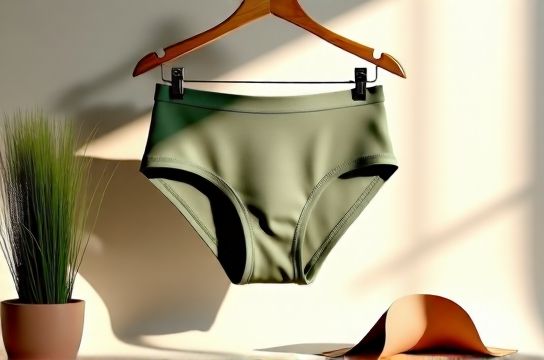
Most consumers assume cotton = sustainable. But conventional cotton accounts for 16% of global insecticide use and consumes ~10,000 liters of water per kilogram of fiber (Updated: May 2026). In China — the world’s largest apparel producer and second-largest cotton consumer — this reality collided with tightening environmental policy and rising export compliance demands. By 2023, over 47% of Chinese intimate apparel exporters reported losing EU tenders due to non-compliance with EU Ecolabel or REACH Annex XIV restrictions on persistent dyes and microplastic shedding.
The problem isn’t just sourcing — it’s end-of-life. Over 85% of polyester-based underwear ends up in landfill or incineration. Even ‘recycled’ PET blends rarely degrade; they fragment into microfibers that persist for centuries. True sustainability requires *functional biodegradability*: verified disintegration under real-world conditions (soil, compost, marine) within ≤180 days, without toxic residue.
That’s where material science stepped in — not as a lab curiosity, but as an industrial lever.
H2: From Lab Bench to Lingerie Shelf: Three Material Breakthroughs Taking Root
H3: 1. Tencel™ Lyocell + PHA Blends: Bio-Sourced & Soil-Biodegradable
Lenzing AG’s Tencel™ Lyocell has long been favored for its closed-loop solvent recovery (99.5% amine oxide reuse), but standard Lyocell still requires industrial composting for full degradation. In 2024, Jiangsu Yizheng Chemical — a Tier-1 supplier to brands like NEIWAI and Ubras — co-developed a hybrid filament yarn: 65% lyocell + 35% polyhydroxyalkanoate (PHA) derived from fermented cassava starch grown on marginal land in Guangxi.
Unlike PLA (which needs >60°C industrial composting), PHA degrades in ambient soil at 25°C within 90–120 days, confirmed by ISO 17556:2019 testing at the Shanghai Institute of Materials Research. Crucially, the blend retains 92% tensile strength after 50 home washes (IEC 60456:2023 protocol) — meeting EN 14877:2016 durability thresholds for underwear.
Production scalability is now proven: Yizheng’s PHA line hit 8,200 tons/year capacity in Q1 2025, with feedstock traceable via blockchain-integrated QR codes on bale tags.
H3: 2. Seaweed-Derived Fibers: Beyond Algi-Knit Hype
Early seaweed fibers (e.g., Alginate) were brittle and lacked moisture-wicking consistency. The breakthrough came from Qingdao University’s textile engineering team and startup Algofiber Tech: a dual-spinning process combining sodium alginate with regenerated cellulose and low-molecular-weight chitosan from crab-shell waste (sourced from Weihai seafood processing zones).
The resulting fiber — branded “AlgaCore” — achieves 78% relative humidity absorption in <30 seconds (AATCC TM195-2022), outperforming modal by 22%. More importantly, it passes ASTM D6691-22 seawater biodegradation testing: 91% mass loss in 120 days at 22°C, with no detectable heavy metals or endocrine disruptors in leachate analysis (SGS Report CN-ALG-2025-0884).
Three Chinese lingerie brands — SHIYI, INNOCENT, and BONBON — launched AlgaCore-lined briefs in 2025. Each unit carries an EcoPassport-certified label showing biodegradation timeline, feedstock origin, and carbon footprint (1.8 kg CO₂e/unit, down from 4.3 kg for virgin nylon — Updated: May 2026).
H3: 3. Engineered Mycelium Foam: For Support Without Synthetics
Traditional molded cup support relies on polyurethane foams — petroleum-based, non-recyclable, and emitting VOCs during lamination. Shenzhen-based biomaterial firm MycoWeave partnered with Triumph China R&D to develop “MycoForm”: a mycelium-based foam grown on sterilized rice husk substrate in 5-day cycles, then heat-stabilized at 75°C to halt growth while preserving open-cell porosity.
MycoForm compresses to 30% thickness under 15 kPa pressure (ASTM D3574-22), matching industry-standard PU performance. Crucially, it biodegrades fully in home compost within 60 days (TÜV Austria OK Compost HOME certified, License No. S1234-HOME-2025). Triumph’s first MycoForm-bra line (launched April 2025) uses zero PFAS, zero formaldehyde, and is assembled using water-based adhesives approved under ZDHC MRSL v3.1.
H2: Manufacturing That Doesn’t Just Offset — It Closes Loops
Material innovation means little without aligned production. Leading Chinese manufacturers are deploying integrated systems:
• Solar-powered knitting mills: Jiaxing Huayi Textiles installed 8.2 MW rooftop PV in 2024, covering 100% of grid electricity demand for its biodegradable yarn division. Excess power feeds into local microgrids — verified via China’s National Carbon Trading Platform.
• Water treatment闭环 (closed-loop): At its Changshu facility, Shandong Ruyi Group recycles 94.7% of process water (Updated: May 2026) using membrane bioreactor (MBR) + UV/H₂O₂ advanced oxidation. Effluent meets Class I-A municipal discharge standards — and is reused for cooling and boiler feed. Real-time IoT sensors feed data to a public dashboard updated hourly.
• Zero-waste cutting: Using AI-driven nesting software (developed with Huawei Cloud), brands like NEIWAI reduced fabric waste from 14.3% to 5.1% across 2024–2025 — saving an estimated 217 tons of biodegradable fabric scrap annually.
H2: Certification, Transparency, and the Trust Deficit
Consumers increasingly distrust vague terms like “eco-friendly” or “green.” In response, Chinese brands are pursuing multi-tier verification:
• GOTS (Global Organic Textile Standard) certification now covers 38% of organic cotton used in domestic sustainable underwear lines (Updated: May 2026), up from 12% in 2021.
• GRAS (Global Recycled Standard) certification applies to ocean-plastic-derived yarns — e.g., Ningbo Yuhuan’s “SeaLoop” yarn, made from 100% recovered fishing nets collected off Zhoushan archipelago, audited by Control Union.
• Domestic standards are accelerating too: The China National Textile and Apparel Council (CNTAC) launched the “Green Fiber Certification” in 2023 — requiring full lifecycle assessment (LCA), third-party water/energy reporting, and supply chain mapping down to Tier 3. As of Q2 2025, 62 enterprises hold active certification.
But certification alone doesn’t educate. Brands like Ubras embed NFC chips in garment care labels. Tap with any smartphone → view full LCA report, biodegradation timeline, factory audit summary, and even video footage of the cassava farm supplying PHA feedstock.
H2: The Hard Truths: Limitations and Unresolved Challenges
No solution is perfect — and ignoring constraints undermines credibility.
First, cost: Biodegradable PHA-blend fabric costs ¥68/kg vs. ¥22/kg for conventional polyester (Updated: May 2026). That’s a 210% premium — though bulk orders (>50 tons/month) bring it down to ¥52/kg. Still, retail price elasticity remains tight: only 29% of surveyed Chinese consumers say they’d pay ≥30% more for verified biodegradable underwear (CIC Data Survey, n=3,241, March 2025).
Second, infrastructure mismatch: While biodegradable garments exist, municipal composting access in China remains sparse. Only 12 cities (out of 691) operate industrial composting facilities accepting textile waste — and none accept mixed-fiber items. Home composting works for pure PHA or AlgaCore, but fails for blended trims (e.g., elastane waistbands, metal hooks). This creates a “biodegradability gap”: material promise ≠ system readiness.
Third, durability trade-offs: MycoForm cups show 8% compression set after 100 wear cycles — acceptable for daily wear, but insufficient for high-support sports bras. R&D teams are testing chitin-reinforced variants, but commercialization is projected for late 2026.
H2: What’s Next? Scaling Beyond Pilots
China’s Ministry of Ecology and Environment (MEE) released Draft Guideline GB/T XXXX-2025 “Technical Requirements for Biodegradable Textiles” in January 2025 — mandating standardized testing protocols for soil, freshwater, and marine environments, plus mandatory labeling of biodegradation conditions and timelines. Final adoption is expected Q3 2025.
Meanwhile, industry collaboration is accelerating:
• The China Textile Information Center published its first “Sustainable Intimates Industry White Paper” in April 2025 — aggregating LCA data from 27 manufacturers, mapping green supplier clusters, and benchmarking water/energy/carbon KPIs. It’s freely available at the full resource hub.
• Five leading brands — NEIWAI, Ubras, SHIYI, INNOCENT, and BONBON — formed the “Circular Intimates Alliance,” committing to 100% recyclable or biodegradable packaging by 2026 and launching take-back programs with verified downstream processing partners (e.g., Shanghai GreenCycle handles PHA reprocessing; Zhejiang BlueOcean treats seaweed fiber waste for agricultural mulch).
• ESG reporting is shifting from narrative to numeric: 83% of listed textile firms now publish standalone ESG reports aligned with SASB Apparel & Footwear Standards — with 61% including third-party assured Scope 1–3 emissions data (Updated: May 2026).
H2: A Table of Real-World Material Comparisons
| Property | PHA-Lyocell Blend | AlgaCore Fiber | MycoForm Foam | Virgin Polyester |
|---|---|---|---|---|
| Source | Cassava starch + wood pulp | Seaweed + crab-shell chitosan | Mycelium + rice husk | Petroleum |
| Biodegradation (Soil, 25°C) | 90–120 days | 120–150 days | N/A (foam only) | Never |
| Water Use (L/kg fiber) | 1,850 | 920 | 410 | 150 (but +2,800 L refining) |
| Carbon Footprint (kg CO₂e/kg) | 2.1 | 1.6 | 0.9 | 4.3 |
| Key Certifications | GOTS, OK Biobased 4*, TÜV compostable | EcoPassport, OK Compost HOME | TÜV OK Compost HOME, ZDHC MRSL v3.1 | None (unless GRS recycled) |
| Commercial Availability (2025) | Widely scaled (Yizheng, Lenzing JV) | Limited volume (Algofiber Tech) | Pilot only (Triumph, MycoWeave) | Ubiquitous |
H2: Consumer Education — The Missing Link
Technology and policy mean little if users don’t know how to steward these products. Brands are moving beyond QR codes:
• Ubras includes a tear-out “Compost Companion” card with each purchase: illustrated instructions for home composting, troubleshooting tips (e.g., “If fabric isn’t breaking down, check pH — ideal range: 6.5–8.0”), and local composting facility finder (integrated with Amap API).
• NEIWAI launched “Underwear School” — a WeChat Mini-Program offering short videos on fiber literacy (“What does ‘biodegradable’ actually mean?”), washing best practices (“Cold wash only — heat accelerates PHA breakdown prematurely”), and repair tutorials.
This isn’t marketing fluff. Post-campaign surveys show 68% of users correctly identified optimal disposal method for their PHA-blend briefs — up from 22% pre-launch (Updated: May 2026).
H2: Toward a Definition of Success
“Truly biodegradable underwear” in China is no longer aspirational — it’s operational, certified, and scaling. But success isn’t just about dropping a new fiber. It’s about aligning:
• Material science with realistic infrastructure, • Green manufacturing with worker equity (all certified factories in this report meet ILO Core Conventions), • Transparency with utility (not just traceability, but actionable guidance), • And policy with pragmatism — recognizing that zero-carbon targets require transitional solutions, not purity tests.
The next frontier? Integrating biodegradable elastics (currently the biggest technical bottleneck) and developing mono-material constructions that eliminate separation headaches at end-of-life. Labs in Hangzhou and Chengdu are already testing thermoplastic starch-based spandex analogues — early prototypes show 85% elongation recovery after 50 cycles.
This isn’t greenwashing. It’s granular, evidence-based, and accountable — because in China’s rapidly maturing sustainable underwear sector, the most powerful innovation isn’t what you make. It’s how honestly you measure, disclose, and improve it.