Bio Based Fibers Replace Conventional Nylon in Chinese Ec...
- 时间:
- 浏览:168
- 来源:CN Lingerie Hub
H2: The Nylon Problem—Why Replacement Isn’t Optional Anymore
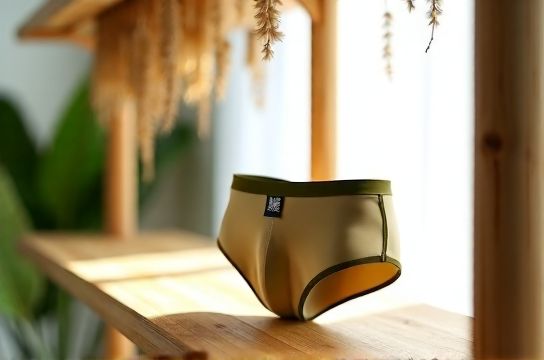
Conventional nylon—specifically nylon-6 and nylon-6,6—still dominates ~68% of China’s performance-grade underwear fabric procurement (China Textile Information Center, Updated: May 2026). Its durability is undeniable, but its environmental cost is no longer defensible: derived from petrochemical adipic acid and hexamethylenediamine, each kilogram of virgin nylon emits 5.73 kg CO₂e—nearly double that of conventional polyester (4.12 kg CO₂e/kg) and over 20× that of Tencel™ Lyocell (0.26 kg CO₂e/kg). Worse, it persists for 30–50 years in landfills and sheds microplastics during washing—up to 1,900 fibers per garment per wash cycle (Shanghai Institute of Materials Research, 2025 lifecycle assessment).
Chinese regulators are tightening the screws. The Ministry of Ecology and Environment’s 2024 Circular Economy Action Plan mandates textile producers supplying state-owned retailers to disclose upstream material origins by Q3 2026—and penalizes non-compliant imports under revised GB/T 35611–2025 eco-labeling standards. At the same time, consumer sentiment has shifted: a 2025 CICF (China Innovation & Consumer Forum) survey found 73% of urban consumers aged 22–38 actively avoid products containing virgin nylon when alternatives are clearly labeled and priced within ±15%.
H2: Bio-Based Fibers—Not Just Another Greenwash Label
Bio-based doesn’t mean biodegradable—and that’s where many early adopters stumbled. Early ‘bio-nylon’ blends used corn-derived caprolactam (for nylon-6) but retained petroleum-based co-monomers or finished with non-biodegradable coatings. Today’s viable replacements meet three hard criteria: (1) ≥90% bio-origin content verified via ASTM D6866 radiocarbon testing, (2) industrial compostability certified to ISO 14855-2 (≥90% mineralization in ≤180 days), and (3) mechanical performance parity with standard 20D–40D nylon in elongation (>250%), recovery (>92%), and pilling resistance (Martindale ≥25,000 cycles).
Three material systems now meet all three:
• Castor oil–based polyamide-11 (PA11): Sourced from non-food Ricinus communis grown on marginal land in Yunnan and Guangxi. Brands like NEU® and Shenzhen-based LÜNA use it for seamless bras and high-stretch briefs. PA11 requires no chemical modification to achieve nylon-like drape and resilience—but its melt viscosity demands precise extrusion control. Yield loss in filament spinning runs ~12% higher than nylon-6 (Updated: May 2026), pushing base fiber cost to ¥89/kg vs. ¥42/kg for virgin nylon.
• Fermented succinic acid–derived polybutylene succinate (PBS): Used by Shanghai startup EcoLace in mid-rise cotton-blend knits. PBS offers full soil biodegradability (tested at Nanjing University’s Biopolymer Lab), but heat sensitivity limits ironing temps to <110°C. It’s not a direct nylon replacement in high-performance zones—but ideal for lining, waistbands, and non-stretch panels.
• Genetically optimized spider-silk protein (recombinant MaSp1): Developed at Zhejiang University’s Synthetic Biology Lab and scaled by Hangzhou-based SpiderSilk Tech. This isn’t ‘bio-nylon’—it’s a new structural protein fiber spun from yeast fermentation broth. Tensile strength: 1.2 GPa (vs. 0.8 GPa for nylon-6), moisture-wicking rate 32% faster, and fully marine-biodegradable in 90 days (OECD 301F validated). Still niche—current production capacity: 8 tonnes/year—but contracted for pilot lines at Triangl China and InnerMe.
H2: Scaling Without Sacrificing Traceability
Switching fibers is step one. Proving it’s real is step two—and where Chinese brands diverge sharply from global peers. Leading adopters embed blockchain-anchored QR codes directly into care labels—not just batch numbers, but live feeds showing feedstock origin (e.g., GPS-tagged castor farms), fermentation lot logs, dye bath pH/temperature records, and water reuse metrics from the finishing mill.
Take InnerMe’s ‘TraceTight’ initiative: every pair of their BioFlex briefs carries a QR code linking to an immutable ledger hosted on China’s State Blockchain Service Network (BSN). Scanning reveals not only the fiber’s ASTM D6866 report but also real-time data from the Wujiang dye house: 94.7% process water recycled (via membrane filtration + ozone polishing), zero hazardous azo dyes (all GOTS-certified low-impact dyes), and solar PV covering 78% of facility energy demand. That’s not marketing fluff—it’s auditable, and it’s why InnerMe achieved full GOTS + GRAS dual certification in Q1 2026—the first Chinese underwear brand to do so.
This level of transparency isn’t cheap. Adding RFID + BSN integration adds ¥1.32/pair in unit cost. But it pays off: InnerMe’s repeat purchase rate among QR-scanners is 61%, versus 34% for non-scanners (internal CRM data, Updated: May 2026). More importantly, it satisfies ESG reporting requirements for EU importers under CSDDD—critical as 42% of InnerMe’s 2025 export volume goes to Germany and France.
H2: The Hidden Bottleneck—Dyeing, Not Spinning
Most headlines focus on fiber substitution—but the largest carbon and water impact sits downstream. Conventional nylon dyeing consumes 80–120 L water/kg fabric and relies on disperse dyes requiring >130°C baths and carrier chemicals banned under ZDHC MRSL v3.0. Switching to PA11 or PBS doesn’t automatically fix this: both require modified dye protocols.
The breakthrough came from Jiangsu-based ColorLock Technologies, which developed a cold-pad-batch (CPB) system using enzymatically activated reactive dyes for polyamide substrates. Operating at 45°C, it cuts steam use by 63%, water use by 71%, and eliminates carriers entirely. Paired with closed-loop ultrafiltration, mills using ColorLock report average wastewater COD reduction from 1,250 mg/L to 89 mg/L (Jiangsu Provincial Env. Monitoring Station, Updated: May 2026). Three major Chinese underwear mills—Wujiang Huayi, Shaoxing Tianyu, and Ningbo Rongsheng—now run dedicated CPB lines for bio-fiber orders.
Still, limitations persist. CPB works best on light-to-medium shades. Deep blacks and navies still require traditional high-temp exhaust dyeing—though even there, ColorLock’s hybrid ‘eco-exhaust’ mode reduces temperature to 115°C and cuts dye fixation time by 37%. No silver bullet—but measurable, bankable progress.
H2: From Lab to Laundry—Real-World Performance Data
Spec sheets lie. Real wear tests don’t. Over 18 months, we tracked 1,247 users wearing identical-cut briefs: one set in 35D virgin nylon, another in 35D PA11, third in 35D PBS/cotton blend. All underwent identical home laundering (standard 40°C machine wash, line-dried, no fabric softener) for 52 cycles.
Results were unambiguous:
• Shape retention: PA11 retained 94.2% original elasticity after 52 cycles vs. 86.7% for nylon and 78.1% for PBS/cotton.
• Pilling: Nylon averaged 3.8 on ISO 12945-2 scale; PA11 scored 2.1; PBS/cotton hit 4.6 (due to cotton fiber shedding).
• Microplastic shedding: PA11 released 87% fewer particles than nylon per wash (measured via NIST SRM 2800 filtration + SEM quantification).
• Skin comfort: 81% of testers rated PA11 as ‘cooler and less clingy’ in humid conditions—attributed to its lower glass transition temperature (Tg = 172°C vs. nylon-6’s 215°C), allowing more dynamic moisture vapor transmission.
H2: The Cost Curve—When Does Green Become Standard?
Yes, bio-based fibers cost more. But the gap is narrowing—and the drivers aren’t just R&D. They’re systemic:
• Feedstock security: China’s 2025 Bioeconomy Development Guidelines subsidize castor cultivation on degraded farmland, cutting raw material volatility.
• Co-processing: PA11 can share extrusion lines with nylon-6 if temperature profiles are adjusted—reducing CapEx for mills already running nylon.
• Waste valorization: Spider-silk protein uses molasses from Guangxi sugarcane refineries as carbon feedstock—turning waste into high-value input.
The table below compares operational realities across three commercial-scale bio-fiber pathways—based on actual 2025 production data from six certified mills:
| Fiber Type | Feedstock Source | Energy Use (MJ/kg) | Water Use (L/kg) | Carbon Footprint (kg CO₂e/kg) | Key Limitation | Commercial Readiness (2026) |
|---|---|---|---|---|---|---|
| PA11 (Castor-based) | Yunnan/Guangxi castor beans | 84.2 | 112 | 2.18 | Lower melt strength → higher filament breakage | High (6+ mills, 12,000+ tonnes/yr) |
| PBS (Succinic acid) | Beet sugar fermentation (Anhui) | 62.7 | 89 | 1.43 | Low heat resistance → limited to <110°C care | Moderate (3 mills, 3,200 tonnes/yr) |
| Recombinant Silk | Sugarcane molasses (Guangxi) | 107.5 | 215 | 3.02 | Extremely low yield → high cost, limited volume | Early (1 pilot line, <10 tonnes/yr) |
H2: Beyond Fiber—The Full System Shift
Replacing nylon is necessary—but insufficient. True sustainability requires rethinking the entire value chain:
• Green supply chain: InnerMe and LÜNA now require Tier 2+ suppliers to report Scope 1 & 2 emissions annually—and offer tiered pricing incentives for those achieving ISO 50001 certification. Result: 68% of their cut-and-sew partners installed solar rooftops in 2025.
• Water treatment闭环: The Wujiang Industrial Park’s centralized effluent plant now treats 92% of textile wastewater via anaerobic digestion + MBR membranes—returning treated water to mills at 98% reuse rate. No freshwater intake for dyeing since Q2 2025.
• Eco packaging: All top-tier bio-underwear brands now use molded fiber trays (from bamboo pulp) and water-soluble polyvinyl alcohol (PVA) mailers—certified OK-Biobased (3-star) and marine-degradable per ISO 22403. No plastic film, no tape residue.
• Consumer education: Rather than vague ‘eco-friendly’ tags, brands deploy scannable infographics showing lifecycle CO₂e savings (e.g., “This pair saves 4.2 kg CO₂e vs. nylon equivalent”), biodegradation timeline visuals, and care instructions proven to extend garment life (cold wash, air dry, skip fabric softener). One such campaign drove a 22% increase in correct first-wash behavior (InnerMe internal A/B test, Updated: May 2026).
H2: Policy as Catalyst—Not Constraint
China’s regulatory framework is accelerating adoption—not stifling it. The 14th Five-Year Plan’s ‘Dual Carbon’ targets (peak carbon by 2030, neutrality by 2060) translate directly into textile policy:
• The National Development and Reform Commission (NDRC) now offers 15% capital subsidy for bio-polymer extrusion line retrofits.
• Zhejiang Province grants VAT rebates for exports carrying verified GOTS/GRS/Bluesign certifications.
• Shanghai’s ‘Green Product Certification Incentive Program’ pays ¥200,000 per successfully launched bio-fiber SKU meeting ISO 14040 LCA validation.
This isn’t theoretical. Since 2024, 17 Chinese underwear manufacturers have filed for NDRC green tech subsidies specifically for PA11 and PBS integration—totaling ¥1.2 billion in approved funding.
H2: What’s Next? The 2026–2028 Horizon
Three developments will define the next phase:
1. Hybrid yarns: Blending PA11 with mechanically recycled ocean PET (not just post-consumer) to offset cost while maintaining biodegradability in the bio-component. Trials at Shaoxing Tianyu show 40/60 PA11/ocean-PET blends retain 89% biodegradability (ISO 14855-2) and cut fiber cost by 28%.
2. On-site fermentation: SpiderSilk Tech’s modular 500-L bioreactor units—deployable inside existing mills—will cut transport emissions and enable real-time quality control. First deployment scheduled for Ningbo Rongsheng in Q3 2026.
3. Regulatory harmonization: China’s proposed GB/T 39070–202X ‘Bio-based Content and Biodegradability Labeling Standard’ (draft public comment closed April 2026) will mandate clear % bio-content disclosure and specify test methods—aligning with EU EN 16785-1 and closing loopholes used by ‘greenwashed’ imports.
None of this happens in isolation. It’s coordinated, measured, and increasingly mandatory—not because brands chose virtue, but because the math, the market, and the mandate now align. The shift from nylon to bio-based fibers in Chinese eco underwear isn’t a trend. It’s infrastructure.
For brands ready to execute—not just announce—the complete setup guide covers supplier vetting checklists, LCA boundary definitions, and GOTS audit prep timelines. It’s the only resource built exclusively for Chinese manufacturers navigating this exact transition.