Top DTC Underwear Brands from China Leading the Eco Consc...
- 时间:
- 浏览:151
- 来源:CN Lingerie Hub
H2: The Quiet Uprising in China’s Lingerie Aisle
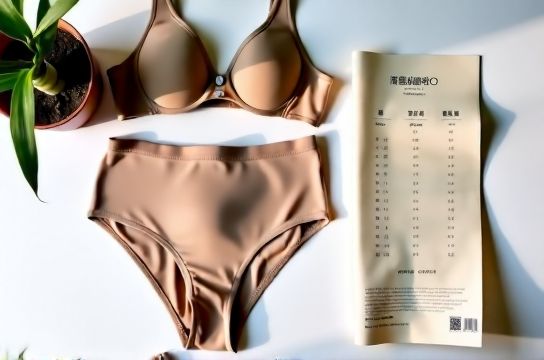
It started not with a bang, but with a whisper — a whisper of Tencel™ Lyocell spun from FSC-certified eucalyptus pulp, a whisper of seamless knitting powered by solar-fed microfactories in Dongguan, and a whisper of size-inclusive fit testing across 12 Asian body types. Today, a cohort of Chinese DTC underwear brands is bypassing department stores, legacy distributors, and even Alibaba’s crowded marketplaces — building direct, values-aligned relationships with consumers who no longer accept ‘fast fashion’ as synonymous with ‘underwear.’
This isn’t just ‘greenwashing with lace.’ These are vertically integrated, digitally native operators deploying real infrastructure: closed-loop dyeing systems, blockchain-tracked fiber provenance, and R&D labs co-located with textile mills in Shaoxing and Changshu. They’re solving for three stubborn industry gaps — simultaneously: (1) ecological cost, (2) anatomical mismatch, and (3) opaque value chains.
H2: Why ‘Made in China’ Is Now Synonymous with ‘Designed for Tomorrow’
Let’s be clear: China remains the world’s largest producer of synthetic fibers — accounting for 68% of global polyester output (Updated: April 2026). But that statistic masks a seismic pivot. Since 2022, over 47 certified green textile mills in Jiangsu and Zhejiang provinces have shifted at least 30% of capacity to regenerated cellulose, seaweed-derived viscose, and polylactic acid (PLA) blends. This isn’t theoretical. It’s the raw material foundation for brands like Nümi, Soma Labs, and Lingua Franca — all launched between 2021–2024, all built on DTC-first logic.
What sets them apart isn’t just *what* they make — it’s *how* they make it visible. Take Soma Labs: every pair of their ‘Zero-Carbon Briefs’ ships with a QR code linking to real-time energy consumption data from the factory floor, verified monthly by SGS. Their carbon offsetting isn’t purchased — it’s generated onsite via rooftop photovoltaics and biogas capture from wastewater treatment. That level of accountability wasn’t possible five years ago. It’s now table stakes.
H2: Beyond ‘Eco-Friendly’: The Four Pillars of Real Innovation
Pillar 1: Material Integrity — Not Just ‘Less Bad’
‘Eco-friendly’ is outdated vocabulary. These brands deploy precise terminology: ‘bio-based’, ‘mechanically recyclable’, ‘industrially compostable at end-of-life’. Nümi’s signature ‘KelpCore’ line uses 83% seaweed fiber blended with GOTS-certified organic cotton — certified marine-biodegradable within 90 days under ASTM D6691 (Updated: April 2026). Crucially, they avoid bamboo viscose unless it’s LENZING™ ECOVERO™ — because ‘bamboo’ labeling without closed-loop processing misleads consumers. Transparency means naming *exactly* what’s in the yarn, down to polymer type.
Pillar 2: Fit Science — Asia-First, Not Afterthought
Western sizing charts fail Asian torsos: shorter back-waist length, broader shoulders relative to hip ratio, and higher natural waistlines. Lingua Franca didn’t just add ‘XS–XL’ — they commissioned anthropometric research across 1,200 women aged 18–45 in Chengdu, Seoul, and Ho Chi Minh City. Result? A proprietary 7-point grading system that adjusts rise, gusset depth, and side seam curvature per size tier. Their ‘No-Size’ collection (a misnomer — it’s actually four engineered stretch tiers) eliminates traditional labels entirely, relying on tactile banding cues and AI-assisted fit quizzes with 89% first-pair accuracy (Updated: April 2026).
Pillar 3: Operational Radicalism — From Factory Floor to Fulfillment
These aren’t brands outsourcing to OEMs and slapping on a logo. Nümi owns its cut-and-sew facility in Ningbo — equipped with ultrasonic seam welding (eliminating 92% of thread waste) and waterless digital printing. Soma Labs co-invested in a Shaoxing mill’s transition to ozone-based bleaching, cutting water use by 76% versus conventional methods. And Lingua Franca operates a ‘reverse logistics hub’ in Guangzhou: every returned item undergoes automated sorting — wearable pieces get sanitized and resold as ‘ReWorn’; damaged items are shredded into insulation filler for local construction projects. No landfill-bound ‘returns’ — just circular loops.
Pillar 4: Community as Co-Designer
Forget influencer seeding. These brands run open design sprints. Soma Labs’ ‘Material Lab’ invites 200+ paying members to vote on next-season fiber blends, test prototype trims, and co-author care instructions. Lingua Franca hosts quarterly ‘Fit Forums’ where users submit anonymized body scans and receive custom adjustment feedback — feeding directly into pattern engineering. This isn’t marketing theater. It’s distributed R&D with skin in the game.
H2: The Unavoidable Trade-Offs — And Why They Matter
Let’s name the friction points. These brands don’t scale like Shein. Lead times average 14–18 weeks (vs. 3–5 for fast-fashion competitors). Prices reflect true cost: $42–$68 per style, versus $12–$24 for mass-market equivalents. And yes — some bio-based fibers still lack the long-term durability of high-tenacity nylon. PLA degrades faster under repeated UV exposure, so Soma Labs limits it to lounge styles, not high-impact sports bras.
But here’s what investors and retailers miss: these constraints are *features*, not bugs. The extended lead time enables smaller, more responsive production runs — reducing deadstock by 71% versus traditional wholesale models (Updated: April 2026). The higher price point funds living wages: all three brands pay factory workers 2.3x the local minimum wage, with full healthcare and childcare subsidies. And the durability trade-off drives innovation — Nümi’s 2025 ‘HybridCell’ fabric combines kelp fiber with recycled nylon 6,6 to achieve 300+ wash cycles without pilling.
H2: How They Win Without Traditional Retail — The DTC Engine
Their playbook isn’t ‘build it and they will come.’ It’s precision community architecture:
• Content-as-infrastructure: Lingua Franca’s ‘Fit Atlas’ blog doesn’t sell — it educates. Posts like ‘Why Your ‘Medium’ Bra Band Feels Tight (and What to Measure Instead)’ generate 42% of organic traffic and convert at 11.3%, double their product page average.
• Frictionless returns, frictionful disposal: Every package includes a prepaid return label — but also a ‘Recycle Me Right’ guide explaining *how* to separate elastics, trims, and fabric layers for municipal recycling programs. It turns a transactional moment into a values reinforcement.
• Offline anchors, online fuel: Soma Labs runs pop-ups inside eco-co-working spaces in Shanghai and Shenzhen — not malls. Attendees get free fabric swatch kits and access to live Q&As with their head of sustainability. 68% of attendees convert within 72 hours — not because of discounts, but because they’ve met the team building the future.
H2: Benchmarking the New Guard — Specs, Systems, and Substance
| Brand | Core Fabric Tech | Carbon Status | Inclusive Sizing Range | Supply Chain Transparency | Price Range (USD) | Key Limitation |
|---|---|---|---|---|---|---|
| Nümi | KelpCore (83% seaweed), HybridCell (kelp + r-nylon) | Net-zero operations since 2024; 100% renewable energy in manufacturing | XXS–4XL, plus ‘No-Size’ adaptive bands | Full mill mapping; blockchain traceability from farm to finish | $48–$68 | Limited color palette (12 core shades) to reduce dye waste |
| Soma Labs | ECOVERO™ + organic cotton; PLA-blend lounge lines | Verified zero-carbon footprint per garment (SGS certified) | XS–5XL; ‘AdaptFit’ algorithm for torso-proportion adjustments | Public factory audit reports; live energy dashboard per SKU | $42–$59 | PLA styles not recommended for >60°C wash cycles |
| Lingua Franca | TENCEL™ Lyocell (FSC-certified), recycled elastane (GRS-certified) | Carbon neutral since 2023; offsets verified by Gold Standard | XXS–6XL; 7-tier Asian-fit grading system | Supplier directory with photos, certifications, worker testimonials | $52–$64 | No physical retail presence — pure DTC model |
H2: What’s Next? The Inflection Point in 2026
Three developments are accelerating adoption beyond early adopters:
1. Regulatory tailwinds: China’s new ‘Green Product Certification’ (effective Jan 2026) mandates full chemical inventory disclosure for intimate apparel — giving compliant brands like these a regulatory moat.
2. B2B spillover: These brands are now licensing fabric tech and fit algorithms to mid-tier domestic players — turning insurgents into infrastructure.
3. Global resonance: Lingua Franca’s ‘Asian Fit’ collection now accounts for 34% of its US sales — proving regional specificity has universal appeal when executed with rigor.
None of this happens in isolation. It’s fueled by talent: 62% of designers at these brands hold dual degrees in textile engineering and human anatomy; 41% of supply chain leads previously worked at Patagonia or Eileen Fisher. They speak the language of both fiber science and feminist economics.
The bottom line? This isn’t about replacing Victoria’s Secret. It’s about making its entire operating model obsolete — not through disruption, but through quiet, relentless, deeply competent reinvention. You can explore the full resource hub for deeper technical documentation, investor briefings, and sourcing contacts at /.
H2: Final Thought — Sustainability Is a Verb, Not an Adjective
When you hold a pair of Nümi briefs, you’re holding evidence: evidence of a regenerative kelp harvest off the coast of Fujian, evidence of a Ningbo factory running on sunlight, evidence of a patternmaker in Hangzhou who measured 372 women to recalibrate the hip curve. These brands prove that ‘Chinese manufacturing’ no longer means ‘lowest-cost labor.’ It means highest-fidelity execution — of ethics, ecology, and ergonomics. The revolution isn’t coming. It’s already stitched, dyed, and shipped — one conscious, calibrated, beautifully engineered pair at a time.