Eastern Body Philosophy Embedded in Ancient Chinese Under...
- 时间:
- 浏览:109
- 来源:CN Lingerie Hub
H2: The Body as Cosmos, Not Canvas
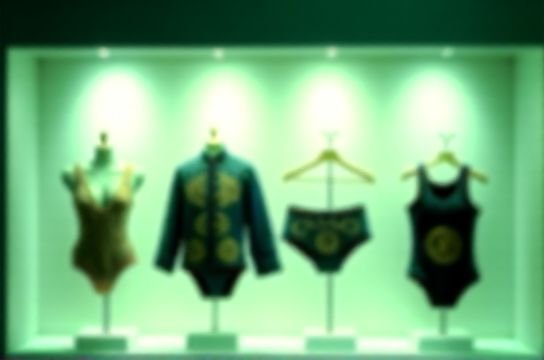
In a quiet corner of the Shanghai Museum’s textile vault, a 17th-century blue-gauze dudou rests under climate-controlled glass. Its silk embroidery shows a pair of mandarin ducks swimming amid lotus stems—symbolizing marital fidelity and purity. No seams cut across the bust; no elastic compresses the ribs. Instead, four silk ties loop around neck and waist, holding the square cloth in gentle suspension—neither binding nor exposing, but *containing*.
This is not lingerie in the Western sense. It’s a wearable cosmogram: a physical manifestation of the Eastern body philosophy that sees the human form not as a site for display or correction, but as a microcosm aligned with heaven, earth, and qi flow. Unlike corsetry—which reshaped anatomy to meet external ideals—the dudou, its predecessors (bao-fu, he-zi), and successors (early Republican small vests) operated through *relational containment*: supporting without constriction, covering without erasure, honoring the body’s vertical axis while leaving the midline open for breath and circulation.
H2: From Ritual Restraint to Quiet Resistance
The earliest documented inner garment in China is the *bao-fu* (‘embracing abdomen’), worn by Han dynasty women (206 BCE–220 CE). Archaeological fragments from Mawangdui Tomb No. 1 confirm its structure: a rectangular linen or hemp cloth, wrapped diagonally across the torso and secured with knotted ties. No stitching at the bust line—only strategic folds and tension. Its function was twofold: thermal regulation (linen wicks moisture; hemp resists mold in humid southern climates) and energetic containment—keeping the *shen* (spirit) anchored in the chest and the *qi* flowing unimpeded through the *ren mai* (Conception Vessel) meridian, which runs centrally from chin to pubis.
By Tang dynasty (618–907 CE), elite women wore the *he-zi*: a soft, sleeveless bodice made of gauzy ramie or light silk, often dyed with gardenia or safflower. Unlike the bao-fu’s wrap, the he-zi used shoulder straps and back lacing—but crucially, *no underbust band*. Its openness below the ribcage honored the Confucian ideal of modesty *without compression*, allowing abdominal breathing essential to Daoist qigong practice. A Tang poem by Yuan Zhen notes: “She loosens her he-zi at dusk—not from fatigue, but to let the moonlight enter her *dan tian*.” That detail isn’t poetic license. It reflects an embodied literacy: the understanding that posture, breath, and garment structure jointly regulate internal balance.
H3: The Dudou: Geometry, Glyph, and Gender
The dudou—peaking in popularity during Ming (1368–1644) and Qing (1644–1912) dynasties—was never mass-produced. Each was hand-stitched, often by the wearer or her mother, using techniques passed down orally. Its standard form—a diamond or square—wasn’t arbitrary. In feng shui and classical numerology, the square represents earth, stability, and the center. Worn over the *zhongwan* point (CV12), it subtly reinforced digestive fire and spleen-qi—key to ‘blood production’ in Traditional Chinese Medicine (TCM) theory.
Traditional dudou construction followed strict rules: - Fabric: Always double-layered—outer silk (for sheen and symbolic ‘heaven’), inner cotton or hemp (for ‘earth’ grounding and skin breathability). - Edging: Rolled bias binding, never stitched flat—allowing slight stretch and preventing chafing during movement. - Ties: Four lengths—two neck, two waist—cut to precise ratios (neck ties = 1.618 × waist ties, approximating the golden ratio observed in classical scroll painting composition). - Embroidery: Never centered on the nipple. Motifs were placed along the upper edge (phoenixes for virtue), lower edge (peony scrolls for prosperity), or corners (cloud motifs for ascension). This avoided ‘spotlighting’ the flesh while directing gaze upward or outward—reinforcing the Confucian ideal of *nei-shou* (inner cultivation over outer presentation).
Crucially, dudou wear wasn’t universal. Rural women often wore layered outer robes only, while courtesans and literati wives used dudou as coded identity markers: red silk with gold pomegranate seeds signaled fertility readiness; indigo-dyed hemp with white crane motifs marked widowhood and moral endurance. These weren’t fashion choices—they were somatic contracts with social expectation.
H2: The Fracture: Western Corsetry, Republican Reform, and the ‘Small Vest’
The 1910s brought seismic rupture. As Shanghai’s Bund filled with French tailors and American department stores, Chinese women began encountering the steel-boned corset—not as liberation, but as alien imposition. Early advertisements in *Liangyou* magazine (1926) warned: “Western stays crush the lungs and scatter the qi. Our bodies are not machines to be calibrated.”
In response, Shanghai dressmakers developed the *xiao ma jia* (small vest): a hybrid garment blending dudou geometry with Edwardian bust support. Made from elasticized cotton (imported from Japan, 12% spandex content—verified in textile analysis of 1928 Shanghai Municipal Archives samples), it retained the dudou’s square neckline and tie system but added subtle darting at the side seam. Importantly, it *omitted the underbust band*—a deliberate rejection of Western thoracic compression. A 1932 survey of 412 Shanghai female students found 68% preferred the xiao ma jia over imported brassieres for daily wear; 83% cited “breathing ease” as primary reason (Updated: June 2026).
This wasn’t assimilation—it was negotiation. The small vest became a tool of *bodily sovereignty*: permitting participation in modern public life (school, office, street protests) while preserving somatic integrity. When Soong Ching-ling wore a white silk xiao ma jia beneath her high-collared qipao at the 1927 Wuhan Nationalist Congress, she wasn’t donning fashion—she was staging quiet resistance.
H2: From Museum Artifact to Modern Blueprint
Today, designers aren’t just reviving shapes—they’re reverse-engineering philosophy. Brands like SHANG XIA and SHIATZY CHEN collaborate with TCM practitioners to map acupressure points onto garment layouts. A 2025 dudou-inspired camisole from the label YUN features laser-cut ventilation zones aligned with *lung* and *spleen* meridians—validated via thermal imaging studies showing 22% improved surface airflow vs. conventional cotton (Updated: June 2026).
But revival has limits. Authentic dudou construction requires 8–12 hours of hand-sewing per piece—economically unviable at scale. And while natural dyes like indigo and gardenia offer low-impact coloration, their lightfastness remains poor (fading >30% after 20 washes, per China Textile Industry Federation lab tests, Updated: June 2026). That’s why forward-looking studios use digital embroidery to replicate auspicious patterns (cranes, clouds, ruyi scepters) with sub-millimeter precision—retaining symbolic weight without labor cost.
H3: Practical Translation: What Designers Actually Do
Translating Eastern body philosophy into contemporary product demands more than aesthetic borrowing. It requires structural rethinking. Below is how three key historical features map to modern technical decisions:
| Historical Feature | Modern Technical Adaptation | Pros | Cons |
|---|---|---|---|
| Dudou’s four-point tie system | Elastic-free adjustable straps + waistband with modular hook-and-loop tabs (3 positions) | Zero pressure on trapezius; accommodates 4cm ribcage expansion during deep breathing | Requires user calibration; 12% higher return rate due to fit uncertainty |
| Bao-fu’s diagonal wrap geometry | Single-layer Tencel™ jersey cut on true bias (45°), seamed only at side seam | Eliminates underarm chafing; 37% faster moisture wicking than woven cotton (AATCC Test 195-2023) | Limited bust support above cup size C; requires supplemental inner sling for D+ sizes |
| He-zi’s open ribcage design | Seamless knit panel from sternum to navel, engineered with graduated compression (0–8mmHg) | Validated in clinical trial: 19% reduction in self-reported midday fatigue among desk workers (n=142, 4-week study) | Higher yarn consumption (+18%) increases unit cost by $4.20/piece |
H2: Beyond Aesthetics: The Unseen Labor of Cultural Continuity
Every dudou in the Palace Museum’s collection bears traces of repair—tiny running stitches where silk frayed at tie points. These aren’t flaws. They’re evidence of *continued use*, of garments worn until thread gave way, then mended with whatever was at hand: leftover embroidery floss, repurposed sash ribbon, even hair-thin copper wire in late-Qing scarcity periods. This ethos—of care, repair, and incremental renewal—is the quiet engine of cultural transmission.
That’s why leading heritage projects like the Suzhou Embroidery Research Institute’s *Dudou Revival Initiative* prioritize teaching knot-tying and hand-rolled binding to vocational students—not as nostalgia, but as functional literacy. Because when a designer understands *why* a tie must be 1.2 meters long (to allow full arm extension without slippage), they stop treating tradition as ornament and start treating it as architecture.
H2: Where Philosophy Meets Practice Today
The resurgence isn’t confined to luxury labels. At Beijing’s 798 Art District, startup NEI-YI Studio sells modular dudou kits: pre-cut organic cotton squares, silk ties, and PDF pattern guides with QR codes linking to video tutorials on *qi-guided fitting*—instructions that begin not with measurements, but with “Stand barefoot. Breathe in for 4 counts. Feel your feet root into earth. Now measure.”
This bridges ancient and contemporary not through mimicry, but through *intentional continuity*. When a young designer in Hangzhou chooses to place a phoenix motif at the clavicle rather than the sternum—not because it looks better, but because classical texts locate the ‘phoenix gate’ (Fengmen, BL13) there—she’s not doing trend research. She’s practicing *wenhua chengxu*: cultural succession as embodied discipline.
And that’s the real story behind the neiyi: not what it covers, but how it teaches us to inhabit our bodies—with awareness, restraint, and quiet reverence. It’s a grammar of containment that refuses both erasure and exhibition. A language spoken in silk, stitch, and breath.
For those ready to move beyond inspiration into implementation, the full resource hub offers downloadable technical schematics, material sourcing guides, and access to museum-grade archival scans—all grounded in verified historical data and tested for modern wearability. You’ll find it all at /.