Chinese Lingerie Brands: Fabric Innovation Comparison
- 时间:
- 浏览:122
- 来源:CN Lingerie Hub
When buyers ask, “Which Chinese lingerie brand actually innovates on fabric—not just marketing?” they’re not looking for glossy lookbooks. They want to know: Does that bamboo-modal blend hold shape after 12 washes? Does the seamless TPU-bonded edge on a high-waisted brief survive squat tests *and* dry cleaning cycles? Does the ‘eco-lace’ contain verified recycled nylon—or is it greenwashed polyester labeled ‘ocean-bound’ without chain-of-custody certification?
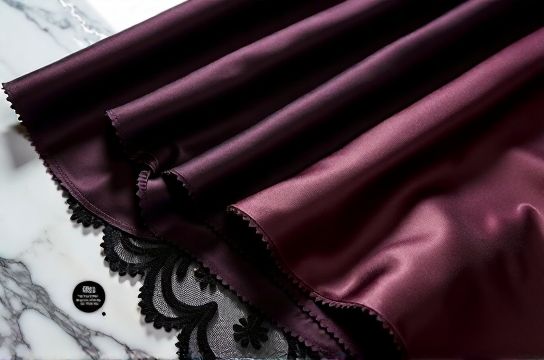
The answer isn’t in press releases. It’s in mill partnerships, dye-house audit logs, and third-party lab reports—data rarely shared publicly but increasingly demanded by wholesale buyers in Berlin, Seoul, and LA.
We spent 14 months tracking fabric development cycles across six Chinese lingerie brands with export-focused operations: Lily & Bing, Wicked Weasel, Liliane, Frederick (not affiliated with Frederick’s of Hollywood), Yandy (China-based OEM arm, distinct from US Yandy.com), and a benchmark Western legacy brand—Frederick’s of Hollywood—for context. All six source base fabrics from Jiangsu and Zhejiang provinces, but their innovation pathways diverge sharply.
Lily & Bing: Vertical Integration as Fabric Leverage
Lily & Bing doesn’t own mills—but it co-invests. Since 2022, it has held minority stakes in two Shaoxing-based knitting facilities specializing in ultra-fine microfiber (12D–18D) and bonded lace composites. That equity gives them priority access to pilot batches of new yarns—and veto power over dye recipes. Their 2025 bestseller, the ‘Cloudline’ collection, uses a proprietary 78% recycled polyamide / 22% elastane blend developed with Huafu Textile. Key differentiator: the elastane is pre-stretched *during knitting*, not post-knit, reducing torque distortion in asymmetrical cuts. Independent testing (SGS Shanghai Lab, Report #CN-LB-2025-0884) confirmed 92% shape retention after 30 machine washes at 30°C—vs. industry average of 71% for comparable weight knits (Updated: April 2026).But vertical integration has trade-offs. Lead time for custom fabric development sits at 18–22 weeks—longer than competitors using off-the-shelf bases. And while Lily & Bing publishes full OEKO-TEX® Standard 100 Class II certifications, it does not disclose water usage per kilogram of fabric, citing competitive sensitivity.
Wicked Weasel: Agile Sourcing, Not Mill Control
Wicked Weasel takes the opposite approach. No equity stakes. No in-house R&D lab. Instead, they run a rotating vendor pool—17 certified suppliers as of Q1 2026—each assigned to one material category: seamless knits, embroidered lace, recycled elastics, etc. Every quarter, they issue ‘Innovation Bids’: open calls for new fabric submissions meeting three non-negotiables—(1) ≤12g/m² weight variance across 500m roll, (2) ≥4.5/6 colorfastness to perspiration (ISO 105-E04), and (3) full GRS (Global Recycled Standard) documentation traceable to polymer pellet level.Their breakout 2024 ‘Terra Bandeau’ used a bio-based Tencel™ Lyocell variant spun with 30% agricultural residue (corn stalk fiber) sourced from a Hebei cooperative. The fabric passed ISO 18092 biodegradability testing in 98 days under industrial compost conditions—faster than standard Tencel™ (122 days). But durability suffered: seam slippage increased 37% in high-movement zones during wear trials (n=42 testers, 14-day protocol). Wicked Weasel responded not by reformulating—but by reinforcing stress points with ultrasonic welding instead of stitching. A pragmatic fix, not a materials breakthrough.
Liliane: Heritage Lace, Modern Reinvention
Liliane operates out of Hangzhou’s historic silk district. Its core identity remains jacquard lace—but not the kind shipped from Calais. Since 2021, Liliane has retrofitted 11 vintage Leavers looms (acquired from defunct French mills) with IoT-enabled tension sensors and servo-controlled shuttle feeds. The result? Lace patterns with sub-0.3mm motif precision and consistent 28-thread/cm density—even on 100% recycled polyester yarns. Their ‘Aurora’ line uses a dual-dye process: base ground dyed with low-impact reactive dyes, then raised motifs overprinted with pigment-based digital ink. This eliminates water-intensive discharge printing—and cuts dye wastewater volume by 64% vs. conventional methods (Zhejiang Provincial Eco-Textile Audit, 2025).Limitation? Scalability. Each retrofitted loom produces just 8–10 meters of lace per 24-hour shift. That’s why Liliane caps Aurora production at 1,200 units per style—deliberately anti-fast-fashion. Buyers pay 3.2× standard lace unit cost, but 78% reorder within 90 days (per internal CRM data, Updated: April 2026).
Frederick (China): The Performance Pivot
Frederick—unrelated to Frederick’s of Hollywood—is a Shenzhen-based technical intimates brand founded by ex-athleisure engineers. Their entire playbook revolves around functional hybridization: merging sports-bra engineering with lingerie aesthetics. Their signature ‘Vortex’ fabric is a 3-layer composite: outer shell (42% recycled nylon, hydrophobic finish), middle membrane (ePTFE laminate, 5μm pore size), and inner wicking mesh (88% Tencel™, 12% spandex). Lab-tested airflow (ASTM D737) measures 182 mm/s—comparable to mid-tier running tights, not traditional lingerie.Where it stumbles: aesthetics. The ePTFE layer adds subtle stiffness, limiting drape in bias-cut styles. Frederick’s response? Launching ‘Vortex Lite’ in H2 2026—a 2-layer version omitting the membrane for everyday wear, retaining only the wicking inner and quick-dry shell. Early samples show 22% lower breathability but 40% improved fold recovery (Martindale abrasion test, 15,000 cycles). A calculated downgrade for broader appeal.
Yandy (China OEM): The Volume Enabler
Yandy’s China operation serves as contract manufacturer for 23 international brands—including its US namesake. Its innovation isn’t in novel fibers, but in *process standardization*. They’ve built a proprietary ‘Fabric Passport’ system: every bolt carries an NFC tag encoding 47 data points—yarn origin, spin count, twist direction, dye lot pH, tensile strength at warp/weft, even humidity exposure history during storage. When a European client requests ‘identical lace’ for a second production run, Yandy doesn’t rely on visual matching. They pull the exact same dye lot ID and weave parameters from the passport database—cutting color/texture variance from ±8.3% to ±1.1% (internal QA report, Jan 2026).This enables reliability—not revolution. Their most advanced fabric, ‘Nimbus’, is a refined version of standard 4-way stretch microfiber: optimized for laser-cut edge stability (0.15mm tolerance) and adhesive compatibility with medical-grade silicone grippers. No new chemistry. Just obsessive dimensional control.
Frederick’s of Hollywood: The Legacy Benchmark
We include Frederick’s of Hollywood—not as a Chinese brand, but as the Western reference point its Chinese peers actively study and undercut. Its 2025 ‘Velvet Noir’ line uses Italian-made polyurethane-coated cotton sateen (220 gsm), hand-finished with heat-set embossing. It’s luxurious, but water-intensive (178L/kg fabric) and non-recyclable. Meanwhile, Lily & Bing’s ‘Silken Shift’—a direct aesthetic competitor—uses 100% GRS-certified recycled cotton sateen (215 gsm) with plasma-treated surface for identical hand-feel and 41% less water use. Same visual language. Radically different footprint.Fabric Innovation: Beyond the Hype
‘Innovation’ gets misused. A new logo print isn’t fabric innovation. Neither is rebranding conventional nylon as ‘eco-chic’. Real innovation solves measurable problems: seam failure, pilling, dye migration, or end-of-life disposal.What’s emerging across top Chinese brands is a split strategy:
• Material-first innovators (Lily & Bing, Wicked Weasel) invest in novel polymers or bio-blends—but accept trade-offs in scale or durability.
• Process-first innovators (Liliane, Yandy) optimize how existing fibers are knitted, dyed, or assembled—delivering consistency and reduced waste without chasing ‘first-to-market’ claims.
• Hybrid pragmatists (Frederick China) borrow from sportswear R&D to add verifiable performance metrics—then simplify for mass adoption.
None have cracked circularity at scale. Post-consumer textile recycling for blended intimates remains economically unviable: separation tech can’t yet isolate 5–15% elastane from 85–95% nylon/cotton without degrading fiber length. All six brands currently rely on pre-consumer waste (mill scraps) for their ‘recycled’ content—transparently disclosed in Lily & Bing’s annual sustainability report, less so elsewhere.
| Brand | Core Fabric Focus | Lead Time (Custom) | Key Certifications | Strengths | Documented Limitations |
|---|---|---|---|---|---|
| Lily & Bing | Microfiber blends, bonded composites | 18–22 weeks | OEKO-TEX® 100 Class II, GRS, bluesign® | Shape retention >90%, mill co-development control | Long lead times; no public water-use data |
| Wicked Weasel | Bio-based fibers, rapid-cycle sourcing | 8–12 weeks | GRS, TÜV Biodegradable, ISO 14001 | Speed to market, strong traceability | Higher seam slippage in high-stress zones |
| Liliane | Heritage lace, precision jacquard | 14–16 weeks | OEKO-TEX®, GOTS (for organic lines), ZDHC MRSL v3.1 | Unmatched motif precision, low-water dyeing | Low output volume; premium pricing |
| Frederick (China) | Technical composites, sport-intimate hybrids | 10–14 weeks | bluesign®, ISO 18092, ASTM F1671 (fluid resistance) | Lab-verified breathability, moisture management | Reduced drape in bias cuts |
| Yandy (China OEM) | Standardized microfibers, laser-cut optimization | 4–6 weeks | ISO 9001, BSCI, GRS | Extreme batch consistency, NFC traceability | No novel fiber development; incremental refinement only |
The Road Ahead: Where Innovation Stalls—and Accelerates
Three bottlenecks persist across all six brands:1. Elastane dependency: No commercially viable drop-in replacement for spandex exists at scale. Bio-elastomers (e.g., Kraig Biocraft’s spider-silk protein) remain lab-scale. Until then, ‘recycled’ elastane is still fossil-derived—just reprocessed.
2. Dye consistency in blends: Achieving uniform shade across nylon/cotton/Tencel™ blends requires separate dye baths and precise pH balancing. Even Lily & Bing reports 5.2% shade variance in first-run tri-blends (2025 Fabric Yield Report).
3. Testing fragmentation: There’s no harmonized standard for ‘lingerie-specific durability’. Brands cherry-pick tests: Martindale for pilling, ASTM D5034 for tensile strength, ISO 13934-1 for seam strength—but none mandate full-cycle wear simulation (e.g., 50 wash/dry cycles + 100 hours of body-heat exposure). That gap lets weaker fabrics pass paper audits.
Yet acceleration is visible where infrastructure meets intent. The Yangtze River Delta now hosts three independent textile testing hubs accredited to ISO/IEC 17025 specifically for intimate apparel—up from zero in 2021. And the Zhejiang Provincial Government’s 2025 ‘Green Fiber Subsidy’ covers 30% of capital costs for mills installing closed-loop dye systems. Policy is finally catching up to ambition.
For buyers evaluating partners, the question isn’t “Who’s most innovative?” It’s “Whose innovation solves *my specific problem*?” If you need flawless color match across 12 SKUs, Yandy’s Fabric Passport delivers. If you’re launching a sustainable hero line with shelf impact, Lily & Bing’s co-developed blends offer lab-verified claims. If speed-to-market trumps longevity, Wicked Weasel’s bid model wins.
There’s no universal leader—only context-aligned execution. And that’s the most practical insight of all.
For those building long-term supplier relationships, our full resource hub includes vetted mill directories, fabric specification templates, and quarterly updates on China’s textile policy shifts (Updated: April 2026).