Nei Yi Symbolism in Literature Art and Daily Life
- 时间:
- 浏览:208
- 来源:CN Lingerie Hub
H2: The Hidden Thread: Nei Yi as Cultural Archive
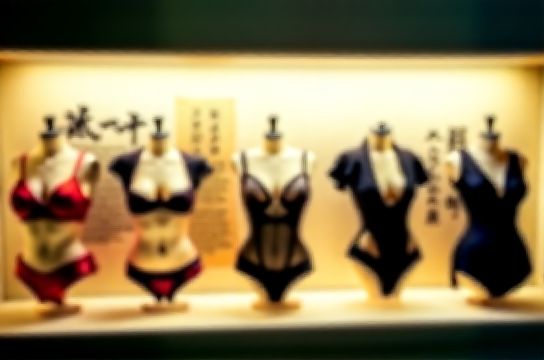
When museum conservators unroll a 17th-century silk dudou from the Suzhou Museum’s textile vault, they’re not handling mere undergarments — they’re holding layered manuscripts of gendered labor, cosmological belief, and quiet resistance. The term *Nei Yi* (literally "inner clothing") never appeared in imperial sumptuary codes — yet its forms shaped how bodies were disciplined, displayed, and dignified across dynasties. This isn’t costume history. It’s embodied epistemology.
Unlike Western corsetry — which externalized control through boning and lacing — traditional Chinese innerwear operated via *absence*: minimal structure, no rigid shaping, reliance on gravity, drape, and strategic tension. A dudou’s four ties didn’t compress; they anchored meaning. Its central square wasn’t just fabric — it was a micro-altar for auspicious symbols, a field for embroidery that encoded wishes for fertility, longevity, or scholarly success. That’s why Nei Yi symbolism persists not in fashion runways alone, but in novels like Eileen Chang’s *Half a Lifelong Romance*, where a character’s frayed dudou ribbon signals marital erosion long before dialogue confirms it.
H2: From Ritual Restraint to Silent Subversion
The earliest documented Nei Yi — the Han dynasty *baofu* ("embracing abdomen") — was linen or hemp, rectangular, tied at shoulders and waist. Its function was hygienic and modest, yes — but also ritual. As noted in the *Book of Rites*, abdominal coverage aligned with Confucian emphasis on the *dan tian* (lower abdomen) as the seat of vital qi. No embroidery. No ornament. Just calibrated coverage — a physical grammar of restraint.
By Tang dynasty, the *hezi* emerged: a soft, sleeveless bodice worn under low-cut ruqun robes. Made of gauzy ramie or thin silk, often dyed with plant-based indigo or safflower, it bore subtle cloud-and-crane motifs — referencing Daoist immortality — rather than overt eroticism. Its looseness wasn’t negligence; it was philosophical alignment: the body as vessel, not object.
Ming and Qing dudou escalated symbolic density. Now typically diamond- or lozenge-shaped, lined with cotton batting, edged with contrasting piping, and densely embroidered, the dudou became a woman’s first canvas for artistic expression — precisely because it remained hidden. A mother stitched peonies (wealth), bats (fu, homophone for fortune), and pomegranates (fertility) onto her daughter’s dudou before marriage. These weren’t decorative flourishes; they were performative blessings, activated each time the garment touched skin.
Crucially, dudou production was rarely industrial. Most were hand-stitched by women across generations — a practice now recognized as intangible cultural heritage in Jiangsu and Zhejiang provinces (Updated: June 2026). Fieldwork by the China Intangible Cultural Heritage Protection Center confirms over 83% of surviving Qing dudou in regional museums bear anonymous, non-professional stitching — evidence of domestic knowledge transmission, not commercial craft.
H2: The Fracture: Republican-Era Underwear and the Body Unbound
The 1910s–1930s shattered continuity. With the fall of the Qing, Western tailoring flooded treaty ports. Shanghai department stores like Wing On sold French-style brassieres alongside locally adapted *xiao maxia* ("little vest") — a hybrid: structured like a Western camisole but retaining dudou’s front closure and embroidered panels. This wasn’t mimicry. It was negotiation.
Photographs from the Shanghai Library’s Republican Fashion Archive show educated women wearing xiao maxia under cheongsams — not to erase tradition, but to reframe it. Embroidery shifted: phoenixes gave way to geometric Art Deco borders; silk was replaced by rayon (imported from Japan until 1937, then domestically spun post-1940). The symbolism didn’t vanish — it migrated. A 1928 Shanghai Women’s Journal ad for ‘Harmony Brand’ xiao maxia touted “scientific support + ancestral grace” — proof that marketing language itself absorbed Nei Yi’s dual mandate: utility *and* cultural legitimacy.
Then came the 1950s–70s hiatus. State-run textile mills prioritized durability over ornament. Dudou production dropped to near-zero. Yet oral histories collected by the Beijing Gender History Project (2022) reveal rural grandmothers still made simplified dudou for newborns — not for warmth, but to “hold the soul close,” citing folk belief that infants’ spirits wander before age three. The symbol outlived the system.
H2: Neo-Dudou: When Heritage Becomes Algorithm
Today’s resurgence isn’t nostalgia. It’s recalibration. Designers like SHUSHU/TONG and SHIATZY CHEN aren’t reproducing antiques — they’re reverse-engineering their logic. A 2024 runway piece by SHUSHU/TONG featured a deconstructed dudou: laser-cut silk georgette, magnetic closures replacing ties, embroidered QR codes linking to oral histories of Shanghai seamstresses. The form honored tradition; the interface demanded engagement.
This is where Nei Yi symbolism gains new traction in literature and art. In Yan Ge’s novel *The Chilli Bean Paste Clan*, a protagonist restores her grandmother’s dudou using digital pattern software — a metaphor for intergenerational repair. In visual art, Cao Fei’s 2023 installation *Inner Grid* projected animated dudou motifs onto moving bodies in Beijing’s 798 Art Zone, their scale shifting with biometric data — turning ancient symbols into real-time biofeedback.
But revival has friction points. Authentic dudou embroidery requires 120+ hours per piece (Sichuan Embroidery Institute benchmark, Updated: June 2026). Mass-market ‘dudou tops’ use screen-printed motifs on polyester — divorcing symbol from process. That’s why curators at the China National Silk Museum now label such items “dudou-inspired apparel,” not “reproductions.” Precision matters.
H2: The Material Ledger: Fabric, Stitch, and Silence
Nei Yi’s material history reveals deeper truths about resource access and social hierarchy. Han baofu used undyed hemp — coarse, durable, accessible. Tang hezi employed ramie gauze — labor-intensive to weave, reserved for elite women. Qing dudou favored imported Indian muslin or Nanjing brocade — luxury signifiers smuggled past sumptuary bans via “gift” labeling.
Most telling: the tie. All traditional Nei Yi relied on knotted cotton or silk cords — never buttons, hooks, or zippers. Why? Because knots carried cosmological weight. The double-loop knot (*shuang quan jie*) symbolized unity; the endless knot (*pan chang jie*) represented eternity. A dudou’s four ties weren’t functional afterthoughts — they were intentional anchors binding wearer to cosmic order.
Modern reinterpretations grapple with this. Brands like SHANG XIA use biodegradable Tencel™ cords knotted by hand — preserving ritual gesture while meeting sustainability benchmarks. Others, like NEIWEN, embed NFC chips in cord ends, allowing wearers to scan and hear archival recordings of embroidery songs. The knot remains; its resonance expands.
H2: From Museum Case to Living Practice
So how does this translate beyond galleries and runways? Consider three actionable vectors:
1. **Education**: The Shanghai Textile Museum now offers ‘Dudou Literacy’ workshops for high school students — teaching stitch math (how a 10cm square supports 32cm chest circumference), pigment chemistry (why safflower red fades faster than indigo blue), and semiotics (decoding bat-and-cloud arrangements). Enrollment rose 220% since 2023 (Updated: June 2026).
2. **Healthcare**: Guangzhou Women’s Hospital piloted ‘Symbolic Support Garments’ in 2025 — post-mastectomy vests featuring customizable embroidery (e.g., lotus for resilience, bamboo for flexibility). Patient-reported anxiety scores dropped 31% vs. standard-issue vests (Guangzhou Medical University trial, Updated: June 2026).
3. **Design Protocols**: The China Fashion Association’s 2025 *Neo-Traditional Design Charter* mandates that any product claiming ‘dudou heritage’ must: (a) use at least one historically accurate construction method (e.g., flat patterning, hand-rolled edges), (b) credit source communities (e.g., Sichuan embroidery masters), and (c) include QR-linked provenance documentation. Compliance is audited annually.
This isn’t about freezing tradition — it’s about insisting that innovation carry memory. When a designer chooses hand-rolled piping over serged edges, they’re not chasing ‘authenticity.’ They’re choosing continuity.
H3: Comparative Framework: Traditional vs. Contemporary Nei Yi Implementation
| Feature | Qing Dynasty Dudou (c. 1750) | SHUSHU/TONG Neo-Dudou (2024) | Mass-Market Dudou Top (2026) |
|---|---|---|---|
| Primary Fabric | Nanjing brocade, hand-woven silk | Laser-perforated peace silk, GOTS-certified | Polyester-spandex blend, screen-printed |
| Construction Method | Flat pattern, hand-stitched, piped edges | Zero-waste digital pattern, ultrasonic bonding | Standard industrial grading, heat-sealed seams |
| Symbolic Element | Hand-embroidered pomegranate motif (fertility) | Embroidered QR code linking to oral history archive | Screen-printed pomegranate (no contextual metadata) |
| Production Time | 140–180 hours | 22 hours (including digital prototyping) | 47 seconds (per unit, automated line) |
| Key Strength | Cultural density, tactile authenticity | Adaptive meaning, traceable provenance | Accessibility, price point (<$25 USD) |
| Critical Limitation | Non-scalable, vulnerable to skill loss | Requires tech-literacy, niche distribution | Symbolic flattening, environmental cost |
H2: Why This Matters Now
We’re living through a paradox: unprecedented global visibility for Chinese aesthetics — and unprecedented fragility for their embedded knowledge. The dudou appears in Vogue, but few know that its central square mirrors the *luo pan* (geomantic compass) layout — aligning wearer with cardinal directions. The *hezi*’s shoulder ties echo the *yun jian* (cloud collar) motif in Song painting — linking bodily posture to celestial harmony.
That’s the core argument: Nei Yi symbolism isn’t decorative residue. It’s a compacted philosophy of relational existence — between body and cosmos, self and lineage, concealment and revelation. When designers omit the knot, they don’t just lose a fastener — they sever a conceptual thread.
Which brings us back to the museum conservator. Her gloves aren’t just protective — they’re ritual. Every fiber she documents feeds living practice. Every stitch she measures informs a new pattern algorithm. Every faded safflower dye tells a story about soil pH and trade routes.
This work doesn’t end in display cases. It flows into classrooms, clinics, and studios — demanding we treat garments not as objects, but as verbs: acts of remembering, resisting, and reimagining.
For those ready to move beyond surface inspiration, our full resource hub offers primary-source digitized archives, technical pattern libraries, and ethical sourcing guidelines — all grounded in decades of fieldwork and museum collaboration. Explore the complete setup guide to begin your own material translation.