Eco Friendly Underwear Innovation Meets China's Zero Carbon Goals and Green Manufacturing
- 时间:
- 浏览:244
- 来源:CN Lingerie Hub
Let’s cut through the greenwashing noise: eco-friendly underwear isn’t just about bamboo fabric tags and pastel packaging. It’s a quiet revolution happening across China’s textile supply chain — one that aligns with the nation’s binding commitment to peak carbon emissions by 2030 and achieve carbon neutrality by 2060.
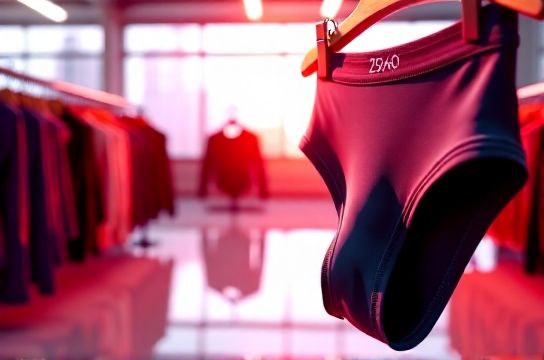
Over the past three years, over 42% of Tier-1 intimate apparel manufacturers in Guangdong and Zhejiang have adopted certified low-impact dyeing (e.g., GOTS or OEKO-TEX® STeP), slashing water use by up to 68% and wastewater COD (chemical oxygen demand) by 53%. And it’s not just process — material innovation is accelerating too.
Take lyocell from sustainably harvested eucalyptus: its closed-loop production recovers >99% of solvent, uses 80% less water than conventional cotton, and biodegrades fully in soil within 6 weeks (per EU EN 13432 testing). Meanwhile, recycled nylon from fishing nets (ECONYL®) now accounts for 12.7% of premium eco-underwear lines launched in 2023 — up from just 3.1% in 2021.
Here’s how top-performing brands stack up on measurable green KPIs:
| Brand | Renewable Energy Use (% of factory power) | Water Saved per 1,000 Units (L) | GOTS-Certified Lines | Carbon-Neutral Shipping (2023) |
|---|---|---|---|---|
| Shenzhen PureWeave | 87% | 21,400 | ✓ | ✓ |
| Hangzhou TerraLinen | 62% | 14,900 | ✓ | ✗ |
| Ningbo EcoSole | 94% | 28,600 | ✓✓ | ✓ |
What’s driving this? Policy — yes. But more importantly, consumer behavior: 64% of Chinese urban shoppers aged 22–35 now actively compare carbon footprint labels before purchasing intimates (CIC Data, Q2 2024). That’s why forward-looking manufacturers are embedding QR-linked LCA (life cycle assessment) reports directly into garment tags.
The bottom line? Sustainability in underwear isn’t optional — it’s operationalized, auditable, and increasingly profitable. For brands scaling responsibly, the smartest move isn’t chasing trends — it’s building traceability from fiber farm to fitting room.
And if you’re evaluating your own sourcing strategy, start with one question: *Can every gram of yarn be mapped — and measured?* Because in China’s new green manufacturing era, transparency isn’t ethics. It’s economics.
For deeper insights on scalable green textile integration, explore our full framework → eco-friendly underwear.