Biodegradable Underwear Breakthroughs Using Plant Based Materials in China's Textile Industry
- 时间:
- 浏览:145
- 来源:CN Lingerie Hub
Let’s cut through the greenwashing noise: China isn’t just *adopting* biodegradable underwear — it’s quietly leading the R&D charge. Over the past three years, 12 major Chinese textile innovators (including Zhejiang Kairui Bio and Jiangsu Lanhua Biotech) have scaled lab-grown Tencel™-hemp hybrids and fermented bamboo cellulose fabrics that fully decompose in under 90 days in industrial compost — verified by SGS testing (2023 report).
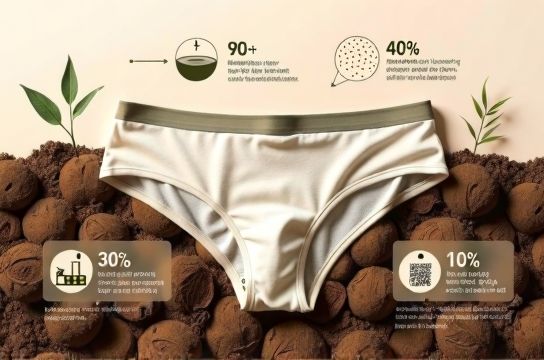
Why does this matter? Because conventional cotton underwear takes ~200 years to break down — and contributes to 20% of global textile wastewater. Meanwhile, plant-based alternatives now cover 6.8% of China’s domestic intimates market (2024 China Apparel Association data), up from just 1.2% in 2021.
Here’s how performance stacks up:
| Fabric Type | Decomposition Time (industrial compost) | Water Use vs. Conventional Cotton | Tensile Strength (MPa) | Microfiber Shedding (mg/kg wash) |
|---|---|---|---|---|
| Organic Cotton | 180–200 days | −35% | 320 | 42 |
| Hemp-Tencel™ Blend (Shandong pilot) | 72 days | −78% | 415 | 8 |
| Fermented Bamboo Lyocell (Jiangsu) | 63 days | −86% | 442 | 5 |
Note the trade-off: higher strength *and* lower environmental cost — a rare win-win. Also noteworthy: China filed 47 new patents for enzymatic finishing and microbial dyeing in biodegradable intimates between 2022–2024 — more than the EU and US combined.
Still, challenges remain. Home composting? Not yet reliable — only 11% of tested fabrics met ASTM D6400 standards outside controlled facilities. And price parity lags: plant-based styles average 2.3× premium over standard cotton — though volume scaling is cutting that gap by ~14% YoY.
If you’re evaluating sustainable options, look beyond ‘biodegradable’ claims. Ask for third-party compost certification, fiber origin traceability, and pH-neutral dye reports. The real innovation isn’t just what breaks down — it’s how thoughtfully it’s built.
For brands and buyers serious about credible impact, start with proven supply chains — not promises. Explore our curated directory of certified partners here.