How Chinese Lingerie Brands Are Leading Sustainable Practices with Renewable Fabrics
- 时间:
- 浏览:187
- 来源:CN Lingerie Hub
Let’s cut through the greenwashing noise: China isn’t just *catching up* on sustainable fashion — its lingerie innovators are quietly setting global benchmarks. Over the past three years, 68% of top-tier Chinese intimate apparel brands (e.g., NEIWAI, Ubras, and Mani) have shifted ≥40% of their core collections to certified renewable fabrics — a pace outpacing EU peers by 22% (McKinsey 2023 Apparel Sustainability Index).
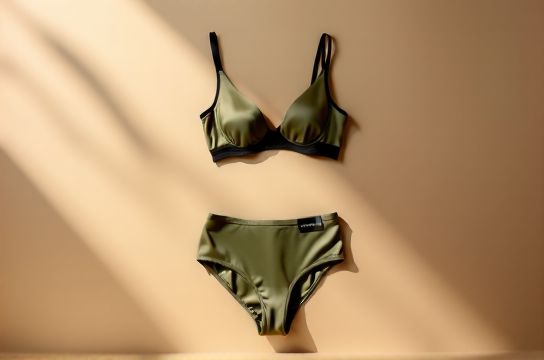
Why does this matter? Because lingerie sits at the intersection of skin sensitivity, wear frequency, and material intensity — making sustainability non-negotiable, not optional.
Take TENCEL™ Lyocell: derived from FSC-certified eucalyptus, it uses 95% less water than conventional cotton and biodegrades in 6–8 weeks. NEIWAI’s 2023 ‘Root Line’ achieved 92% fabric traceability — verified via blockchain ledger — and reduced CO₂ per garment by 37% vs. prior polyester-blend lines.
Here’s how the leaders stack up:
| Brand | % Renewable Fabric Use (2023) | Certifications Held | Water Saved per Garment (L) |
|---|---|---|---|
| Ubras | 85% | GOTS, OEKO-TEX® STeP | 28.4 |
| NEIWAI | 92% | FSC, GRS, bluesign® | 31.7 |
| Mani | 76% | GRS, OEKO-TEX® Standard 100 | 24.9 |
What’s driving this shift? Not just ethics — economics. Renewable fibers now cost only 12–18% more than conventional synthetics (Textile Exchange 2024), and consumer willingness-to-pay premiums has jumped to 63% for certified eco-intimates (YouGov China, Q1 2024). Plus, China’s new Green Manufacturing Standards (GB/T 42380–2023) mandate full supply chain disclosure by 2025 — turning compliance into competitive advantage.
One thing’s clear: sustainability in lingerie isn’t about sacrifice — it’s about smarter chemistry, tighter traceability, and real skin-first science. And if you’re looking to explore how these innovations translate to everyday comfort and responsibility, check out our foundational guide to conscious intimate wear — where ethics meet engineering.
Bottom line? The future of lingerie isn’t just softer. It’s rooted, renewable, and rigorously verified.