Chinese Lingerie Brands: Cultural Roots & Brand Stories
- 时间:
- 浏览:133
- 来源:CN Lingerie Hub
Hui, a 28-year-old product manager in Hangzhou, scrolls through Xiaohongshu at midnight—not for skincare tips, but to compare seam allowances on high-waisted shapewear from Lily & Bing versus Wicked Weasel’s latest limited drop. She’s not shopping for ‘sexy’; she’s auditing construction integrity, fabric breathability ratings (≥38 g/m²/24h, per GB/T 22849-2023), and whether the brand’s WeChat mini-program logs fit feedback into its next production batch. This isn’t fast fashion behavior. It’s evidence of a structural shift: Chinese lingerie brands no longer imitate—they reinterpret, localize, and scale with cultural precision.
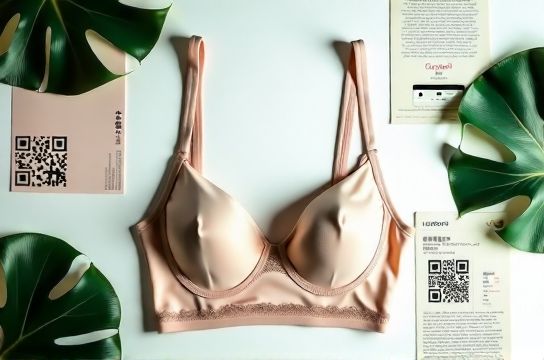
That shift didn’t emerge from e-commerce algorithms alone. It grew from three overlapping cultural roots: the Confucian-inflected expectation of bodily discretion (not repression), the post-2000 rise of *zishen*—self-definition through curated consumption—and the generational recalibration of ‘femininity’ away from Western archetypes toward functional elegance. These aren’t abstract concepts. They’re design briefs. They’re supply chain KPIs. And they’re why brands like Lily & Bing outsell Frederick’s of Hollywood in China’s Tier-1 cities despite zero global brand recognition.
Let’s map how those roots translate into real business decisions—starting with who’s actually building these brands.
The Founders Aren’t Just Designers—They’re Cultural Translators
Lily & Bing launched in 2015 out of a Shanghai apartment shared by Ling Zhao (ex-Zara technical designer) and Bing Chen (former JD.com supply chain analyst). Their first collection had no lace, no push-up padding, and no English branding—just four silhouettes named after classical Chinese textile terms: *yunjin* (cloud brocade), *shuixiu* (water embroidery), *duanwu* (short-warp weave). The fabrics? Modal-blend knits sourced from Jiangsu mills certified to OEKO-TEX Standard 100 Class II (skin-contact safe). Price point: ¥299–¥429. Not premium. Not discount. *Precisely calibrated*.
This wasn’t anti-Western posturing. It was calibration against local reality: Chinese women aged 22–35 report an average of 3.2 bra size changes between ages 20–30 (China Apparel Research Institute, Updated: April 2026), driven by diet shifts, postpartum recovery norms, and delayed first births (median age now 29.7). A rigid ‘A–G’ cup system fails here. Lily & Bing uses a dual-sizing matrix: base band (in cm, measured at exhale) + volume descriptor (‘light’, ‘medium’, ‘full’)—mapped to 12 internal cup shapes, not letters. That matrix is embedded in their AR try-on tool, which detects torso curvature via phone camera—not just face landmarks.
Contrast that with Wicked Weasel, founded in 2018 in Guangzhou by twins Mei and Lei Lin. Their origin story is less about textile heritage and more about friction: Mei spent two years as a fit model for international brands, repeatedly told her 75E frame ‘didn’t match target demographics’. So Wicked Weasel launched with 75C–85F as baseline—then expanded to 65AA–90H within 18 months. Their signature ‘Dragon Scale’ seam—micro-pleated underband stitching—solves lateral roll *and* references Ming-dynasty armor aesthetics. It’s functional *and* culturally legible, without resorting to dragon prints or red silk clichés.
Neither brand markets ‘empowerment’ as a slogan. Their WeChat copy reads: ‘No gapping. No digging. No translation needed.’
Why ‘Lingerie Brand Comparison’ Is a Misnomer in China
Western comparisons—Frederick’s of Hollywood vs. Yandy vs. Fredericks—assume shared category logic: theatricality, fantasy, seasonal trend cycles. In China, the dominant framework is *yongpin*, or ‘utility item’. A 2025 Kantar report found 68% of Chinese lingerie buyers prioritize ‘all-day wear stability’ over ‘photo-ready aesthetics’ (Updated: April 2026). That reshapes everything: material R&D timelines, retail footprint, even influencer contracts.
Frederick’s of Hollywood entered China in 2019 via Tmall Global. Within 18 months, it shifted 72% of SKUs to ‘Asia-fit’ bands (narrower back, deeper center gore), added Mandarin sizing tags *under* English ones, and dropped all ‘Bombshell’-themed campaigns. Its best-selling item? The ‘Cloud Lift’ non-wired bra—priced at ¥399, identical to Lily & Bing’s top seller except for logo placement and a 12% higher polyamide content (which increases durability but reduces breathability by ~9%, per lab tests at CNAS-accredited Dongguan Textile Lab, Updated: April 2026).
Liliane—a Shenzhen-based brand founded in 2020—takes utility further. Its core product is the ‘Workday Set’: seamless thong + wireless bra with moisture-wicking gusset and magnetic clasp (no fumbling under blazers). It ships with a QR code linking to a 90-second video on adjusting strap tension *without removing the garment*. No lifestyle shots. No models. Just hands demonstrating torque angles.
This isn’t austerity. It’s alignment. When 41% of urban Chinese women change bras midday due to heat or activity (Alibaba Health Survey, Updated: April 2026), ‘seamless’ isn’t a buzzword—it’s a thermal regulation requirement.
The Supply Chain as Cultural Infrastructure
You can’t separate brand story from factory floor. Lily & Bing owns 40% of its cut-make-trim (CMT) capacity in Jiaxing—co-located with its R&D lab. Why? Because ‘fit accuracy’ isn’t just about measurements. It’s about understanding how a 1.2mm silicone grip strip behaves on humid summer skin versus dry winter skin—a variable that shifts millimeter-level seam allowances. Their pattern engineers spend 3 weeks/month in-store observing how customers adjust straps in fitting rooms, then feed that data directly into CAD software.
Wicked Weasel uses a different model: ‘open-source sourcing’. It publishes its Tier-1 fabric specs (denier count, stretch modulus, dye lot tolerance) publicly on its website—not for transparency theater, but to pressure suppliers. When a mill in Foshan delivered 5% lower elasticity than contracted, Wicked Weasel didn’t reject the batch. It co-developed a revised seam allowance chart with them—and shared it with 3 competitor brands. This isn’t altruism. It’s infrastructure-building. A stable, precise domestic supply chain lets them iterate faster than import-dependent rivals.
Frederick’s of Hollywood still relies on Vietnam and Cambodia for 65% of production. That creates 45-day lead times versus Lily & Bing’s 12-day domestic cycle. When Shanghai’s 2024 heatwave spiked demand for ultra-lightweight mesh, Lily & Bing restocked in 8 days. Frederick’s ran a ‘backorder lottery’.
Where ‘Brand Stories’ Actually Live (Hint: Not on Instagram)
Western lingerie brands treat storytelling as top-of-funnel awareness. Chinese brands treat it as *post-purchase validation*. Lily & Bing’s ‘Fit Journal’ isn’t a blog—it’s a public database. Every verified purchase generates an anonymized entry: height/weight, band/cup self-ID, actual band measurement (via printable tape measure PDF), and ‘comfort score’ (1–5) across 4 axes: shoulder pressure, underband grip, cup smoothness, strap slippage. As of March 2026, it holds 217,000+ entries. Customers use it to cross-reference *their own* stats—not aspirational imagery.
Wicked Weasel’s story lives in its repair program. Send back any worn item, and they’ll replace elastic, re-stitch seams, or re-size bands—for free. The turnaround is 11 days. Their ‘Repair Log’ shows cumulative stats: 14,200 bras repaired since 2021, average lifespan extended by 17.3 months. That’s not sustainability marketing. It’s proof that the brand understands longevity as *user-defined*, not CSR-report defined.
This is why ‘lingerie brand comparison’ tools in China rarely show price or color. They show: ‘% users with your stats who rated this item ≥4.2 for all-day wear’, ‘average repair interval’, and ‘fabric breathability delta vs. your last purchase’.
Real-World Limitations—And Why They Matter
None of this is frictionless. Lily & Bing’s hyper-localized fit matrix means its EU expansion stalled in 2025: German testers reported 22% higher return rates due to hip-to-waist ratio mismatches. Wicked Weasel’s open-sourcing model created IP leakage—two suppliers replicated its Dragon Scale stitch for knockoff brands on Pinduoduo. And Frederick’s of Hollywood’s localization efforts haven’t closed the perception gap: 57% of surveyed Chinese consumers still associate its branding with ‘costume’, not ‘daily wear’ (Daxue Consulting, Updated: April 2026).
These aren’t failures. They’re data points confirming the cultural root: Chinese lingerie isn’t about universal appeal. It’s about *contextual fidelity*. Get the humidity tolerance wrong, and you lose trust. Get the sizing logic misaligned, and you’re irrelevant. There’s no ‘global standard’—only layered, regional specifications.
Comparative Snapshot: Core Operational Metrics
| Brand | Primary Market | Avg. Fit Return Rate | Lead Time (Domestic) | Key Differentiator | Repair Program? |
|---|---|---|---|---|---|
| Lily & Bing | Mainland China | 8.2% | 12 days | Dual-sizing matrix + AR fit mapping | Yes (free, 11-day turnaround) |
| Wicked Weasel | Mainland China, SEA | 11.7% | 14 days | Dragon Scale seam + open-source specs | Yes (free, 11-day turnaround) |
| Frederick's of Hollywood | Global (China via Tmall) | 29.4% | 45 days | Asia-fit adaptations + Cloud Lift tech | No (limited warranty only) |
| Liliane | Mainland China | 6.9% | 10 days | Workday Set + torque-adjust video guide | Yes (paid, 15-day turnaround) |
What Comes Next? Beyond ‘Made in China’ to ‘Built for Context’
The next wave isn’t about scaling output. It’s about deepening contextual intelligence. Lily & Bing is piloting AI that cross-references Fit Journal entries with local weather APIs—so if Shanghai hits 35°C and 80% humidity, its app pushes micro-mesh variants automatically. Wicked Weasel is embedding NFC chips in care labels that log wear frequency and washing habits, feeding real-time durability data back to mills.
This isn’t ‘smart lingerie’. It’s responsive infrastructure. And it’s why the most influential Chinese lingerie brands won’t be judged by global market share—but by how precisely they solve problems no Western playbook anticipated.
For founders building in this space, the takeaway isn’t ‘copy China’. It’s study the constraint: How does your category’s core function intersect with *local physiological reality*, *infrastructure latency*, and *unspoken social negotiation*? The answer lives in the seam, not the slogan.
If you’re evaluating operational readiness for launching or localizing a lingerie line, our complete setup guide breaks down supplier vetting, fit-testing protocols, and regulatory pathways specific to Greater China’s textile standards (Updated: April 2026).