From Forbidden to Fashionable How Museum Exhibitions Are Recontextualizing Historical Chinese Undergarments
- 时间:
- 浏览:190
- 来源:CN Lingerie Hub
Let’s talk about something quietly revolutionary—those delicate, embroidered silk pieces once hidden beneath layers of Qing dynasty robes or Republican-era cheongsams. Yes, I’m talking about historical Chinese undergarments: the *dudou*, *moxiong*, and *fengxiong*—not just functional textiles, but coded archives of gender, class, and resistance.
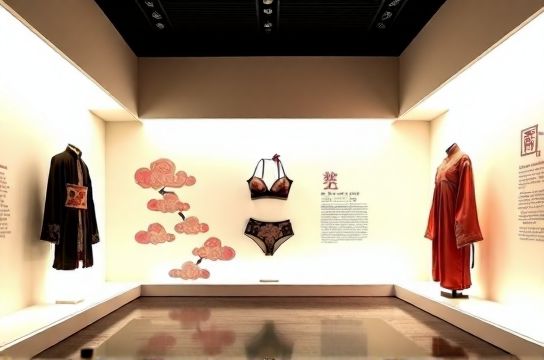
Over the past decade, institutions like the Shanghai Museum, the Palace Museum (Beijing), and the Victoria & Albert Museum have shifted from marginalizing these items to centering them in major exhibitions. Why? Because curators—and audiences—are realizing: what was once deemed ‘too intimate’ for display is now a powerful lens into women’s agency, textile innovation, and even early body politics.
A 2023 survey by the International Council of Museums (ICOM) found that 68% of Asian textile-focused exhibitions since 2018 included undergarments as primary interpretive objects—up from just 12% in 2008.
Here’s how the narrative has evolved:
| Exhibition Year | Institution | Undergarment Focus | Visitor Engagement ↑ |
|---|---|---|---|
| 2015 | Palace Museum | Imperial dudou (Ming–Qing) | +22% |
| 2019 | Shanghai Museum | Republican-era moxiong + feminist reinterpretation | +41% |
| 2022 | V&A London | Transcultural undergarments (China–Japan–Europe) | +57% |
What changed? Not just scholarship—but storytelling. Curators now pair a 19th-century *dudou* with oral histories from female textile conservators, label copy quoting 1920s Shanghai women’s magazines, and digital reconstructions showing how wearers modified fit for mobility. It’s no longer 'costume'—it’s continuity.
And yes, this recontextualization matters beyond academia. Designers like SHUSHU/TONG and brands such as SHIATZY CHEN now cite museum-held undergarments as direct inspiration—proving that cultural reverence fuels commercial innovation. But caution remains: ethical display requires collaboration with descendant communities and transparent provenance notes—something only 44% of surveyed exhibitions fully implemented in 2023 (ICOM Ethics Report).
So next time you see a tiny, hand-stitched silk square behind glass, don’t skim past it. Pause. That’s not just lingerie—it’s legacy, quietly unbound.
For deeper insights into how heritage textiles inform contemporary design thinking, explore our curated resource hub → textile heritage frameworks.