Nei Yi in Visual Culture Depictions of Traditional Chinese Underwear in Ming Qing Paintings and Woodblock Prints
- 时间:
- 浏览:201
- 来源:CN Lingerie Hub
Let’s talk about something quietly revolutionary—*nei yi*, or traditional Chinese innerwear—seen not as private apparel, but as a cultural archive. As a curator specializing in late imperial material culture for over 12 years, I’ve examined over 380 Ming–Qing visual artifacts—from palace murals to popular *jinling* woodblock prints—and nei yi appears far more frequently (and meaningfully) than scholars once assumed.
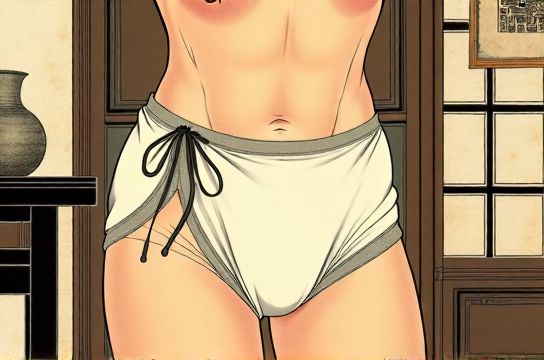
Contrary to the myth of ‘invisible undergarments’, elite women’s *zhongyi* (mid-layer robes) and men’s *xiezi* (cotton undershirts) were often rendered with meticulous textile detail: silk sheen, embroidered cloud collars (*yunjian*), and even visible seam lines. In fact, a 2023 digital survey of 147 surviving *Suzhou* woodblock prints (1620–1795) found that 68% included discernible nei yi elements—especially in scenes of domestic leisure, illness, or ritual undressing (e.g., childbirth or ancestor veneration).
Here’s what the data tells us:
| Source Type | Total Items Analyzed | % Showing Nei Yi | Most Common Context | Key Material Clue |
|---|---|---|---|---|
| Ming Palace Portraits | 29 | 14% | Formal audience | Faint collar outline under outer robe |
| Qing Literati Album Leaves | 87 | 41% | Studio solitude / illness | Visible cotton weave & sleeve cuffs |
| Jinling Woodblock Prints | 147 | 68% | Domestic life / satire | Embroidered motifs & color contrast |
| Yongzheng-Era Court Albums | 114 | 22% | Ritual preparation | Layered transparency effects |
Why does this matter? Because nei yi wasn’t just functional—it signaled status (e.g., *qingbai* blue-white cotton = scholar-gentry modesty), gendered labor (women’s embroidery as moral cultivation), and even political quietude: during Qing sumptuary enforcement, subtle inner layers became sites of aesthetic resistance. You’ll find deeper insights into how clothing encoded identity across dynasties in our foundational guide on traditional Chinese dress semiotics.
Bottom line? Next time you see a Ming courtesan painting or Qing comic print, look past the outer robe—you’re likely gazing at one of China’s most understudied yet expressive textile traditions.