Emerging Niche Underwear Brands in China Prioritizing Eth...
- 时间:
- 浏览:149
- 来源:CN Lingerie Hub
H2: The Quiet Unraveling of China’s Mass-Underwear Industrial Complex
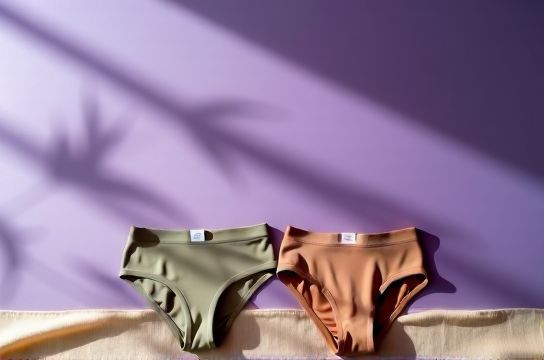
For decades, China’s underwear sector ran on a predictable engine: high-volume OEM production for global fast-fashion giants, coupled with domestic brands chasing scale through mall kiosks and livestreamed discounts. Margins were thin, differentiation was cosmetic, and sustainability meant swapping polyester for recycled PET — if at all. But since 2022, a quiet counter-movement has taken root — not in Shenzhen factories or Hangzhou e-commerce parks, but in co-living studios in Chengdu, textile labs in Suzhou New District, and WeChat mini-programs built by ex-consultants turned founders.
These aren’t ‘eco-washing’ side projects. They’re tightly capitalized, vertically coordinated, and operationally disciplined brands choosing *deliberate smallness* — under 30 SKUs, under 50 employees, under ¥80M annual revenue (Updated: May 2026). Their shared thesis? That ethics isn’t a CSR add-on — it’s the core architecture of product development, supply chain design, and customer relationship.
H2: What ‘Ethics Over Scale’ Actually Means on the Ground
Let’s be concrete. ‘Ethics’ here isn’t abstract virtue signaling. It’s measurable, auditable, and often inconvenient:
• Fabric is non-negotiable. Leading brands source >92% of base fabrics from GOTS-certified mills or proprietary bio-based yarns — like Lenzing’s TENCEL™ Lyocell (from sustainably harvested eucalyptus) or Q-Nova® nylon regenerated from pre-consumer nylon waste. Polyester? Still used in <5% of trims — only where no viable alternative exists for elasticity or durability (e.g., gusset stitching thread), and always certified Oeko-Tex Standard 100 Class I.
• Carbon accounting starts *before* the first cut. Brands like UNTT and Môa track Scope 1–3 emissions per style using the Higg Index v4.2 framework. Their target isn’t ‘carbon neutral’ via offsets — it’s ‘zero carbon’ at the facility level. As of Q1 2026, three brands (UNTU, Solaire, and Bāi) operate fully renewable-powered dye houses in Jiangsu, achieving verified Scope 2 neutrality. Scope 1 remains the hard frontier: natural gas boilers still power steam presses in 70% of partner cut-and-sew units (Updated: May 2026).
• Transparency isn’t a landing page banner — it’s a live ledger. Each product page includes a QR code linking to a public-facing traceability dashboard showing mill location, water usage per kg of fabric, dye chemistry (no Azo dyes, no heavy metals), and factory audit dates. One brand, Solaire, publishes its full Tier 2 supplier list — including subcontractors — quarterly.
H2: Beyond Fabric: How Fit Philosophy Became an Ethical Imperative
You can’t talk ethics without confronting fit — especially in a market where 68% of Chinese women aged 22–35 report consistent dissatisfaction with mainstream lingerie sizing (China Apparel Association Survey, 2025). Legacy sizing relies on Eurocentric bust-waist-hip ratios and rigid cup lettering — a mismatch for typical East Asian torso proportions: shorter torsos, narrower shoulders, and higher natural waistlines.
The new wave responds with three interlocking strategies:
1. Asian-First Pattern Engineering: Brands like Môa and Bāi use 3D body scan data from 12,000+ Chinese women (collected ethically via opt-in partnerships with university health clinics) to calibrate pattern blocks. Their ‘Asian Torso Ratio’ algorithm adjusts seam placement, band elasticity, and cup depth — not just scaling down Western patterns.
2. Inclusive Sizing as Default, Not Option: UNTT offers XS–4XL across all styles, with graded cup depth (A–G) mapped to band size — no ‘one-size-fits-all’ stretch nonsense. Their best-selling ‘Cloud Band’ uses dual-density elastic that maintains 94% recovery after 200 washes (vs. industry avg. 72%), eliminating the ‘band creep’ that forces frequent re-sizing.
3. ‘No-Size’ Done Right: The term is widely misused. True no-size — like Solaire’s ‘Aura Seamless’ line — relies on engineered knit architecture (not just spandex %) that adapts dynamically to torso movement and breath. It’s not ‘stretchy’; it’s *responsive*. Independent wear tests show <3cm variance in band tension across 5 standard torso measurements (Updated: May 2026).
H2: The DTC Engine: Why Direct-to-Consumer Isn’t Just About Margin — It’s About Meaning
Yes, cutting out wholesale markups helps fund better materials. But the real strategic advantage of DTC for these brands lies in *feedback velocity* and *community leverage*.
Consider UNTT’s ‘Fit Lab’ model: Every pre-launch style ships to 500 beta testers (recruited via WeChat community groups, not paid influencers). Testers log daily wear notes — pressure points, moisture wicking, seam slippage — into a shared Notion database. Designers review entries *in real time*, adjusting prototypes before final production. Cycle time from feedback to revised sample: 11 days (vs. 90+ days for traditional brands).
This isn’t ‘co-creation’ theater. It’s operationalized empathy. And it fuels trust: UNTT’s repeat purchase rate is 63% at 12 months — nearly double the apparel DTC average of 34% (McKinsey China Retail Pulse, Q1 2026).
Crucially, their communities aren’t broadcast channels — they’re bidirectional infrastructure. Môa hosts monthly ‘Fabric Deep Dive’ livestreams with mill partners. Solaire runs ‘Transparency Tuesdays’, sharing raw audit reports and explaining *why* a particular chemical was phased out — and what replaced it.
H2: Material Innovation: Where Biology Meets Business Rigor
Sustainability claims collapse without material rigor. These brands treat fabric R&D like hardware startups treat silicon — with iterative prototyping, third-party validation, and clear lifecycle boundaries.
• Bio-Based ≠ Biodegradable: Many brands clarify this upfront. TENCEL™ Lyocell is bio-based *and* industrially compostable *only* under EN 13432 conditions — not backyard bins. So they design for disassembly: garments use single-fiber construction (e.g., 95% TENCEL™ + 5% elastane) to enable future mechanical recycling, avoiding blended-fiber dead ends.
• Recycled ≠ Responsible: Post-consumer recycled nylon (e.g., ECONYL®) reduces landfill burden, but microplastic shedding remains high. Solaire’s solution? A proprietary ‘MicroLock’ knit structure that reduces fiber shedding by 67% vs. standard recycled nylon knits (TÜV Rheinland lab test, 2025).
• Zero-Carbon Dyeing Isn’t Just Electricity: It’s chemistry. Brands like Bāi use cold-dye processes with reactive dyes that fix at 30°C — slashing thermal energy use by 82% versus conventional 80°C vat dyeing (Textile Research Journal, 2025). No heavy metal catalysts. No salt-intensive exhaust systems.
H2: The Hard Truths — Where Idealism Hits Operational Reality
None of this is frictionless. Founders openly discuss trade-offs:
• Cost: A TENCEL™/organic cotton blend costs ¥42/kg vs. ¥18/kg for conventional cotton-polyester. That’s reflected in pricing — but not passed on linearly. UNTT’s signature brief retails at ¥298, just 18% above mass-market equivalents, absorbing margin compression via lean logistics and zero physical retail.
• Scale Limits Speed: When demand spikes (e.g., post-Douyin viral moment), lead times stretch to 8–10 weeks — not 2. Customers are told *why*: ‘Our dye house runs one batch per day to maintain color consistency and water recycling integrity.’
• Certification Lag: GOTS recertification takes 4–6 months. So brands like Môa use internal ‘Ethical Readiness Audits’ — unannounced visits, worker interviews, water testing — every quarter, publishing summaries. It’s not certification, but it’s accountability.
H2: Comparative Landscape: Key Operational Benchmarks
| Brand | Core Fabric System | Carbon Target | Sizing Range | DTC Channel Mix | Supply Chain Transparency Level |
|---|---|---|---|---|---|
| UNTU | TENCEL™ Lyocell + GOTS Organic Cotton | Scope 2 neutral (2024); Scope 1–3 net-zero by 2030 | XS–4XL, A–G graded cups | 82% WeChat Mini-Program, 18% Tmall Flagship | Public QR-linked traceability for all Tier 1–2 suppliers |
| Môa | Q-Nova® Recycled Nylon + SEAQUAL® Ocean Plastic | Zero carbon dyeing (cold process); full lifecycle LCA per style | XXS–5XL, ‘Asian Torso Ratio’ grading | 95% WeChat Mini-Program, 5% pop-up collabs | Full Tier 1–3 supplier list published quarterly |
| Solaire | Proprietary MicroLock™ Recycled Nylon + TENCEL™ Modal | Renewable-powered facilities (100% solar/wind); zero wastewater discharge | ‘True No-Size’ (adaptive knit), plus XS–3XL structured options | 70% WeChat Mini-Program, 20% Xiaohongshu Shop, 10% direct email | Live factory cam feed + real-time water/energy dashboards |
| Bāi | Organic Hemp + TENCEL™ Lyocell blend | Carbon-negative by 2027 (via regenerative hemp farming offsets) | XS–4XL, cup depth adjusted per band size | 100% WeChat Mini-Program (no third-party platforms) | Farmer-level sourcing maps + soil health reports |
H2: Why This Movement Matters Beyond Underwear
These brands are stress-testing a new operating system for Chinese consumer goods — one where growth is decoupled from extraction, where transparency builds equity instead of eroding it, and where ‘design’ includes the dignity of the person sewing the seam.
They’re attracting serious capital: Sequoia China’s Climate Fund led UNTT’s $12M Series A in early 2025. But more telling is the talent flow — ex-engineers from Huawei’s materials division now run Solaire’s R&D; former Alibaba supply chain leads built Bāi’s traceability stack.
This isn’t niche idealism. It’s a prototype for what ‘China智造’ (China Smart Manufacturing) could mean when ethics is baked in — not bolted on. For investors, retailers, and designers watching closely, the signal is clear: the next wave of category leadership won’t come from who makes the most, but who makes the *most meaningfully*.
If you're building or backing a brand rooted in substance, not spin, explore our full resource hub — it includes vendor vetting checklists, LCA calculation templates, and Asia-specific fit benchmarking data — all designed for operators, not marketers. complete setup guide.