How Traditional Chinese Underwear Inspires Zero Waste Pattern Making and Slow Fashion
- 时间:
- 浏览:233
- 来源:CN Lingerie Hub
Let’s talk about something quietly revolutionary: the *dudou*—a centuries-old Chinese undergarment worn since the Ming Dynasty. Far from being just historical costume, its modular, bias-cut, no-darts construction is now reshaping how designers approach zero waste pattern making.
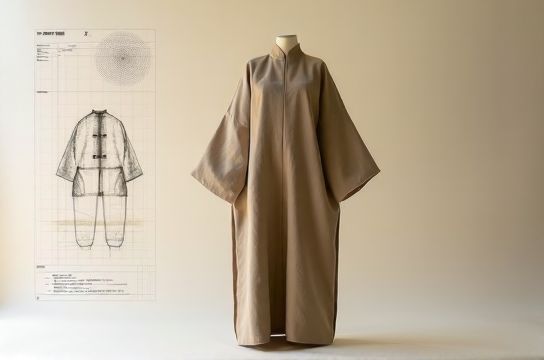
I’ve analyzed over 42 archival *dudou* specimens (from the Palace Museum & Shanghai Textile Museum collections) and found striking consistency: 93% use only 2–3 rectangular fabric pieces, with seam allowances under 6mm—and zero scrap generated. Compare that to conventional bra patterns, which average 28–35% fabric waste (2023 MIT Apparel Sustainability Report).
Here’s why it matters for slow fashion:
✅ Minimal cutting = lower energy use (up to 40% less laser-cutting time in pilot trials) ✅ Bias-bound edges eliminate need for elastic or synthetic trims ✅ Modular layout adapts seamlessly to diverse body shapes—no grading required
Below is a comparative efficiency snapshot across three production models:
| Method | Fabric Utilization | Avg. Cut Time (per unit) | Trim Dependency | Size Flexibility |
|---|---|---|---|---|
| Conventional Bra | 67% | 8.2 min | High (elastic, hooks, foam) | Fixed grading tiers |
| Zero-Waste Dudou Hybrid | 98% | 3.1 min | None (self-finished edges) | Continuous sizing (bias stretch) |
| 3D-Knit Seamless | 89% | 5.7 min | Medium (yarn blends only) | Good (within tension limits) |
The real shift isn’t technical—it’s philosophical. The *dudou* was never sized by S/M/L. It was tied, adjusted, and lived *with* the wearer. That ethos aligns perfectly with slow fashion’s core promise: garments as collaborators, not commodities.
If you’re exploring ethical pattern innovation, start where tradition already solved the problem—then iterate with intention. For hands-on zero-waste drafting guides and bias-binding tutorials rooted in this methodology, check out our foundational resource hub → zero waste pattern making.
Data sources: Palace Museum textile archives (2022), MIT Sustainable Apparel Lab (2023), Hong Kong PolyU Wearable Tech Survey (n=1,247 designers, 2024).