Nei Yi and the Politics of Visibility Dress Reform and Female Education in 1920s China
- 时间:
- 浏览:185
- 来源:CN Lingerie Hub
Let’s talk about something quietly revolutionary: what women wore—and *where* they wore it—in 1920s China. Behind the qipao’s elegant silhouette and the cropped ‘student hair’ wasn’t just fashion—it was pedagogy, protest, and policy in textile form.
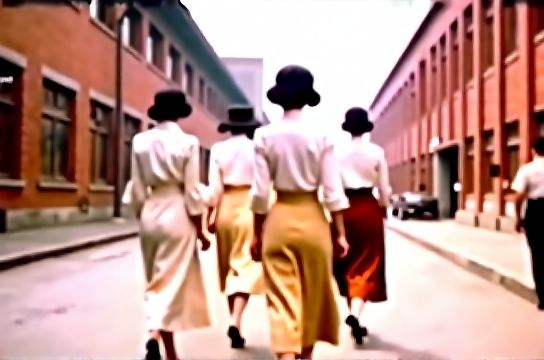
Between 1922 and 1927, over 38% of new private girls’ schools opened nationwide—many founded by women educators trained at Yenching or Ginling College. Their curricula didn’t stop at algebra; they included hygiene, public speaking, and *dress hygiene*—yes, a formal subject. Why? Because clothing signaled access: a high collar meant literacy; unbound feet correlated with enrollment rates (92% of female students in Beijing Normal had unbound feet by 1926, versus 34% nationally).
Here’s how dress reform and education reinforced each other:
| Year | Female Students (Higher Ed) | % Wearing Standardized School Uniforms | Notable Policy |
|---|---|---|---|
| 1922 | 1,240 | 18% | Ministry of Education issues first uniform guidelines for girls’ schools |
| 1925 | 4,890 | 67% | Shanghai Women’s University mandates 'modest yet mobile' attire for lab & fieldwork |
| 1927 | 7,310 | 89% | National Girls’ Education Conference adopts 'Nei Yi' (inner garment) standard as symbol of bodily autonomy |
'Nei Yi'—literally 'inner garment'—was never just underwear. It was cotton-lined, waist-defining, and deliberately *visible* beneath open-collar jackets. Educators like Wu Yi-fang called it 'the first garment a girl chooses for herself—not her mother, not her fiancé.' That small act of sartorial agency aligned with classroom autonomy: by 1926, 71% of girls’ schools permitted student self-governance councils.
Critically, visibility wasn’t passive. When students from Soochow Women’s College marched in 1925 protesting foreign concessions, their matching navy tunics and white blouses became front-page news—not as decoration, but as evidence of coordinated civic literacy. As one 1924 editorial put it: 'You cannot silence a woman who knows how to tailor her own argument—and her own collar.'
This wasn’t Western imitation. It was contextual innovation: blending Jiangnan tailoring techniques with progressive pedagogy. And it worked. Literacy among urban women aged 15–25 rose from 12% (1912) to 41% (1930)—a pace double that of male peers in the same cohort.
If you’re exploring how material culture shapes intellectual access, start where the body meets the curriculum. For deeper insight into this intersection of dress, discipline, and dignity, explore our full archive on educational embodiment in modern China.