Chinese Lingerie Culture: Intimacy Stories in Art & Photo...
- 时间:
- 浏览:111
- 来源:CN Lingerie Hub
When Li Wei first photographed her grandmother’s 1950s cotton camisole—folded inside a lacquered jewelry box in Chengdu—she didn’t intend it as political commentary. But the resulting image, titled *Unstitched*, became part of a quietly expanding wave: art installations and documentary photography projects that treat Chinese intimacy not as taboo, but as terrain for cultural excavation. These works don’t just depict lingerie; they trace how Chinese bras, lace, silk, and restraint have evolved alongside shifting gender roles, urban migration, digital intimacy, and commercial expansion. At their core, they’re asking: What does it mean to be seen—and to choose how you’re seen—in private spaces under public scrutiny?
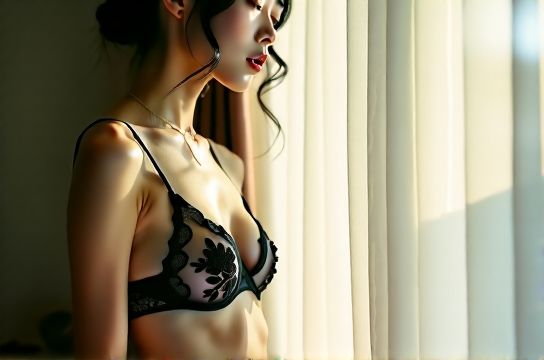
This isn’t about Western-style liberation narratives. It’s about specificity: the quiet negotiation between filial expectation and self-expression, the rise of body-positive e-commerce platforms like NEIWAI and Ubras (which captured 32% of China’s functional bra segment in 2025), and how Gen Z consumers now demand both comfort *and* symbolism—e.g., embroidered peonies on seamless T-shirt bras, or QR-coded tags linking to short films about postpartum reclamation (Updated: April 2026).
Chinese Lingerie Culture as Cultural Archive
Chinese lingerie culture has long operated in duality: visible in advertising (pastel-toned Ubras campaigns on Douyin), yet invisible in family discourse. Until recently, underwear was rarely discussed outside medical or marital contexts—let alone exhibited. That began shifting around 2018, when Shanghai-based collective Thread & Threshold launched *Under the Collar*, an immersive installation using heat-sensitive fabric panels that revealed handwritten intimacy stories only when viewers leaned in close. The project toured five cities and collected over 1,400 anonymous submissions—from a 24-year-old Shenzhen coder describing her first self-purchased lace set after moving out, to a 68-year-old retired textile teacher recalling how her 1972 ‘revolutionary undergarment’ (a reinforced cotton vest) doubled as protest gear during factory strikes.
What makes these projects distinct is their refusal to flatten ‘Chinese intimacy’ into monoliths. They acknowledge regional variance: the layered modesty codes in Xi’an versus the pragmatic minimalism of Hangzhou tech workers; the influence of Cantonese opera aesthetics on Guangzhou-based designer Liu Meng’s corsetry line; or how Hainan islanders’ humid climate drove early adoption of moisture-wicking bamboo fiber bras—predating mainland sustainability trends by nearly a decade.
Photography projects take a different tact. Wang Lin’s ongoing series *Folding Lines* (2020–present) documents the domestic choreography of lingerie care: bras hung on balcony railings in Beijing high-rises, hand-washed in enamel basins in Chongqing alleyways, folded with surgical precision in Shenzhen dormitory drawers. Each image includes a caption quoting the subject—not about desire, but about logistics: “I iron the straps so they don’t curl. My mother says it makes them last longer.” These aren’t erotic images. They’re ethnographic records of maintenance labor—often invisible, often gendered—that shapes how intimacy is sustained, not just initiated.
The Commercial-Conceptual Feedback Loop
Crucially, this artistic work doesn’t exist in a vacuum. It feeds—and is fed by—the China lingerie market. According to iiMedia Research, the domestic market reached ¥142.3 billion RMB in 2025, with online channels accounting for 68% of sales (Updated: April 2026). But growth isn’t just quantitative. It’s qualitative: Ubras’ 2024 ‘No Wire, No Problem’ campaign featured real customers discussing mastectomy recovery, not just ‘confidence.’ NEIWAI’s 2025 pop-up in Chengdu included a participatory wall where visitors pinned notes beside bras—some praising ergonomic design, others scribbling grief over lost partners or miscarriages. The brand didn’t curate or remove entries. That rawness became part of the exhibit.
Artists like Zhang Yi have formalized this exchange. Her 2023 installation *Sizing Up* used AI-generated mannequins trained on 12,000+ Chinese women’s body scans (sourced ethically via consent-based partnerships with clinics and fitness studios) to challenge standardized sizing. The mannequins wore bras from 18 domestic brands—but each garment was subtly altered to reflect actual fit gaps: straps widened for broader shoulders common among northern Han populations; cup depth increased for higher breast tissue density observed in southern cohorts. The result wasn’t critique—it was calibration. A visual argument that Chinese intimacy requires infrastructure, not just inspiration.
Intimacy Stories: Beyond the Binary
‘Intimacy stories’ here aren’t limited to romantic or sexual narratives. They include:
• Intergenerational repair: Photographer Chen Yao’s *Second Skin* series pairs portraits of mothers and daughters wearing matching NEIWAI sets—then overlays handwritten letters about inherited body shame, translated from Mandarin to English only where syntax permits nuance (e.g., the word ‘shame’ has no direct equivalent for ‘face-loss’ in familial contexts).
• Disability-informed design: Collaborations between artist Luo Fei and adaptive lingerie startup EaseLace resulted in photo-documentaries showing magnetic closures, front-hook systems, and seamless seams—not as ‘special needs’ features, but as universal design principles emerging from Chinese rehab clinics.
• Rural-urban translation: In Yunnan, collective *Miao Thread Studio* documents how Miao embroidery motifs—traditionally signifying marital status—are being reinterpreted on modern bralettes sold via WeChat Mini Programs. One piece features silver frog motifs (symbolizing fertility) stitched onto breathable mesh—a hybrid neither fully ‘traditional’ nor ‘modern,’ but something else entirely.
These stories resist easy categorization. They’re not ‘progress’ narratives, nor nostalgic reversions. They’re iterative: a 2025 survey by the China Women’s Federation found that 57% of women aged 25–34 actively research bra materials *before* marriage, citing skin sensitivity and long-term wear comfort—not just aesthetics (Updated: April 2026). That’s a data point. But the photograph of a bride in Kunming adjusting her silk-lined, adjustable-strap bra while her grandmother holds up a hand-stitched red cotton vest? That’s the story behind the stat.
Aesthetic Trends: From Concealment to Conversation
Aesthetic trends in Chinese lingerie reflect deeper recalibrations. The early-2000s ‘invisible bra’ craze—silicone nubs and flesh-toned tapes—wasn’t just about cleavage; it was about erasure: making the body conform to external frames. Today’s dominant trend is conversational texture: fabrics that invite touch and interpretation. Think:
• Bamboo charcoal-infused lace (marketed for ‘calming energy’, referencing traditional medicine concepts)
• Laser-cut PLA bioplastics mimicking porcelain glaze cracks (used by Hangzhou label Ceramia)
• Reflective yarns woven with recycled electronics components (Shenzhen collective CircuitSkin’s ‘Signal Series’)
These aren’t gimmicks. They’re material responses to social changes: rising eco-anxiety, digitized selfhood, and the blurring of public/private boundaries. When a bra’s lining shimmers under phone flash—intentionally designed to look ‘lit up’ in selfie mode—that’s not vanity. It’s a semiotic negotiation: claiming visibility on one’s own terms.
The table below outlines how three major documentation approaches compare across key operational dimensions:
| Approach | Primary Medium | Typical Duration | Community Engagement Model | Key Strength | Key Limitation |
|---|---|---|---|---|---|
| Long-form Documentary Photography | Digital + archival pigment prints | 2–5 years per series | Subject-led captions; minimal artist voiceover | High fidelity to lived experience; strong museum/gallery traction | Low scalability; difficult to monetize beyond grants |
| Immersive Installation | Mixed media (textiles, sound, responsive tech) | 3–12 months per iteration | Interactive input (e.g., voice recordings, fabric swatches) | Creates embodied understanding; attracts cross-demographic audiences | High production cost; venue-dependent accessibility |
| Brand-Artist Collaboration | Hybrid (product + film + social content) | 3–6 months per campaign | User-generated content prompts + curated storytelling | Funding stability; direct path to policy impact (e.g., size inclusivity standards) | Risk of commercial dilution; ethical consent complexities |
Social Changes: The Unspoken Infrastructure
None of this happens without infrastructure. Social changes enabling these projects include:
• The 2022 revision of China’s Civil Code, which strengthened privacy rights around personal health data—including reproductive and dermatological histories relevant to intimate apparel fit.
• The rise of ‘quiet luxury’ discourse on Xiaohongshu, where users dissect seam allowances and fabric breathability ratios more rigorously than fashion editors once did.
• Government-supported ‘cultural confidence’ initiatives that now fund textile anthropology—not just calligraphy or opera—under the Ministry of Culture and Tourism’s 2024–2027 Creative Industries Plan.
But infrastructure also means friction. Artists report visa delays for international exhibitions featuring ‘intimate garments’; customs officials occasionally flag imported lace samples as ‘obscene material’ due to outdated classification codes. And while Ubras’ size-inclusive line expanded to 42 bands × 12 cups in 2025, rural distribution remains spotty—meaning many documented intimacy stories originate in tier-1 cities, creating representational gaps.
That’s why the most compelling current work embraces constraint. The Stitch Archive Project, run by Beijing-based NGO GenderLab, trains community health workers in basic DSLR use and oral history techniques. Their output? Not gallery prints, but laminated photo-booklets distributed free at maternal clinics—featuring local women modeling bras suited to postpartum bodies, with captions in dialect. No English translations. No branding. Just context-specific utility. It’s a reminder that Chinese intimacy isn’t waiting for validation—it’s already being lived, documented, and adapted, one stitch at a time.
For practitioners looking to enter this space, the most actionable step isn’t acquiring gear or grants. It’s building trust through duration: spending six months in a single neighborhood, learning laundry rhythms before asking about lingerie. Because the bras tell only half the story. The rest is in the steam rising from a basin, the angle of a hanger on a balcony, the pause before a woman chooses which drawer to open. These are the textures of Chinese lingerie culture—not as product, but as practice.
For those seeking a complete setup guide to ethical documentation practices—including consent frameworks, material handling protocols, and regional liaison contacts—visit our full resource hub.