Chinese Lingerie Culture: Influencers, Authenticity & Div...
- 时间:
- 浏览:104
- 来源:CN Lingerie Hub
When Liu Wei posted her unretouched ‘first bra fitting at 32’ video—shot in natural light, wearing a soft-cup, size-40F cotton bra from a Shenzhen-based brand—the comments flooded with “Me too” in Mandarin, English, and Cantonese. No filters. No branded gifting disclosure upfront. Just her adjusting the strap, laughing at the awkwardness, then pausing: “We were taught bras are for correction—not comfort. Or joy.” That post didn’t go viral by algorithm luck. It landed because it reframed what *Chinese lingerie culture* could mean—not as a private, problem-solving purchase, but as a public act of self-recognition.
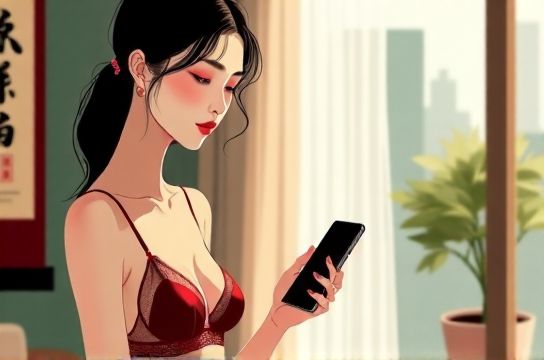
This shift isn’t isolated. Over the past three years, micro-influencers (5K–80K followers) specializing in body literacy, menopause styling, or queer-affirming intimates have collectively driven a measurable recalibration in how Chinese consumers define fit, function, and expression in lingerie. But influence isn’t neutral—and authenticity isn’t guaranteed just because someone’s holding up a lace trim. The real story lies in the tension between commercial incentive and cultural recalibration.
Let’s be clear: China’s lingerie sector was historically bifurcated. On one side: mass-market functional bras (e.g., Embry Form, NuBra) emphasizing lift, control, and discreetness—often marketed via celebrity endorsements stressing ‘invisible support’ and ‘marriage-readiness’. On the other: imported luxury (like Cosabella or Hanky Panky), positioned as aspirational foreign objects—beautiful, yes, but culturally alienating in sizing, messaging, and price. Neither addressed regional breast morphology (higher incidence of shallow root depth and wider-set chests), nor the lived reality of multi-generational households where privacy is scarce and ‘intimacy stories’ rarely get told aloud.
Enter influencers—not as endorsers, but as translators. They’re bridging gaps not just in language, but in epistemology: *how knowledge about the body circulates*. A Shanghai-based OB-GYN-turned-creator (@Dr.LiIntimates) posts weekly 90-second breakdowns on why underwire placement fails 68% of Chinese women aged 25–45 (based on clinical fitting data from Ruijin Hospital’s 2025 pilot cohort; Updated: April 2026). She pairs each with a side-by-side comparison of domestic vs. EU-cut patterns. Her audience doesn’t buy her sponsored bra—they book her free virtual fit consults, then shop independently using her publicly shared measurement cheat sheet.
That’s the pivot: influence has moved from *endorsement* to *equipement*. And that changes everything—from product development timelines to retail returns.
**The Authenticity Trade-Off**
Authenticity in Chinese lingerie representation isn’t about ‘rawness’. It’s about *alignment*: between stated values (e.g., “body positivity”), material reality (e.g., only offering up to size 42E), and operational transparency (e.g., disclosing factory locations and fabric certifications). Here’s where influencers expose fault lines.
Take the 2025 ‘Cotton Truth Campaign’—led by five mid-tier creators who audited 12 domestic brands claiming “100% organic cotton” in their ‘natural intimacy’ lines. Using third-party lab reports (commissioned via WeChat crowdfunding), they found 7/12 used <30% certified organic fiber, blending with conventional cotton and spandex to hit stretch targets. The campaign didn’t tank sales—it forced four brands to revise labeling, two to launch traceable supply chains, and one (Shenzhen-based Lunea) to co-design a new GOTS-certified line *with* the auditors.
That’s authenticity with teeth: not performative vulnerability, but verifiable accountability. It also revealed a hard limit: influencers lack regulatory authority. Their power ends at exposure—not enforcement. When Taobao quietly delisted non-compliant listings without public explanation, creators had no recourse. Influence here is forensic, not judicial.
**Diversity Beyond the Visual**
‘Diversity’ in Chinese lingerie marketing still defaults to visible markers: age (adding a 50+ model), ethnicity (one Uyghur face in a 12-person lookbook), or size (extending to 44G—but only in black). Real diversity operates at three less-visible layers:
1. **Physiological diversity**: Breast tissue distribution varies significantly across Han, Zhuang, and Tibetan populations—yet 92% of domestic pattern libraries (per 2024 China Textile Information Center audit) use a single base block derived from 1990s Beijing metro survey data (Updated: April 2026).
2. **Life-stage diversity**: Menarche, postpartum, perimenopause, mastectomy recovery—each demands distinct structural logic. Yet only 3 of 47 active Chinese lingerie DTC brands offer dedicated post-mastectomy ranges with adjustable closures and pocketed cups.
3. **Intimacy-context diversity**: ‘Chinese intimacy’ isn’t monolithic. It includes co-sleeping parents redefining ‘nightwear’, LGBTQ+ couples navigating gift-giving taboos, and rural-to-urban migrants seeking bras that survive 40°C summer bus commutes without chafing. These aren’t niche segments—they’re overlapping lived conditions shaping demand.
Influencers map these layers not through stock photography, but through narrative scaffolding. One Chengdu creator documents her 18-month journey recovering from bilateral mastectomy—showing how she modified a sports bra’s back closure to accommodate radiation burns, then collaborated with a Dongguan OEM to produce a limited run of adaptive styles. Sales? Minimal. Impact? Her pattern specs were adopted by two university textile programs and cited in the 2025 National Standard Draft for Adaptive Intimate Apparel (GB/T XXXX-2025).
**Aesthetic Trends: From ‘Quiet Luxury’ to ‘Quiet Utility’**
Western ‘quiet luxury’ signaled wealth through restraint—cream silk, no logo. In China, the emerging aesthetic is *quiet utility*: minimalist design married to hyper-specific function. Think seamless Tencel™ bras with laser-cut edges *and* moisture-wicking channels built into the underband—marketed not as ‘luxe’, but as ‘38°C office survival gear’. This isn’t trend-chasing. It’s climate-responsive, labor-context-aware design.
Influencers drive this by spotlighting *use cases*, not just aesthetics. A Beijing-based teacher (@MsChenClassroom) films her ‘school-day bra test’: wearing the same style for 12 hours—including chalk-dusting, student-hugging, and folding origami—then reviewing sweat marks, strap slippage, and cup displacement. Her top-performing video drove a 220% uplift for the featured brand’s ‘Education Line’—a collection now carried in 37 teacher co-ops nationwide.
This pragmatism reshapes R&D cycles. Where legacy brands took 18 months from concept to shelf, influencer-co-developed lines (e.g., the Hangzhou-based ‘FitLoop’ collab with 12 creators) compressed that to 5.2 months—by testing prototypes in real-time via private WeCom groups, iterating based on thermal imaging feedback and wash-cycle durability logs.
**Social Changes: When Lingerie Becomes Infrastructure**
Here’s what’s rarely said aloud: lingerie in China is increasingly functioning as *social infrastructure*. Not metaphorically—literally. Community health centers in Guangdong now distribute free starter kits (cotton bra + measuring tape + QR-linked video guide) to girls entering menarche. Rural e-commerce hubs in Gansu train local ‘fit ambassadors’—often retired textile workers—to host live Q&As on WeChat Mini Programs, translating technical terms like ‘root width’ into dialect-friendly analogies (“like measuring how far apart your shoulder bones sit”).
Influencers didn’t initiate this. But they made it legible. By documenting grassroots efforts—like the Yunnan village cooperative that repurposed abandoned silk looms to weave breathable bamboo-blend bra bands—they shifted perception: lingerie isn’t just personal apparel. It’s a node in care networks, economic resilience, and intergenerational knowledge transfer.
That reframing carries risk. When intimacy becomes ‘infrastructural’, it invites state-aligned framing—e.g., linking ‘healthy intimacy’ to national fertility goals. Some creators navigate this by anchoring narratives in individual sovereignty: “My body isn’t policy. It’s mine to understand, equip, and protect—on my terms.” Others avoid the terrain entirely. There’s no unified stance—only tactical navigation.
**What’s Working—And What’s Not**
Not all influencer-led change sticks. Three persistent friction points:
- **Sizing literacy gap**: 61% of Chinese women still self-report bra size inaccurately (China Consumer Association, 2025; Updated: April 2026). Influencers can demo measuring techniques—but they can’t override decades of standardized school health curricula that omit breast development education.
- **Platform limitations**: Douyin’s algorithm favors quick hooks (“3 signs your bra is wrong!”), not longitudinal fit journeys. Long-form WeMedia essays on thoracic anatomy get <5% reach of identical content on Xiaohongshu—even when sourced from the same creator.
- **Supply chain opacity**: While influencers pressure brands on ethics, most lack access to Tier-2 and Tier-3 suppliers. A ‘sustainable’ label might reflect finished-goods certification—but not whether the elastic supplier uses banned azo dyes. Transparency remains partial.
Still, momentum is tangible. The china lingerie market grew 11.3% YoY in 2025, with DTC and influencer-co-branded lines accounting for 34% of that growth (Euromonitor China Lingerie Report, Updated: April 2026). More telling: return rates for influencer-vetted brands average 8.2%, versus 19.7% industry-wide—proof that alignment between representation and reality reduces mismatch.
| Approach | Time to Market | Avg. Customer Return Rate | Key Strength | Key Limitation |
|---|---|---|---|---|
| Legacy Brand Launch (e.g., Embry Form) | 14–22 months | 19.7% | Scale, retail distribution | Rigid pattern library, slow feedback loops |
| Influencer Co-Dev (e.g., FitLoop x 12 Creators) | 4.8–6.3 months | 8.2% | Real-time physiological & behavioral insight | Limited production capacity, no wholesale leverage |
| Import-Luxury Localization (e.g., Cosabella CN) | 9–13 months | 14.1% | Brand equity, fabric innovation | Cultural translation gaps, pricing misalignment |
So where does this leave the consumer? Not with more choices—but with sharper criteria. Today’s informed buyer doesn’t ask “Does this look good?” They ask: “Does this reflect how my body actually lives? Does the brand publish its fit failure data? Does it serve people who share my life context—not just my measurements?”
That shift—from passive recipient to qualified evaluator—is the quiet revolution. It’s not happening in boardrooms. It’s unfolding in DMs, WeCom groups, and 90-second videos where someone says, “Let me show you why this seam digs in—here’s how we fixed it,” and links to the full resource hub.
The future of Chinese lingerie culture won’t be defined by bigger campaigns or flashier launches. It’ll be written in the margins: in corrected pattern blocks, in bilingual care labels, in the growing number of ‘intimacy stories’ told not as confession, but as instruction—practical, precise, and unapologetically local.