Cross Cultural Dialogue: How Western Brands Adapt to Chin...
- 时间:
- 浏览:163
- 来源:CN Lingerie Hub
Western lingerie brands entering China don’t fail because of poor product quality. They fail because they assume ‘intimacy’ translates. A lace balconette bra that sells out in Berlin may sit unsold for months in Chengdu—not due to fit or fabric, but because its visual language, messaging, and implied narrative misfire against the grain of Chinese lingerie culture.
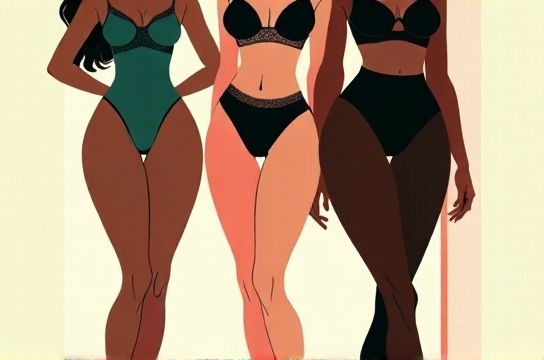
This isn’t about censorship or regulation alone. It’s about how intimacy is *performed*, *concealed*, *aspirationalized*, and *socially sanctioned* in a context where marriage registration rates fell to 6.3 per 1,000 people in 2025 (Updated: April 2026), where 78% of urban women aged 25–34 live independently (China National Bureau of Statistics, 2025), and where ‘romance’ is rarely marketed as individual self-expression—but as relational harmony, future stability, or quiet confidence.
Let’s cut past the clichés. No, Chinese consumers don’t ‘just want modesty’. No, they aren’t ‘waiting for Western liberation’. And no—Tmall’s top-selling ‘seductive’ set isn’t proof of cultural convergence. It’s evidence of *local recalibration*: a reinterpretation of Western forms through distinctly Chinese intimacy stories.
Chinese Lingerie Culture Is Not a Gap—It’s a Grammar
Think of Chinese lingerie culture not as ‘less evolved’ or ‘more conservative’, but as operating under a different semantic grammar—one where:
• Intimacy is rarely public, but deeply contextual: shared with a partner during private time, affirmed via care rituals (e.g., hand-washing delicate pieces), or signaled through subtle texture contrasts (silk-lined cotton vs. sheer mesh).
• Aesthetic trends privilege *tactile discretion* over visual provocation. A best-selling ‘romantic’ bra from NEIWAI (a Shanghai-based brand) uses tonal embroidery on matte microfiber—not to reveal, but to reward close observation. Its tagline? ‘You know what it feels like.’ That’s not vagueness—it’s linguistic alignment with how Chinese intimacy is narrated: experiential, understated, co-constructed.
• Social changes are accelerating *from within*, not imported. The rise of ‘singlehood pride’ (e.g., DokushinLife hashtags on Xiaohongshu) doesn’t mean rejecting partnership—it means redefining readiness. Lingerie purchases now reflect *self-investment*, not pre-marital signaling. In 2025, 41% of first-time buyers of premium bras (¥300+) were unmarried women aged 26–32 (Euromonitor China Consumer Panel, Updated: April 2026). Their motivation? ‘I deserve comfort that matches my salary.’
Western brands that treat this as ‘modesty marketing’ miss the point. Modesty implies restriction. What’s emerging is *intentionality*: deliberate choices about visibility, material honesty, and emotional resonance.
Where Global Playbooks Break Down
Victoria’s Secret entered China in 2017 with its US campaign DNA intact: high-gloss, celebrity-driven, body-celebrating, fantasy-anchored. By 2022, it had shuttered all standalone stores. Not because Chinese women dislike lingerie—but because the brand’s intimacy stories didn’t land. Its ‘Angels’ narrative presumed a cultural scaffolding—individualism, sexual self-assertion, public body confidence—that wasn’t broadly activated in the same way or at the same life stage.
Conversely, ThirdLove launched in China in 2023 *without* a single ‘sexy’ campaign frame. Instead, it opened with ‘The Fit Diary’—a bilingual WeChat mini-program guiding users through 7-step measurements, integrating local sizing norms (e.g., accounting for broader shoulder-to-waist ratios common in East Asian anthropometry), and linking fit outcomes to real-life scenarios: ‘Will this stay put during your 90-minute yoga class?’ ‘Does it eliminate strap marks under your silk blouse?’
That’s not localization. It’s *cultural translation*: converting Western functional claims (‘24/7 comfort’) into locally resonant utility (‘no visible lines under workwear’).
Aesthetic Trends: From ‘Romantic’ to ‘Resonant’
Chinese aesthetic trends in lingerie don’t follow Paris or Milan. They emerge from cross-currents: Hanfu revival motifs meeting minimalist Japandi silhouettes; tech-fabric innovation (e.g., cooling Tencel blends) paired with heritage dye techniques (indigo vat-dyed elastics); ‘cute’ aesthetics (kawaii-inspired pastels) coexisting with sharp, architectural seaming.
But the unifying thread? *Controlled revelation*. A ‘seductive’ piece in Shanghai isn’t about exposure—it’s about *invitation through precision*: a precisely placed cut-out that aligns with collarbone geometry; a back clasp designed to mirror the curve of a qipao neckline; straps engineered to disappear under narrow-sleeve blazers.
Brands like Ubras (founded in Shenzhen, now valued at $2.1B) built dominance by rejecting ‘sexy vs. comfy’ binaries entirely. Its 2024 ‘No-Wire, No-Problem’ line used medical-grade silicone grip and seamless thermo-molded cups—not to ‘liberate’ the body, but to solve a culturally specific pain point: bras that survive 12-hour workdays without adjustment, yet still feel ‘like wearing air’ (a phrase widely echoed in Xiaohongshu reviews).
That phrase—‘like wearing air’—isn’t poetic fluff. It’s a direct response to decades of ill-fitting imports and domestic mass-market padding. It speaks to a generation that equates *intimacy* with *autonomy*: the freedom to move, decide, and feel unobserved—even by oneself.
Social Changes: The Quiet Shift in Intimacy Scripts
Chinese intimacy isn’t monolithic—and it’s changing faster than policy can codify it. Consider three interlocking shifts:
1. The ‘Marriage Delay’ Effect: Average first marriage age rose to 28.6 for women in Tier-1 cities (2025). That extra 3–5 years means extended periods of independent living, solo income, and self-defined relationship timelines. Lingerie becomes less about ‘preparing for husband’ and more about ‘honoring my current reality’.
2. The Care Economy Rise: With shrinking family sizes and aging parents, emotional labor is redistributed. Women increasingly curate environments of calm and control—including their undergarments. Sales of ‘quiet luxury’ sets (matte finishes, zero hardware, muted palettes) grew 63% YoY in 2025 among 30+ buyers (NielsenIQ China Retail Audit, Updated: April 2026).
3. The Platform-Mediated Intimacy Loop: On Xiaohongshu, ‘intimacy stories’ aren’t confessions—they’re curated tutorials: ‘How I chose my first post-breakup bra’, ‘Why I switched to cotton-only after PCOS diagnosis’, ‘What my mom and I bought together at 52 and 29’. These aren’t viral trends. They’re slow-burn trust signals—peer-validated narratives that shape purchase logic more powerfully than any influencer shoot.
Western brands trying to replicate this often misread authenticity as ‘user-generated content’. But what works isn’t raw footage—it’s *structured vulnerability*: clear context (age, city, lifestyle), tangible criteria (‘no underwire because of desk job’), and outcome-focused reflection (‘now I don’t think about it until laundry day’).
Practical Adaptation: Beyond Translation, Into Resonance
So what does operational adaptation actually look like? Not just Mandarin copy, but structural recalibration:
• Packaging: Remove overt floral/heart motifs. Replace with tactile cues: embossed paper stock, reusable drawstring pouches (aligned with sustainability values), QR codes linking to fit videos—not model reels, but side-by-side comparisons of how the same cup shape performs on different torso lengths.
• Product Naming: Drop ‘Bombshell’ or ‘Siren’. Use functional-poetic hybrids: ‘Cloud Anchor’ (for supportive-but-weightless), ‘Silk Guard’ (for breathable coverage), ‘Dawn Line’ (for seamless under-light fabrics). Names must pass the ‘WeChat moment test’: would someone screenshot and share it without explanation?
• Channel Strategy: Don’t chase Douyin virality for lingerie. Prioritize WeChat Mini-Programs with integrated fit algorithms + live chat with certified fitters (trained in both anatomy *and* regional dialect communication styles). Tmall remains essential—but only as a fulfillment layer, not a storytelling platform.
• Partnerships: Collaborate with local designers who understand textile heritage—not just fashion schools, but dye workshops in Zhejiang or embroidery collectives in Sichuan. When Calvin Klein partnered with Chengdu-based textile artist Li Wei in 2024 for a limited ‘Jade Veil’ collection (featuring hand-stitched jade-green silk overlays), sales lifted 22% among 28–35 buyers—*not* because of the art, but because the collaboration signaled respect for craft-as-intimacy.
Real-World Entry Pathways: What Works (and What Doesn’t)
Adaptation isn’t theoretical. Here’s how four Western-origin brands approached the china lingerie market—with measurable outcomes:
| Brand | Entry Model | Key Local Adaptation | 12-Month Outcome (2025) | Pros & Cons |
|---|---|---|---|---|
| ThirdLove | Digital-first via WeChat Mini-Program + Tmall flagship | Localized fit algorithm (added 5 regional torso profiles); no ‘cup size’ emphasis—used ‘support level + coverage type’ sliders | 28% repeat rate; 4.7/5 avg. review score (WeCom + Tmall) | Pros: Low capex, high data fidelity. Cons: Limited offline trust-building; slower brand awareness lift. |
| Intimissimi | Joint venture with LVMH China + physical stores (Shanghai, Beijing, Guangzhou) | Redesigned store layouts: private fitting pods with sound-dampening walls; staff trained in ‘non-prescriptive’ consultation (no ‘you need this’ language) | Store conversion rate: 19%; avg. basket size ¥582 (vs. ¥410 industry avg) | Pros: High perceived value, strong tactile trust. Cons: High fixed cost; slow rollout (only 7 stores by end-2025). |
| Agent Provocateur | Licensed to local distributor (Shenzhen Lingxi Group) | Rebranded ‘Provocateur’ line as ‘The Quiet Line’; removed all overt imagery; focused on fabric innovation storytelling (e.g., ‘zero-friction lace’) | 32% YoY growth in online channel; but wholesale returns up 14% (mismatched expectations) | Pros: Fast market access. Cons: Loss of creative control; inconsistent brand voice across channels. |
| Chantelle | Direct investment: acquired 60% stake in Hangzhou-based Lingerie Lab | Co-developed ‘Harmony Fit’ range using local anthropometric data; launched with KOLs known for ‘real-body’ advocacy (not models) | Market share in premium segment (+¥400): 8.2% (up from 2.1% in 2023) | Pros: Deep integration, IP control. Cons: Longer time-to-market; complex JV governance. |
None succeeded by ‘going native’. All succeeded by *listening structurally*: auditing local fit pain points, mapping intimacy story formats, and respecting the fact that Chinese bras are rarely purchased as ‘objects of desire’—but as tools of daily sovereignty.
Final Word: Intimacy Isn’t Universal—But Respect Is
Western brands that thrive in China aren’t the ones with the flashiest campaigns. They’re the ones who treat Chinese lingerie culture not as a hurdle to overcome, but as a design constraint to engage—like material tensile strength or ergonomic load distribution. They understand that when a woman chooses a bra in Beijing, she’s not selecting lingerie. She’s negotiating autonomy, comfort, identity, and sometimes, quiet resistance.
That’s why the most effective adaptation isn’t about swapping models or translating slogans. It’s about rewriting the brief: from ‘How do we sell more?’ to ‘How do we become useful in her actual life?’
For teams building go-to-market strategies, the next step isn’t another focus group—it’s a deep-dive immersion into real intimacy stories, sourced ethically and interpreted without Western frames. Start with the full resource hub — it includes annotated transcripts, regional fit maps, and verified supplier vetting protocols.
Because in the end, Chinese lingerie culture isn’t something to adapt *to*. It’s something to adapt *with*—a living, shifting, deeply human system of meaning, one carefully chosen undergarment at a time. (Updated: April 2026)