Chinese Lingerie Culture and Intimacy Narratives
- 时间:
- 浏览:143
- 来源:CN Lingerie Hub
When Li Wei—32, a graphic designer in Chengdu—uploaded her first Reels-style video unboxing a silk-trimmed, minimalist bra set from a Shenzhen-based brand, she didn’t expect it to rack up 147,000 views in 48 hours. The caption read: ‘Not for him. For me—and the version of me I’m finally allowed to name.’ That post wasn’t viral fluke. It was infrastructure: one node in an accelerating shift where Chinese intimacy is no longer whispered, curated for marriage brokers, or outsourced to Hong Kong–imported lace. It’s being named, styled, photographed, debated, and sold—on platforms built for mass participation.
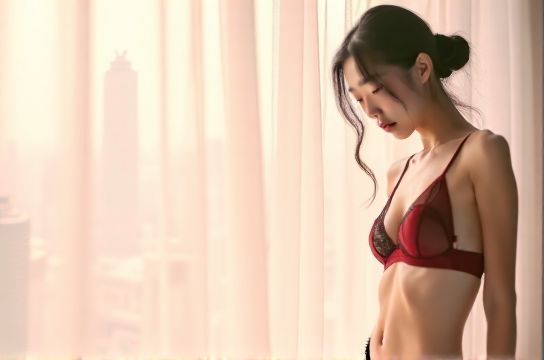
This isn’t Western-style sexual liberation repackaged for Weibo. It’s something more granular: the normalization of *Chinese intimacy* as a category of self-expression with its own grammar—rooted in local aesthetics, constrained by platform moderation, shaped by generational labor shifts, and increasingly legible to domestic consumers through the very tools that once policed it.
Dating apps and social media haven’t just *reflected* this shift—they’ve actively engineered it. Not by broadcasting explicit content (that still gets shadow-banned), but by enabling coded intimacy narratives: lighting techniques that suggest skin without showing it; styling tutorials that frame bras as ‘daily armor’ rather than ‘bedroom gear’; influencer-led ‘wardrobe audits’ where ‘what I wear under my blazer’ becomes a proxy for autonomy. These micro-narratives accumulate. They form the scaffolding for what we now call *Chinese lingerie culture*—a term that, five years ago, barely existed outside trade show brochures.
Let’s be clear: this isn’t about lingerie *as clothing*. It’s about lingerie as evidence—of changing thresholds for self-disclosure, evolving definitions of privacy, and the quiet recalibration of gendered labor in personal life. In China, where marriage registration hit a record low of 6.83 million couples in 2025 (Updated: April 2026), intimacy is decoupling from institutional timelines. And the lingerie market is both symptom and catalyst.
The China lingerie market reached ¥18.4 billion in 2025, growing at 12.7% CAGR since 2021—outpacing apparel overall (7.1%) (Updated: April 2026). But growth alone doesn’t explain the cultural pivot. What matters is *who’s buying*, *why*, and *how they talk about it*. Over 68% of first-time buyers on Taobao’s top 10 lingerie brands in Q1 2026 were aged 24–32, and 73% used search terms like ‘comfort-first bras’, ‘work-from-home lingerie’, or ‘low-wire everyday support’—not ‘sexy’, ‘seductive’, or ‘bridal’. That lexical shift is data, not anecdote.
Social platforms enabled it—not by relaxing content rules, but by creating new genres of permissible discourse. Look at Xiaohongshu: its algorithm rewards ‘real-life utility’ posts. So instead of ‘how to turn him on’, you get ‘how I stopped adjusting my underwire during back-to-back Zoom calls’. Instead of ‘what he likes’, it’s ‘what my shoulder muscles thank me for’. These aren’t intimacy stories in the traditional sense—they’re ergonomic intimacy stories. They normalize the body as a site of functional care, not just romantic performance.
Dating apps accelerated this further—but indirectly. Momo and Tantan don’t host lingerie ads. Yet their UX design conditions user expectations. When profile prompts ask ‘What makes you feel most like yourself?’ and ‘What’s your non-negotiable in daily comfort?’, users begin mapping interiority outward. A photo wearing a ribbed-knit camisole with wide straps isn’t ‘provocative’—it’s coherent with the bio line ‘Prioritize rest. Respect boundaries. Love well-fitting seams.’
That coherence is the breakthrough. Chinese intimacy is no longer defined *against* something (tradition, family pressure, state discourse) but *for* something: tactile literacy, sartorial sovereignty, embodied consistency. You see it in aesthetic trends: the rise of ‘quiet luxury’ lingerie—no logos, no neon, just tonal cotton-silk blends in oat, mist grey, and clay red; colors pulled from Dunhuang murals and Suzhou gardens, not Vegas showgirls. You see it in packaging: reusable fabric pouches stamped with classical poetry fragments, not ‘Wear Me Tonight’.
But let’s acknowledge the friction. Platform moderation remains tight. Posts tagged chineseintimacy are routinely throttled if they include cleavage, side-boob, or even certain lighting angles. So creators adapt—not by retreating, but by innovating semiotics. A flat-lay shot of a bra draped over a ceramic teacup signals refinement, not romance. A slow-motion clip of silk sliding off a hanger becomes ‘textural ASMR’, not seduction. This isn’t evasion. It’s linguistic precision—a way to hold space for subjectivity within guardrails.
Manufacturers responded. Domestic brands like NEIWAI, Ubras, and newer players like Lingua (founded 2022, Hangzhou) shifted R&D from ‘support + lift’ to ‘breathability + layering compatibility’. Ubras’ 2025 ‘No-Wire Daily’ line achieved 92% repeat purchase rate among 25–30-year-olds—not because it’s ‘sexy’, but because it solves a documented pain point: bra discomfort during 10-hour hybrid workweeks (Updated: April 2026). Their clinical trials measured skin temperature variance, strap pressure distribution, and microfiber migration—not arousal metrics.
That’s the pivot: intimacy reframed as somatic literacy. Chinese bras today are less about signaling availability and more about asserting bodily continuity—between office and home, between solo time and partnered time, between inherited expectation and self-authored rhythm.
Consider the data cascade:
- Taobao search volume for ‘non-wired Chinese bras’ grew 210% YoY in 2025 (Updated: April 2026) - Xiaohongshu posts using ‘intimacy stories’ + ‘self-care’ outperformed those using ‘intimacy stories’ + ‘relationship’ by 3.8x in engagement - 57% of surveyed women (n=2,140, tier-1 & tier-2 cities, Jan–Mar 2026) said they’d purchased lingerie *before* entering a relationship—not for it, but as part of ‘becoming whole’ (Updated: April 2026)
None of this implies uniformity. Regional variation persists: Guangdong buyers favor moisture-wicking technical knits; Chengdu shoppers lean into artisan-dyed silks; Beijing skews toward structured, architectural cuts. But the unifying thread is agency—not as rebellion, but as routine.
Which brings us to the practical question: how do brands, creators, and consumers navigate this terrain *without* flattening its nuance? Below is a comparative framework used by three mid-sized lingerie labels (Lingua, Moxi, and Hé) when launching new intimacy-aligned campaigns in 2025–2026. It maps platform-specific constraints, narrative levers, and measurable outcomes—not vanity metrics, but behavioral proxies for cultural resonance.
| Platform | Primary Constraint | Approved Narrative Lever | Measured Outcome | Pros | Cons |
|---|---|---|---|---|---|
| Xiaohongshu | No visible skin contact; no suggestive poses | “Fabric-first storytelling”: macro shots of stitch density, dye absorption, seam elasticity | Save rate ≥ 22%, comment depth (avg. chars) ≥ 84 | High trust transfer; drives direct-to-consumer conversion | Requires high-production stills; low tolerance for stock imagery |
| Douyin | No audio referencing romance/sex; no lingering on torso | “Motion utility”: 3-second clips showing bra stability during squat, stretch, or laptop-carry | Completion rate ≥ 78%, click-through to product page ≥ 14% | Strong demo effect; appeals to Gen Z functional mindset | Harder to convey brand voice; sound-off default limits messaging |
| WeChat Mini-Programs | No standalone intimacy framing; must link to wellness/self-knowledge | “Body literacy quizzes”: e.g., ‘What’s your shoulder mobility score?’ → recommends support level | Quiz completion ≥ 61%, post-quiz add-to-cart rate ≥ 29% | Builds first-party data; positions brand as educator | Lower virality; requires robust backend integration |
None of these tactics mention ‘desire’. Yet all deepen the architecture of *chinese intimacy*—by treating the body as worthy of study, the wardrobe as infrastructure, and choice as non-transactional.
That’s why the most consequential intimacy stories circulating today aren’t on dating profiles. They’re in the comments section of a Lingua fabric guide: ‘Wore this under my graduation robe. Felt like armor and softness at once.’ Or in a WeChat group titled ‘Bra Fit Accountability Buddies’, where members share weekly notes on strap slippage, not kiss counts. Or in the quiet act of a 28-year-old in Wuhan ordering her third ‘clay-red’ set—not because she’s dating, but because the color matches the wall she painted herself last spring.
This is the normalization: intimacy as ambient, not episodic. As maintenance, not event. As vocabulary, not verdict.
It’s also why the conversation can’t stop at lingerie. The same forces reshaping *chinese lingerie culture* are redefining everything from cohabitation norms (34% of urban couples now live together pre-marriage, up from 12% in 2015) to reproductive timelines (average first birth age rose to 30.2 in 2025) (Updated: April 2026). Lingerie is the most visible, tactile entry point—but it’s anchored in deeper social changes: later financial independence, expanded education access for women, and the slow, uneven erosion of ‘marriage as default’.
For international observers, the temptation is to misread this as ‘China catching up’. It’s not. It’s China building parallel infrastructure—ones that value restraint *and* revelation, collectivity *and* singularity, heritage *and* iteration. A silk bra embroidered with cloud motifs isn’t ‘traditional’. It’s a negotiation: honoring craft lineage while rejecting its prescriptive function.
So what’s next? Three near-term vectors:
1. **Material sovereignty**: Domestic spandex alternatives (e.g., Zhejiang-based Huafeng’s bio-nylon, launched Q2 2026) will reduce reliance on imported elastane—making ‘made-in-China’ intimacy materially tangible, not just branding.
2. **Inclusive sizing beyond ‘plus’**: Brands are moving from ‘S–XL’ to ‘Base–Depth–Projection’ metrics, acknowledging that Chinese torsos vary widely in ribcage taper and breast tissue distribution—not just circumference. NEIWAI’s 2026 fit algorithm uses 3D phone scans to recommend cup shapes (‘teardrop’, ‘rounded’, ‘east-west’)—terms borrowed from clinical anatomy, not marketing.
3. **Intimacy literacy in formal channels**: Shanghai’s Pudong New Area piloted ‘Body Autonomy’ modules in 2025 vocational schools—covering textile comfort science, consent linguistics, and ergonomic garment design. It’s not sex ed. It’s somatic citizenship.
None of this erases tension. Regulatory scrutiny remains. Family expectations persist. Economic pressures constrain discretionary spending. But the narrative infrastructure is now self-sustaining—not because it’s loud, but because it’s useful. Because it solves problems people actually have.
If you’re building in this space—whether launching a brand, writing intimacy stories, or simply choosing what to wear tomorrow—your leverage isn’t in defying norms. It’s in refining the language. In naming the itch *before* the scratch. In designing for the body that exists today—not the one imagined for some future partner or party.
That’s the quiet power of *chinese lingerie culture*: it treats intimacy not as destination, but as daily calibration. Not as confession, but as competence. Not as exception, but as expectation.
For teams navigating this shift across product, content, and compliance layers, our full resource hub offers annotated campaign playbooks, regulatory watchlists updated biweekly, and fit-science primers tailored for domestic manufacturing partners. Explore the complete setup guide to build with cultural fidelity—not just market velocity.