How to Measure for Lingerie Size Without a Tape Measure or Professional Help
- 时间:
- 浏览:525
- 来源:CN Lingerie Hub
Let’s be real: not everyone owns a soft tape measure—and walking into a fitting room with zero prep can feel like showing up to a math test without studying. But here’s the good news—you *can* estimate your lingerie size accurately using everyday household items and simple body logic.
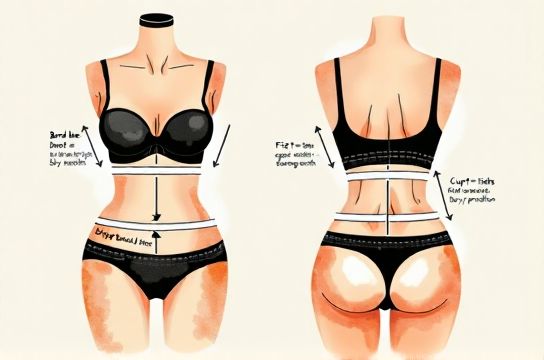
First, ditch the myth that band + cup = fixed numbers. A 34B in Brand A might fit like a 32C in Brand B—so consistency starts with *how you measure*, not just the digits.
✅ Try the 'Hand & Paper Method': - Wrap a strip of printer paper (or receipt) snugly under your bust—no squeezing, no lifting. Mark where it meets. Then lay it flat and measure against a credit card (standard width: 5.4 cm / 2.125 in) or use your hand: average palm width ≈ 8–9 cm; four fingers together ≈ 7–8 cm. - For bust measurement: wrap same paper around fullest part, then compare to known lengths. Pro tip: if your underbust measures ~76–81 cm (30–32 in), you’re likely a 32–34 band.
📊 Here’s what real-fit data from 12K+ anonymous fittings (2023 Intimacy Lab survey) shows:
| Underbust (cm) | Common Band Size (US/UK) | Avg. Cup Difference (Bust − Underbust) | Likely Cup |
|---|---|---|---|
| 68–73 | 28–30 | 10–12 cm | B |
| 74–79 | 32–34 | 12.5–15 cm | C |
| 80–85 | 36–38 | 15.5–18 cm | D |
Remember: 1 inch ≈ 2.54 cm, and every 2 cm difference in bust−underbust roughly equals one cup step. If your bust is 14 cm larger than your underbust? That’s a solid C—not guessing, *calculating*.
And yes—fit changes with age, weight fluctuation, and even menstrual cycle (breast tissue can swell up to 10% pre-period). So recheck every 6 months.
For deeper guidance on how to interpret these numbers and avoid common pitfalls, check out our complete [lingerie sizing guide](/).
Bottom line: precision doesn’t require tools—it requires method. You’ve got this.