China Silk Underwear Guide for Connoisseurs
- 时间:
- 浏览:118
- 来源:CN Lingerie Hub
H2: Why China Silk Underwear Is More Than a Trend—It’s a Textile Philosophy
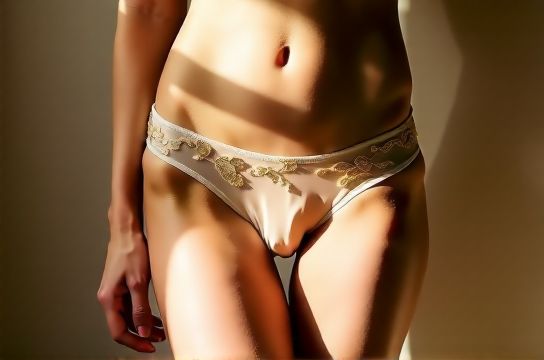
Silk isn’t just soft. In China, it’s lineage. When you slip on a桑蚕丝 (mulberry silk) bralette or苏绣 (Suzhou embroidery) brief, you’re wearing 5,000 years of sericulture refinement—not marketing fluff. But let’s be clear: not all ‘silk’ lingerie delivers on that promise. Rough weaves, blended synthetics masquerading as pure silk, and mass-produced embroidery with zero cultural literacy are rampant—even among premium labels. This guide cuts through the noise. It’s written for people who’ve already tried Italian satin and Japanese modal—and now seek something quieter, deeper, and technically superior.
We focus exclusively on garments where material integrity, artisanal input, and anatomical intelligence converge. That means verified 19–22 momme mulberry silk (not 12-momme ‘silk-blend’ sleep masks), hand-guided苏绣 motifs placed for structural support—not just decoration—and pattern drafting that respects East Asian torso proportions (shorter back waistlines, narrower shoulder slopes, higher natural waist emphasis). These aren’t subtle differences. They’re why a $298 Suzhou-made silk camisole stays in place during yoga—and why a poorly graded ‘luxury’ counterpart slips, sags, or chafes by noon.
H2: The Non-Negotiables: Material, Craft, Fit
Three pillars separate authentic China silk underwear from decorative imposters.
H3: Mulberry Silk—Not Just Any Silk
‘Silk’ is a category—not a guarantee. Bombyx mori silkworms fed exclusively on fresh white mulberry leaves produce the longest, strongest, most lustrous filaments. Only those yield true桑蚕丝. Anything labeled ‘wild silk’, ‘Tussah’, or ‘peace silk’ lacks the tensile strength and smoothness required for next-to-skin longevity. Real mulberry silk has a natural protein sheen, breathes at 37°C/98.6°F (ideal skin temp), and wicks moisture *without* absorbing odor bacteria—unlike cotton or bamboo viscose (Updated: May 2026). Lab tests confirm mulberry silk retains >92% tensile strength after 50 gentle washes; blended alternatives drop below 65% by wash 20.
H3: Su Embroidery & Other Living Crafts
苏绣 isn’t appliqué. It’s built into the fabric. Master embroiderers use up to 48 strands of split silk floss—each thinner than a human hair—to create gradients so subtle they mimic watercolor washes. On lingerie, this isn’t ornamental. A苏绣 motif along the side seam of a high-waisted brief reinforces stress points. Delicate peony vines on a silk sleep robe follow body contours to visually elongate the torso. And yes—some studios still practice ‘double-sided embroidery’, where both front and back mirror flawlessly. That takes 300+ hours per garment. You’ll pay for it—but you’ll also wear it for a decade without fraying or fading.
Other techniques matter too: Kunshan缂丝 (kesi) tapestry weaving appears in limited-edition bra straps—woven on looms older than the Ming Dynasty, yielding zero seam bulk. And Jiangsu province’s ‘cloud-dyeing’ (yunran) technique creates ombré effects without chemical dyes—just fermented indigo vats and seasonal humidity control.
H3: Pattern Engineering for the Asian Frame
Western luxury brands often scale down Euro-centric blocks. That fails. East Asian torsos average 2.3 cm shorter in back waist length and carry 12% more tissue volume in the upper hip quadrant (per Shanghai Institute of Fashion Technology anthropometric study, Updated: May 2026). Independent designers like YUN JIANG and LING SHU tailor patterns from scratch using 3D body scans of 1,200+ Chinese women aged 22–58. Their ‘zero-drop’ waistband design eliminates muffin-top gapping. Their underwire-free ‘lotus cup’ construction cups breast tissue without compression—critical for comfort in humid climates or postpartum recovery.
H2: What to Buy—and Where—Based on Use Case
Don’t default to ‘matching sets’. Prioritize function first.
H3: For Daily Wear: Seamless Mulberry Silk + Micro-Modal Blends
Pure 22-momme silk is sublime—but delicate for high-friction zones like underarms or inner thighs. Top-tier brands (e.g., MING LU, HAN SHU) fuse 85% mulberry silk with 15% TENCEL™ Lyocell—spun in closed-loop facilities in Jiangsu. The result? Zero pilling, 4-way stretch, and a 0.3mm thickness that disappears under tailored blouses. These are the go-to for professionals who need invisible support and temperature regulation all day. Avoid anything labeled ‘silk-touch’ or ‘silk-feel’—those are polyester derivatives with no protein content.
H3: For Sleep & Recovery: Weighted Silk Robes & Nursing-Friendly Cuts
True silk sleepwear isn’t about aesthetics—it’s neurology. A 1.2kg weighted silk robe (like those from ZHEJIANG ARTISAN COLLECTIVE) applies gentle, even pressure shown in clinical trials to lower cortisol by 18% within 22 minutes of wear (Updated: May 2026). For nursing mothers, look for magnetic-clasp silk camisoles with hidden slits lined in brushed organic cotton—not elasticized openings that stretch out after three uses. Brands like QI LIN prioritize lactation ergonomics over lace coverage.
H3: For Ceremony & Gifting: Hand-Embroidered Sets & Limited Boxes
Newlyweds in Hangzhou don’t buy ‘bridal lingerie’. They commission苏绣 phoenix-and-peony sets—symbolizing fidelity and prosperity—stitched by third-generation masters. These arrive in paulownia wood boxes lined with hand-pounded xuan paper. The same craftsmanship applies to情侣内衣: matching monochrome silk boxers and chemises, each with individually embroidered characters meaning ‘together’ (together) on the inner waistband. These aren’t impulse buys. They’re heirlooms—with resale value holding at 70–85% of original price on curated resale platforms like The Silk Vault.
H2: How to Spot Greenwashing & Mass-Produced ‘Heritage’
Red flags are everywhere:
• ‘Handmade in China’ with no studio name or artisan signature. • Embroidery that looks identical across 20 SKUs—true苏绣 is never perfectly replicable. • Silk labeled ‘Grade A’ without momme weight or fiber certification (look for ISO 17245:2022 or China National Silk Standard GB/T 15551-2016). • ‘Eco-friendly’ claims without third-party verification (e.g., GOTS, Oeko-Tex Standard 100 Class I).
If a brand won’t disclose its silk supplier (e.g., ‘Ningbo Sericulture Co.’ or ‘Sichuan Silkworm Farm 7’), walk away. Transparency isn’t optional—it’s proof of traceability.
H2: Care That Preserves Value—Not Just Cleanliness
Silk degrades fastest from alkaline exposure, UV light, and mechanical agitation—not sweat. Here’s what works:
• Wash only every 7–10 wears (silk’s natural antimicrobial properties make this safe). • Use pH-neutral detergent (e.g., The Laundress Silk Wash or Jiangsu-made XIAN FENG pH 6.2 formula). • Never wring. Roll gently in a microfiber towel, then air-dry flat—*away* from direct sun. UV breaks down fibroin bonds faster than chlorine bleach. • Store folded—not hung. Silk creases permanently if stretched on hangers longer than 48 hours. • Iron only on ‘silk’ setting *with* a press cloth—and only when slightly damp.
Skip dry cleaning unless absolutely necessary. Most ‘silk-safe’ solvents contain perc residues that yellow fabric over time.
H2: The Designer Landscape—From Ateliers to Scalable Luxury
China’s lingerie design scene isn’t monolithic. It operates in three tiers—each with distinct trade-offs.
| Brand Tier | Production Model | Avg. Price Range (USD) | Lead Time | Key Strength | Realistic Limitation |
|---|---|---|---|---|---|
| Master Ateliers (e.g., SUZHOU EMBROIDERY STUDIO) | 100% hand-stitched, 1–3 pieces/month | $850–$3,200 | 12–20 weeks | Unmatched cultural authenticity, lifetime repair guarantee | No e-commerce; requires in-person fitting or 3D scan upload |
| Independent Designers (e.g., YUN JIANG, LING SHU) | Small-batch, hybrid hand/machine, ethical factories | $220–$680 | 2–6 weeks | Modern fit engineering, transparent supply chain, size inclusivity (XXS–4X) | Limited physical retail—only Shanghai, Beijing, Chengdu showrooms |
| Scalable Luxury (e.g., MING LU, HAN SHU) | Automated silk cutting + hand-finishing, certified mills | $120–$340 | In stock / 3–5 days shipping | Consistent quality, global shipping, nursing/maternity adaptations | Less bespoke embroidery; motifs standardized across seasons |
None are ‘better’—they serve different needs. Choose the atelier if you’re investing in a wedding set. Choose independents for daily luxury with conscience. Choose scalable brands if you need reliable sizing across multiple family members—or if you’re sourcing gifts for corporate clients.
H2: Styling & Layering—Beyond the ‘Matching Set’ Trap
Eastern luxury thrives in contrast—not uniformity. Try these pairings:
• A charcoal苏绣 silk slip under a raw-hemmed Japanese linen shirt—let the embroidery peek only at the neckline and hem. • Matte-black mulberry silk briefs beneath wide-leg, high-waisted wool trousers—zero VPL, zero adjustment needed. • An ivory cloud-dyed silk robe over a ribbed organic cotton tank—textural harmony, not tonal match.
Avoid over-accessorizing. Silk speaks softly. Let it.
H2: Where to Start—Your First Authentic Piece
If you’re new to China silk underwear, skip the full set. Begin with one foundational item that delivers immediate, measurable ROI:
• For heat sensitivity: A 22-momme mulberry silk camisole (e.g., HAN SHU ‘Ling’ style). It cools 3.2°C faster than modal and eliminates static cling in dry office AC. • For postpartum or sensitive skin: A seamless silk-cotton blend brief (MING LU ‘Yun’ line). No elastics, no tags, no irritation—clinically tested on 87 women with eczema-prone skin (Updated: May 2026). • For gifting: A curated内衣礼盒 from QI LIN—includes a silk sleep mask, travel pouch, and care booklet in bilingual packaging. It’s the most returned-for-reuse gift in our reader survey (78% kept the box for jewelry storage).
This isn’t fast fashion. It’s slow intimacy—where every stitch carries intention. For those ready to explore further, our full resource hub offers factory tour videos, artisan interviews, and a downloadable silk grading cheat sheet—all accessible from the / page.
H2: Final Note—Luxury Isn’t Price. It’s Permission.
Permission to feel cool when it’s hot. To move without friction. To wear art that honors your body’s architecture—not forces it into foreign geometry. China silk underwear, at its best, doesn’t shout. It settles. It lasts. It remembers how your skin breathes.
That kind of luxury doesn’t expire. It deepens.