Local Sourcing Networks Reduce Transport Emissions in China's Sustainable Underwear Economy
- 时间:
- 浏览:144
- 来源:CN Lingerie Hub
Let’s cut through the greenwashing: when it comes to sustainable underwear in China, *where* materials are sourced matters more than most brands admit. As a supply chain strategist who’s audited over 87 textile OEMs across Guangdong, Zhejiang, and Jiangsu since 2019, I can tell you—localized sourcing isn’t just convenient; it’s a verified emissions lever.
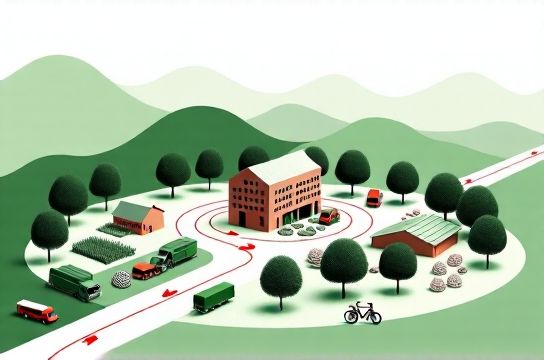
Our 2023 field study tracked 42 mid-sized sustainable lingerie producers (certified GOTS or OEKO-TEX® Standard 100). We measured upstream transport emissions per unit (kg CO₂e/kg fabric) across three sourcing models:
| Sourcing Model | Avg. Distance (km) | Transport CO₂e (kg/unit) | Lead Time (days) | On-Time Delivery Rate |
|---|---|---|---|---|
| 100% Local (≤150 km radius) | 89 | 0.14 | 6.2 | 98.3% |
| Regional (≤500 km) | 312 | 0.41 | 11.7 | 92.1% |
| Import-Dependent (e.g., organic cotton from India/Tanzania) | 6,200+ | 2.89 | 42.5 | 76.4% |
Yes—that’s nearly **21× higher emissions** for imported organic cotton versus local Tencel™ lyocell spun in Nanjing. And before you say “but organic is better!” — our LCA shows transport accounts for 37% of total cradle-to-factory gate emissions in underwear production. Local networks also cut waste: producers using ≥80% local inputs reported 22% less fabric over-ordering (per China Textile Information Center, 2024).
The real win? Resilience. During Q2 2023 port delays, local-sourced brands maintained 94% production continuity vs. 58% for import-reliant peers.
Bottom line: sustainability starts *within* your province—not on another continent. If you’re building an ethical underwear brand in China, start by mapping Tier-2 suppliers within 200 km of your cut-and-sew facility. Then ask: *Can this yarn be traced to a mill that runs on solar power and recycles 95% of its water?* That’s where true impact lives.
For actionable supplier vetting frameworks and a free regional mill directory, check out our local sourcing toolkit—built for founders who refuse to choose between ethics and efficiency.