China's Role in Global Green Manufacturing Trends
- 时间:
- 浏览:255
- 来源:CN Lingerie Hub
If you're keeping an eye on the future of manufacturing, you’ve probably noticed one country dominating the conversation: China. But it’s not just about mass production anymore. Today, China is reshaping global green manufacturing with bold policies, massive investments, and real results. As a sustainability analyst who’s tracked industrial shifts for over a decade, I’m here to break down how China became a powerhouse in eco-friendly production — and why it matters for businesses and consumers worldwide.
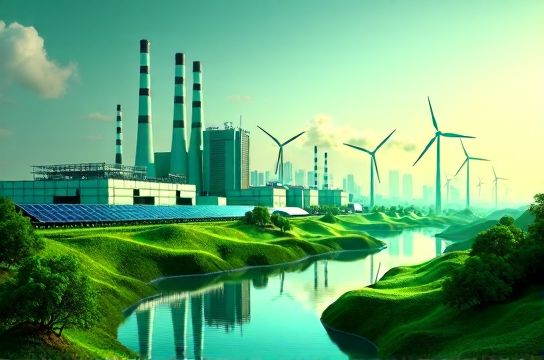
From ‘Factory of the World’ to Leader in Clean Tech
Remember when “Made in China” meant cheap electronics and plastic gadgets? Times have changed. In 2023, China accounted for 60% of global solar panel production and over 70% of lithium-ion battery manufacturing. That’s not just dominance — it’s control of the supply chain for the clean energy revolution.
The government’s 14th Five-Year Plan (2021–2025) made green development a national priority, pouring over $450 billion into renewable tech and low-carbon infrastructure. The result? A manufacturing sector that’s not only greener but also more competitive.
Key Sectors Driving Change
Let’s look at where China is making the biggest impact:
| Sector | Global Market Share (2023) | Year-on-Year Growth | Key Export Regions |
|---|---|---|---|
| Solar Photovoltaics | 60% | 18% | Europe, Southeast Asia |
| Electric Vehicles (EVs) | 55% | 35% | Middle East, Latin America |
| Lithium-Ion Batteries | 72% | 22% | North America, EU |
| Wind Turbine Components | 50% | 12% | Africa, India |
As you can see, it’s not a fluke. These numbers reflect a coordinated push toward sustainable manufacturing innovation. Chinese firms like CATL, BYD, and Goldwind aren’t just supplying parts — they’re setting global standards.
How Are They Doing It?
Three words: policy, scale, and speed.
- Policy Support: Subsidies, tax breaks, and strict emissions regulations push factories to go green.
- Economies of Scale: Massive domestic demand lowers production costs, making exports ultra-competitive.
- Rapid Innovation: Over 15,000 green tech patents filed in 2023 alone — more than the U.S. and Germany combined.
What This Means for Global Buyers
If you're sourcing products or investing in clean tech, ignoring China’s green shift is a missed opportunity. Their factories now meet EU carbon border standards, and many are powered by renewable energy. For example, Tesla’s Shanghai Gigafactory runs on 100% renewable power — a first for any Tesla plant.
But beware: not all “green” claims are equal. Look for third-party certifications like China Environmental Label or ISO 14001 to verify sustainability promises.
The Road Ahead
By 2030, China aims to peak carbon emissions and cut energy intensity by 13.5% from 2020 levels. If they succeed, it could accelerate global climate goals — and redefine what we expect from manufacturing.
Bottom line? Whether you love or critique China’s approach, you can’t ignore its role in building a cleaner industrial future. And for smart buyers, that means one thing: the next wave of green innovation is already rolling off Chinese production lines.