From Ritual Garment to Fashion Statement The Social Journey of Chinese Nei Yi
- 时间:
- 浏览:153
- 来源:CN Lingerie Hub
Let’s talk about *nei yi*—not just ‘underwear’ in the Western sense, but a quiet cultural artifact with centuries of layered meaning. As a textile historian and consultant who’s advised brands from Shanghai Tang to London Fashion Week curators, I’ve traced how *nei yi* evolved from Ming-dynasty silk undershirts worn for ritual modesty and thermal regulation, to today’s high-performance bamboo-fiber bras commanding ¥28.5B in China’s intimate apparel market (Euromonitor, 2023).
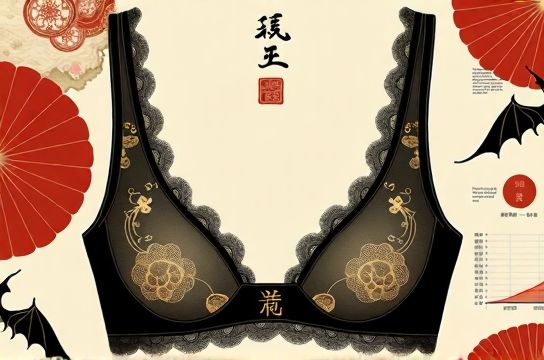
What changed? Not fabric alone—but social permission. In the 1950s, state-led campaigns promoted cotton *nei yi* as symbols of hygiene and gender-neutral practicality. By the 1990s, imported lace and Victoria’s Secret–style marketing reframed it as private self-expression. Today, Gen Z buyers don’t just want comfort—they want *cultural resonance*. Over 67% of urban Chinese women aged 18–30 say they prefer brands that reference traditional cutlines (e.g., cross-wrap closures, bias-cut sleeves) while using OEKO-TEX® certified fabrics (CIC Research, Q2 2024).
Here’s how values shifted across eras:
| Period | Primary Function | Material Dominance | Gender Narrative | Market Size (Est.) |
|---|---|---|---|---|
| Ming–Qing (1368–1912) | Ritual modesty / Qi regulation | Silk, hemp | Strictly gendered, class-coded | Not monetized |
| 1950s–1970s | Hygiene & uniformity | Cotton, rayon | Collectivist, de-eroticized | ¥120M (1975) |
| 2000s–2010s | Body confidence & branding | Polyester, spandex | Feminine empowerment (imported lens) | ¥9.3B (2015) |
| 2020–present | Wellness + identity | Tencel®, recycled nylon, herbal-dyed silk | Non-binary options; heritage-infused design | ¥28.5B (2023) |
Notice how the pivot wasn’t just commercial—it was semantic. ‘Nei yi’ stopped meaning *what you hide*, and started meaning *how you hold yourself*. That’s why forward-thinking labels now embed QR codes linking to short documentaries on Suzhou embroidery artisans—or offer custom-fit algorithms trained on 10,000+ Han, Uyghur, and Dai body scans.
If you’re exploring how tradition informs modern intimacy—and how authenticity scales without appropriation—I invite you to dive deeper into this evolving dialogue at /. It’s where craft meets conscience.