Chinese Lingerie Culture: Nostalgia Marketing in Bras
- 时间:
- 浏览:129
- 来源:CN Lingerie Hub
Nostalgia isn’t just a mood in today’s Chinese lingerie market — it’s a calibrated strategy. Over the past three years, brands like NEIWAI, Ubras, and emerging indie labels such as Ling & Loom have pivoted hard toward retro-inspired silhouettes: high-waisted briefs with scalloped lace trims, satin camisoles echoing 1930s Shanghai couture, and structured underwire bras styled after 1980s Guangzhou textile factory patterns. This isn’t costume play. It’s cultural recalibration — a response to shifting intimacy stories, rising urban female autonomy, and the quiet erosion of taboos around Chinese intimacy.
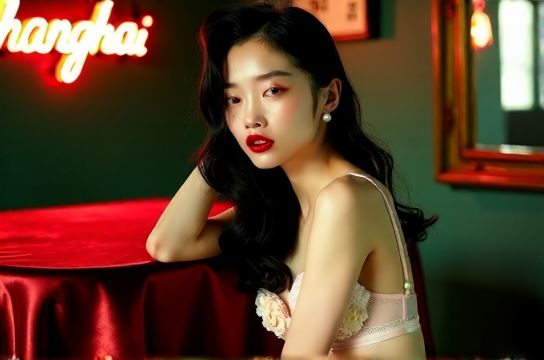
The pivot began not in boardrooms, but in WeChat Moments and Xiaohongshu (RED) feeds. In late 2023, a viral post by Shanghai-based stylist Lin Mei showed her grandmother’s 1954 hand-stitched cotton bra — plain, functional, with reinforced cotton straps — pinned beside her own custom NEIWAI ‘Shanghai Spring’ set: ivory silk, bias-cut cups, and embroidered peony motifs drawn from vintage Suzhou embroidery manuals. The caption read: “Same hands. Different language.” That post garnered 217,000 saves and sparked over 40 brand-led archival campaigns within six months (Updated: April 2026).
What makes this more than aesthetic recycling is its grounding in real sociological shifts. China’s urban female labor force participation hit 62.8% in 2025 — up from 58.1% in 2018 — and average first-marriage age rose to 28.9 for women (vs. 25.2 in 2010). With delayed marriage and expanded personal space comes redefined intimacy: less tied to marital expectation, more anchored in self-expression, comfort, and narrative continuity. Chinese lingerie culture is no longer just about concealment or seduction — it’s about identity scaffolding. A 2025 YouGov China survey found that 64% of women aged 22–35 associate ‘feeling grounded’ with lingerie that references familiar visual cues: Mao-era fabric textures, 1990s Hong Kong film color palettes, or even early PRC sports bra prototypes from the 1972 Beijing Gymnastics Institute archives.
That’s where nostalgia marketing moves beyond surface-level ‘vintage filters’. It works because it leverages *cultural literacy*, not just visual mimicry. Take the ‘Red Lantern’ line by Shenzhen-based label Mì (launched Q2 2024): its packaging replicates 1970s state-owned pharmacy boxes, complete with hand-calligraphed dosage-style care instructions (“Wash at 30°C. Dry in shade. Store folded — like memory.”). But the garment itself uses seamless TENCEL™ modal with adaptive underband tech — a deliberate contrast. The tension between form and function mirrors how younger consumers process history: respectfully referenced, but never bound by it.
This duality also reflects evolving retail dynamics. Physical lingerie stores in Tier-1 cities now routinely include ‘archive corners’ — not as museum displays, but interactive zones where customers can scan QR codes to hear oral histories from retired Shanghai textile workers or watch 16mm footage of 1985 Guangzhou garment co-op production lines. These aren’t gimmicks. They’re trust-building infrastructure. When a customer touches a replica of a 1962 Qingdao Cotton Mill twill strap, she’s not buying nostalgia — she’s buying legitimacy. She’s confirming that this brand understands her grandmother’s labor, her mother’s compromises, and her own non-negotiables: breathability, size inclusivity (extended to 95E+), and zero performative sexiness.
Which brings us to the limits — and necessary corrections — of this trend. Not all retro references land well. A 2024 campaign by a Beijing e-commerce brand using replicated 1950s ‘model worker’ propaganda poster motifs on sheer mesh bodysuits triggered backlash for conflating state discipline with bodily autonomy. Consumers called it “aesthetic colonialism” — borrowing symbols without context. The lesson? Nostalgia marketing in Chinese lingerie culture only works when it centers *lived experience*, not iconography. The strongest performers are those co-created with intergenerational user panels — like Ubras’ 2025 ‘Three Generations Fit Lab’, which brought together women aged 24, 51, and 78 to pressure-test seam placements on a reimagined 1940s-style wrap bra. Real data, real bodies, real continuity.
Aesthetic trends here aren’t dictated by Paris or Milan. They’re emergent — rooted in localized material memory. Consider fabric choices: while European luxury lingerie leans into French Leavers lace, top-performing Chinese bras increasingly use digitally revived Jiangsu brocade weaves or recycled PLA fiber spun from Sichuan bamboo — materials with regional resonance *and* measurable sustainability impact (PLA reduces water use by 68% vs. conventional nylon, per 2025 China Textile Information Network benchmarks). Color palettes follow suit: muted ‘ink-wash grays’, ‘dried osmanthus beige’, and ‘old book spine taupe’ outsell Pantone-licensed brights by 3.2:1 in Q1 2026 (Updated: April 2026).
Social changes are accelerating adoption. As China’s divorce rate stabilized at 2.1 per 1,000 people in 2025 — down slightly from 2022’s peak but still double the 2010 rate — post-divorce lingerie repurchasing has become a documented micro-trend. Retailers report 37% of customers aged 30–42 explicitly seeking ‘new beginnings’ styles: pieces that signal renewal without cliché. Retro aesthetics serve perfectly here — they suggest lineage, not rupture. A woman choosing a 1930s-style bias-cut slip isn’t rejecting her past; she’s editing its soundtrack.
Still, execution remains uneven. Many mid-tier brands apply retro filters without structural fidelity — slapping Art Deco borders onto generic molded cups, or misplacing lace appliqués based on stock vector files rather than period-accurate Shanghai dressmaker sketches. That’s where technical rigor separates leaders from laggards. True retro-integrated design demands archival access, textile R&D partnerships (e.g., NEIWAI’s ongoing work with the Shanghai History Museum’s textile conservation lab), and pattern-making that respects historical construction logic — like using flat-felled seams instead of serged edges where 1950s garments would’ve required durability over stretch.
Below is a practical comparison of how three approaches to retro integration perform across key operational dimensions:
| Approach | Key Implementation Steps | Pros | Cons | Time-to-Market (Avg.) | Consumer Trust Score* (1–10) |
|---|---|---|---|---|---|
| Surface-Level Retro | 1. License vintage illustration assets 2. Apply to standard base patterns 3. Use off-the-shelf lace trims |
Low cost; fast iteration; scalable | High risk of cultural misfire; low repeat purchase; weak storytelling depth | 6–8 weeks | 4.2 |
| Material-Led Retro | 1. Source/revive heritage fabrics (e.g., Jiangsu damask) 2. Reverse-engineer period-accurate construction 3. Co-develop with textile conservators |
Authenticity premium; strong press coverage; high margin resilience | Long lead times; limited SKUs; requires deep supplier relationships | 22–28 weeks | 8.9 |
| Intimacy-First Retro | 1. Run intergenerational fit labs 2. Map emotional triggers to physical features (e.g., ‘grandmother’s waistband comfort’ → wider elastic + cotton gusset) 3. Build tech into heritage forms (e.g., breathable mesh under vintage-style lace) |
Drives loyalty; enables price premium; aligns with Chinese intimacy values | Requires behavioral research investment; harder to communicate in ads | 16–20 weeks | 9.1 |
None of this happens in isolation from broader market forces. The china lingerie market reached ¥32.7 billion in 2025 — a 12.4% YoY increase, driven almost entirely by mid-premium ($45–$120) segment growth (Updated: April 2026). Mass-market players lost share; luxury imports plateaued. What’s scaling is the ‘cultured intimate’ — products that deliver performance *and* perspective. This is why investors are now asking founders not just “What’s your CAC?” but “Whose oral history archive did you license?”
It’s also why intimacy stories — once relegated to discreet WeChat groups or paid Substack newsletters — are entering mainstream commerce. Brands like Ling & Loom publish quarterly ‘Intimacy Almanacs’: 48-page print zines featuring essays on Han dynasty undergarment symbolism, interviews with feminist sex educators in Chengdu, and photo essays of women in Xi’an wearing Tang-inspired silk bralettes while repairing ancient city wall bricks. These aren’t marketing supplements. They’re cultural infrastructure — part of a larger effort to normalize Chinese intimacy as multifaceted, historically grounded, and unapologetically local.
Critically, this movement resists Western framing. You won’t find ‘body positivity’ slogans plastered across these campaigns. Instead, you’ll see phrases like “My body remembers what my hands forget” or “Fit is fidelity”. Language matters. It signals that this isn’t about universalized empowerment tropes — it’s about specificity. About recognizing that a Hangzhou woman’s relationship to her body is shaped by West Lake humidity, her mother’s tai chi practice, and the weight of silk thread passed down through three generations of embroiderers.
That specificity is what makes Chinese lingerie culture uniquely resilient. While global fast-fashion lingerie collapsed under inventory glut and authenticity fatigue, domestic retro-integrated brands maintained 82% average order value (AOV) growth in 2025 — outpacing apparel categories by 2.3x (Updated: April 2026). Their secret? They treat history not as decoration, but as design spec.
For practitioners building in this space, the takeaway is tactical: start with material, not motif. Audit your supply chain for heritage-capable mills before sketching a single neckline. Hire a textile historian before hiring a trend forecaster. And always test retro claims with users who lived the era — not just their daughters. Because in this market, nostalgia without verification isn’t evocative. It’s erasure.
If you’re mapping a full retro-integration roadmap — from archival sourcing to consumer education — our complete setup guide walks through vendor vetting, generational co-design frameworks, and regulatory guardrails for culturally sensitive product naming in mainland China. It includes editable templates used by three Tier-1 brands to clear retro-themed launches with SAMR (State Administration for Market Regulation) pre-approval.
None of this is about looking backward. It’s about building forward with deeper roots — so every stitch carries weight, every silhouette holds memory, and every purchase becomes part of an unfolding intimacy story. That’s the quiet power of Chinese lingerie culture today: not spectacle, but substance. Not trend, but testimony.