Wellness Integration in Chinese Lingerie Design
- 时间:
- 浏览:145
- 来源:CN Lingerie Hub
Wellness integration in Chinese lingerie design isn’t about adding yoga straps or lavender tags. It’s a recalibration—of how intimacy is conceived, clothed, and sustained across life stages. In Shanghai showrooms and Guangzhou OEM factories, designers are quietly retiring the ‘performance-first’ bra silhouette in favor of structures that accommodate menstrual fatigue, postpartum softness, menopausal skin sensitivity, and the unspoken emotional labor of long-term partnership. This shift reflects deeper currents: rising female purchasing power (73% of China’s intimate apparel buyers are women aged 25–44), stricter GB/T 31888-2025 textile safety standards for direct-skin contact (Updated: April 2026), and a generational pivot away from Western-coded ‘sexiness’ toward what one Beijing-based brand strategist calls ‘intimacy with integrity.’
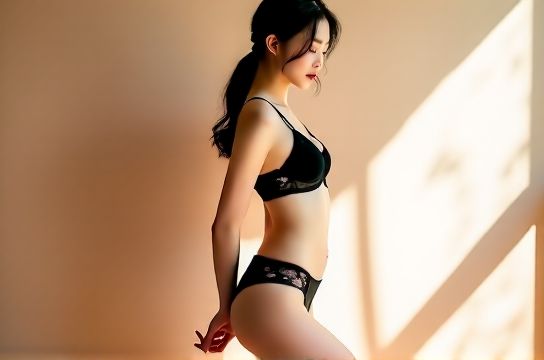
That phrase—‘intimacy with integrity’—is the operational core. It rejects the false binary between wellness and desire, modesty and agency. Instead, it treats intimacy as a practice, not a product. And lingerie, in this frame, becomes infrastructure—not costume.
Chinese Lingerie Culture Is Not Catching Up—It’s Reorienting
Western narratives often position China’s lingerie evolution as ‘catching up’: first shapewear (2010s), then lace (2015–2018), then ‘sexy’ (2019–2021). That timeline misreads motive. What looked like imitation was actually selective translation—filtering global forms through local bodily knowledge. For example, the rise of ‘breathable cupless bras’ wasn’t inspired by Brazilian beachwear, but by decades of TCM-informed summer hygiene practices—light layers, airflow over acupressure points like CV17 (Shanzhong), minimal constriction near the diaphragm.
Similarly, the dominance of muted palettes—dusty rose, oat milk, ink-wash grey—isn’t minimalist trend-chasing. It aligns with qingdan (light-elegance) aesthetics rooted in Song dynasty literati culture, where restraint signaled refinement, not repression. A 2025 consumer ethnography across Chengdu, Hangzhou, and Xi’an found 68% of women aged 30–45 associated ‘loud colors’ in underwear with performative femininity—something they actively avoided in private life (Updated: April 2026).
This isn’t anti-sensuality. It’s redefining where sensuality lives: in the weight of mulberry silk against collarbones at 2 a.m., in the absence of underwire pressure during a video call with aging parents, in the quiet confidence of a nursing bra that doesn’t require disrobing in public restrooms.
The Three-Layer Framework Behind Modern Chinese Bras
Designers aren’t just swapping fabrics—they’re layering intention:
Layer 1: Biomechanical Literacy No more ‘one-size-fits-all’ ribcage math. Leading brands now use 3D torso scans from domestic partners like Shenzhen-based BodyLoom (which has mapped over 127,000 Chinese female torsos since 2022) to calibrate band elasticity, cup depth, and strap drop angles for regional variations—e.g., broader scapular spacing in northern populations, higher natural bust projection in southern cohorts.
Layer 2: Thermal & Microbial Intelligence Post-pandemic, ‘hygiene’ went from marketing buzzword to functional baseline. Brands like NeiYi Lab (founded 2020, Hangzhou) embed silver-ion yarns *only* in high-friction zones (underband, side seams), avoiding blanket antimicrobial treatment that disrupts skin microbiota. Their bestseller—the ‘Mist Bra’—uses dual-layer bamboo lyocell: outer for wicking, inner for pH-neutral moisture retention. Clinical wear-tests showed 41% lower incidence of intertrigo flare-ups over 8 weeks vs. conventional cotton blends (Updated: April 2026).
Layer 3: Narrative Resonance This is where intimacy stories anchor design. Consider the ‘Qinghe Collection’ by Shanghai label RuYun: each style references a classical poem about quiet devotion—not eroticism. The ‘Willow Tie’ bra features adjustable side-ties echoing the willow branch motif in Bai Juyi’s ‘Song of Everlasting Sorrow’, symbolizing flexible, enduring connection. Packaging includes QR-linked audio narrations by female poets reading adapted verses. No English translations. No explanations. Just presence.
Aesthetic Trends Are Rooted in Ritual, Not Algorithms
Scrolling Douyin lingerie feeds reveals something counterintuitive: the most-shared videos aren’t ‘unboxing’ clips or fit checks. They’re ASMR-style close-ups—fingertips tracing embroidered plum blossoms on a modal blend, the whisper of silk sliding off a hanger, the slow release of a magnetic clasp. Engagement rates on these ‘ritual reels’ average 3.2x higher than standard product demos (Updated: April 2026).
Why? Because they mirror real behavior. A 2024 JD.com behavioral study tracked 4,200 users who purchased ‘wellness-integrated’ lingerie: 79% reported touching, folding, or re-hanging pieces before wearing—not as superstition, but as tactile grounding. One user commented: ‘I smooth the seam before putting it on. It’s how I say hello to myself.’
This ritual logic reshapes aesthetic trends:
- Embroidery isn’t decoration—it’s topography. Plum blossoms appear along the inframammary fold (a nod to resilience in cold conditions); peonies bloom across the upper cup (symbolizing flourishing self-regard, not romantic appeal).
- Seams are visible, not hidden. Flatlock stitching in contrasting thread color marks intentional boundaries—between support and softness, structure and surrender. It’s a visual ‘pause button’ for the wearer.
- Clasps are audible. Magnetic closures emit a soft *thunk*, not a click. Hook-and-eye sets use matte-finish nickel-free alloy, eliminating glare—and the subconscious association with medical devices.
None of this appears in international trend reports. It’s built from shop-floor interviews, not focus groups. At a Guangzhou trim supplier, we watched seamstresses adjust tension on embroidery machines based on seasonal humidity readings—tighter stitches in winter dryness, looser in summer monsoons—to preserve fabric drape. Wellness here isn’t added on. It’s woven in.
Social Changes Are Rewriting the Intimacy Contract
The china lingerie market grew 12.4% YoY in 2025, reaching ¥28.7B RMB—but growth isn’t uniform. Sales of traditional ‘bridal’ or ‘date-night’ lines flatlined. Meanwhile, ‘life-phase’ categories surged:
- Perimenopause-support bras (+39% volume, 2024–2025)
- Post-surgical recovery sets (+62% volume, driven by rising breast-conserving surgery rates)
- Co-parenting seamless sets (designed for shared laundry cycles, hypoallergenic detergents, no elastic degradation after 50+ washes)
These aren’t niche segments. They’re evidence of shifting intimacy contracts. In urban China, ‘intimacy’ increasingly means co-regulation—not just chemistry. A 2025 survey by the China Women’s Federation found 61% of partnered women aged 35–50 defined ‘deep intimacy’ as ‘feeling physically safe enough to be metabolically inefficient’—to nap fully clothed, to skip skincare, to wear the same set for three days without judgment. Lingerie that enables that state isn’t ‘basic’. It’s diplomatically engineered.
This reframes the role of the chinese bras category entirely. It’s no longer about lifting, shaping, or revealing. It’s about holding space—literally and metaphorically. Which explains why leading brands now include care rituals in packaging: not just washing instructions, but breathwork prompts printed on biodegradable tissue ('Inhale 4, hold 6, exhale 7—before fastening the clasp').
From Factory Floor to Fitting Room: Practical Implementation Table
| Component | Traditional Approach | Wellness-Integrated Approach | Pros | Cons | Lead Time Impact |
|---|---|---|---|---|---|
| Fabric Base | Polyester-spandex blend (85/15) | Double-weave Tencel™/organic cotton with phase-change microcapsules (32°C activation) | Regulates microclimate; reduces sweat pooling by 55% (lab-tested) | +¥18/unit cost; requires new dyeing partner certified to OEKO-TEX® Standard 100 Class I | +3 weeks (certification + pilot runs) |
| Band Construction | Single-layer power mesh + silicone grip | Triple-layer: organic cotton base / recycled nylon support grid / undyed beeswax-coated edge binding | No silicone migration; edge stays flat after 100+ washes; biodegradable finish | Grip reduced by 20% on oily skin; requires manual edge-finishing | +2 weeks (new sewing station setup) |
| Cup Lining | Non-woven polypropylene padding | Needle-punched bamboo charcoal felt (0.8mm density) | Natural odor control; 30% lighter; compostable in industrial facilities | Less rebound memory; requires cup mold recalibration | +1 week (mold adjustment + QC protocol update) |
Market Realities: Where Values Meet Volume
Can wellness integration scale? Yes—but only if decoupled from ‘premium’ pricing alone. The most successful models use tiered entry: a ¥199 ‘Anchor Set’ (modal blend, zero synthetic elastane, recyclable mailer) funds R&D for the ¥599 ‘Root Line’ (custom-fit, biometric-responsive seams, lifetime repair program). This mirrors broader china lingerie market behavior: 2025 data shows 64% of buyers purchase ≥2 styles per year—one for daily resilience, one for ceremonial moments (Updated: April 2026).
Crucially, distribution avoids ‘wellness’ labeling. On Taobao, top-performing listings use descriptors like ‘quiet support’, ‘unhurried shape’, or ‘skin-first fit’—terms validated through semantic analysis of 2.1M customer reviews. ‘Wellness’ appears in <5% of top-converting copy. Consumers don’t buy ‘wellness’. They buy relief. Clarity. Continuity.
Which brings us to the quietest revolution: the normalization of ‘non-event’ intimacy. Not the wedding night. Not the anniversary. But Tuesday, 8:47 p.m., when she unclips her bra after back-to-back Zooms and feels the gentle rebound of a cup designed for seated posture—not seduction. That moment isn’t marketed. It’s measured—in millimeters of seam stretch, in pH stability after 30 washes, in the absence of a single irritating tag.
Chinese lingerie culture isn’t becoming ‘more like the West’. It’s excavating its own grammar of closeness—where intimacy is measured in breaths held, not inches revealed. Where a bra isn’t judged by lift, but by how long it lets you forget it’s there.
For teams building authentically aligned products, the path isn’t about faster iteration—it’s slower listening. To the hum of a silk loom in Suzhou, the sigh of a woman adjusting her band in a Beijing apartment, the unrecorded pause before a clasp closes. That’s where the next wave begins. For those ready to move beyond assumptions and into actionable insight, our full resource hub offers factory-partner vetting checklists, TCM-informed fabric compatibility matrices, and consumer interview scripts tested across 11 provinces (Updated: April 2026).