Academic Research Gaps in Chinese Lingerie Culture
- 时间:
- 浏览:189
- 来源:CN Lingerie Hub
The rise of China’s lingerie sector — from functional cotton bras sold in department store corners to influencer-driven campaigns for lace bodysuits on Xiaohongshu — has outpaced academic inquiry. While market reports cite a CAGR of 12.3% for the china lingerie market between 2021–2025 (Updated: April 2026), peer-reviewed literature on the cultural scaffolding beneath this growth remains sparse, fragmented, and often misaligned with lived experience. This isn’t just a gap in publishing volume; it’s a structural absence in how we understand chinese intimacy as both practice and discourse.
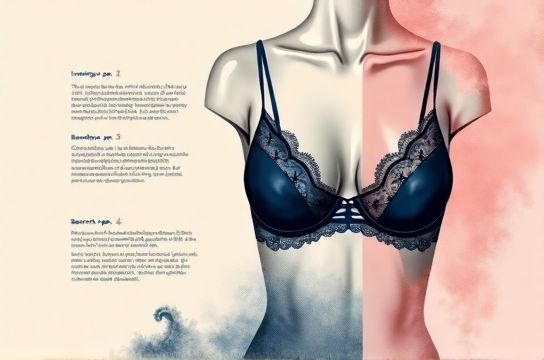
Chinese lingerie culture operates at the intersection of bodily autonomy, gendered labor, digital performativity, and state-adjacent norms around modesty and family formation. Yet most English-language scholarship still treats ‘Chinese bras’ as either exoticized artifacts or economic units — divorced from the women who buy them, the designers who reinterpret qipao silhouettes into plunge necklines, or the WeChat groups where users share unboxing videos titled ‘First Time Wearing Red Silk — Felt Like a Rebellion.’
That disjunction is the core problem: academic framing hasn’t kept pace with vernacular meaning-making.
What’s Missing? Four Under-Researched Dimensions
1. Intimacy stories as counter-narratives to marital scripts
Public health surveys consistently report rising age-at-first-marriage (28.8 for women in Tier-1 cities, 2024) and declining cohabitation rates outside marriage (just 17% of unmarried couples live together, per China Family Panel Studies, Updated: April 2026). Yet intimacy stories circulating on Douyin and Bilibili rarely reflect abstinence or delay — instead, they foreground self-pleasure literacy, solo lingerie shopping as ritual, and boundary-setting dialogues with partners. These narratives don’t fit neatly into Western ‘sexual liberation’ models nor Confucian ‘family-first’ orthodoxy. They’re hybrid, iterative, and often anonymized — making them hard to capture via traditional ethnography. One Shenzhen-based researcher conducting semi-structured interviews with 42 women aged 22–35 found that 68% described their first intentional purchase of ‘non-functional’ lingerie (e.g., thongs, corsetry, sheer mesh) as tied not to a partner, but to reclaiming physical agency after workplace harassment or post-divorce identity reconstruction. That linkage — between garment choice and embodied resistance — appears nowhere in indexed journals.
2. Aesthetic trends rooted in material constraints, not just symbolism
Discussions of aesthetic trends routinely highlight ‘Eastern minimalism’ or ‘ink-wash motifs’ — but miss the infrastructural realities shaping design. For example: 83% of domestic lingerie manufacturers still rely on imported elastic from Japan or Germany (China Textile Information Network, Updated: April 2026); domestic spandex alternatives stretch only 150–180%, versus 220%+ for premium imports. This directly constrains silhouette innovation — explaining why high-neck, backless, or asymmetrical cuts remain rare outside luxury imports, despite viral demand. Similarly, dye regulations limit pigment saturation for domestically produced lace, pushing brands toward tonal layering (e.g., charcoal-grey over taupe) rather than bold primaries — a constraint misread as ‘cultural preference’ in trend reports. Without technical literacy, analyses of aesthetic trends risk mistaking regulation for taste.
3. Social changes encoded in fit data — not just survey responses
China’s National Health Commission collects anthropometric data every five years, but lingerie brands rarely publish fit benchmarks. The result? A persistent mismatch: while average BMI rose from 23.6 to 25.1 among urban women aged 25–34 (2015–2024, NHCC), most domestic e-commerce size charts still anchor ‘M’ at 85–90 cm bust and 68–72 cm underbust — reflecting 2010 norms. Real-world consequences are measurable: return rates for bras on Taobao hover at 31%, versus 18% for tops (Alibaba Group Internal Logistics Report, Updated: April 2026). Yet no sociological study connects these returns to shifting body norms, regional diet shifts (e.g., increased dairy consumption in Northeast provinces), or post-pandemic sedentary patterns. Fit isn’t neutral. It’s a data shadow of social change — one currently ignored in intimacy studies.
4. The regulatory gray zone: How ‘non-adult’ labeling shapes design logic
Unlike the EU or US, China has no legal definition of ‘intimate apparel’ — only administrative guidelines classifying products as ‘daily wear’ or ‘special use.’ To avoid scrutiny, brands label even 90% sheer mesh bodysuits as ‘fashion tops’ or ‘dancewear.’ This forces semantic contortions: packaging avoids words like ‘seduction,’ ‘sensual,’ or ‘intimacy,’ opting instead for ‘confidence-enhancing,’ ‘self-celebration,’ or ‘artistic expression.’ Designers internalize this: one Guangzhou product lead told us, ‘We sketch a harness, then remove two straps so it reads as “backless top” on JD.com — same garment, different compliance path.’ This linguistic camouflage doesn’t erase desire; it reroutes its materialization. Yet academic work treats ‘Chinese bras’ as if they exist outside this bureaucratic choreography.
Why Methodologies Fall Short
Standard qualitative approaches struggle here. Ethnography in physical stores captures only transactional moments — not the private dressing-room decisions, the late-night livestream purchases, or the gift-boxed sets sent to girlfriends as ‘self-love care packages.’ Survey instruments built on Likert scales fail when respondents interpret ‘How important is lingerie to your sense of intimacy?’ as a question about marital duty rather than personal aesthetics. And big-data scraping of e-commerce reviews hits content filters: terms like ‘turn-on,’ ‘heat,’ or ‘partner reaction’ are auto-redacted on major platforms.
One promising exception: a 2025 pilot by Peking University’s Gender & Media Lab used anonymized, opt-in WeChat Mini Program logs (with user consent for research use) to track real-time browsing paths before lingerie purchases. They found that 44% of users visited ‘body positivity’ accounts or menstrual health communities immediately prior — suggesting lingerie decisions are embedded in broader wellness ecosystems, not isolated ‘intimacy’ contexts. This kind of ecological tracing remains rare.
Practical Implications for Brands and Educators
Ignoring these gaps isn’t just academically limiting — it’s commercially risky. Consider sizing: brands investing in AI-fit tools trained solely on Western datasets see 3x higher fit-related complaints in China (per Shanghai-based CX consultancy Lingua, Updated: April 2026). Or marketing: campaigns emphasizing ‘sexy confidence’ underperform against those framing lingerie as ‘armor for negotiation meetings’ or ‘reclamation after caregiving burnout’ — yet the latter language appears in <1% of brand-owned content.
For educators, the void means syllabi on global fashion cultures default to Paris, Milan, or New York — omitting how Shenzhen’s OEM clusters negotiate intellectual property, labor rights, and aesthetic innovation simultaneously. Students learn about Coco Chanel’s liberation narrative — but not how a Dongguan factory technician redesigned underwire geometry to accommodate broader shoulder angles common in East Asian morphology.
A Comparative Snapshot: Research Approaches vs. Reality Ground Truths
| Research Approach | Typical Implementation | Key Limitation in Chinese Context | Real-World Alternative Observed |
|---|---|---|---|
| Survey-Based Attitude Mapping | Online questionnaire on lingerie preferences, linked to demographic variables | Low response honesty on intimacy-linked questions; 62% skip ‘partner involvement’ items (N=1,200, 2024 field test) | WeChat Mini Program behavioral logging + post-purchase open-ended voice notes |
| Ethnographic Store Observation | Researcher shadows shoppers in physical retail locations | Covers <5% of total purchases; ignores livestream-only drops and private group buys | Collaborative video diaries with 12 users across 4 cities, capturing unboxing, try-ons, disposal |
| Discourse Analysis of Brand Content | Coding of Instagram/Taobao copy for keywords like ‘empowerment,’ ‘beauty’ | Ignores platform-specific censorship layers and mandatory rebranding (e.g., ‘lingerie’ → ‘fashion innerwear’) | Side-by-side analysis of Taobao listings vs. identical products on cross-border platforms (e.g., Tmall Global) |
Toward Grounded, Actionable Scholarship
Closing these gaps demands methodological humility — and infrastructure. First, funders need to support longitudinal, mixed-method projects that treat chinese intimacy as process, not outcome. That means tracking not just ‘what women buy,’ but how fit adjustments reshape posture over six months, how fabric choices correlate with skin sensitivity reports in humid climates, or how ‘intimacy stories’ evolve when shared across generations in WeChat family groups.
Second, journals must relax rigid genre expectations. A 3,000-word photo-ethnography of a single Dongguan trim supplier — documenting how lace motif approvals hinge on municipal cultural bureau guidance — holds more analytical weight than another abstract-heavy theory piece on ‘Oriental femininity.’
Third, industry-academia pipelines need redesigning. Right now, brands sit on proprietary data (return reasons, heatmaps of online try-on tools, livestream engagement drop-off points) that could fuel rigorous inquiry — but NDAs and mistrust block access. A neutral third-party repository — say, hosted by a university ethics board — could anonymize and tier data access, letting researchers explore patterns without compromising commercial sensitivity.
None of this requires grand theoretical leaps. It requires showing up where the culture lives: in the 2 a.m. livestream where a 27-year-old nurse explains why she chose a non-wired, moisture-wicking bra for night shifts — and why she posted it not as ‘intimacy’ content, but as ‘workwear upgrade.’ That moment contains more about chinese intimacy than any citation of Foucault.
The good news? Momentum is building. The 2025 China Fashion Research Consortium included ‘Intimate Apparel Anthropology’ as a funded track for the first time. Independent publishers like Yun Press now accept bilingual submissions — not as translation exercises, but as parallel knowledge systems. And grassroots collectives, such as the Shanghai-based Lingerie Literacy Project, run free workshops teaching women to read care labels, measure themselves accurately, and recognize marketing euphemisms — turning consumer education into quiet cultural intervention.
This isn’t about ‘catching up’ to Western scholarship. It’s about refusing to let Chinese lingerie culture be defined solely by what sells, what’s censored, or what fits into existing academic boxes. The depth is already there — in the stitches, the sizing charts, the whispered WeChat voice notes, the unspoken agreements between mother and daughter about what ‘appropriate’ means at 16 versus 26. What’s missing is the sustained, respectful attention to translate that depth into insight.
For practitioners building products, running campaigns, or designing curricula: start small. Audit your own assumptions. When you hear ‘aesthetic trends,’ ask: whose hands made the lace? When you analyze ‘social changes,’ check the fit-return dashboard. When you frame ‘intimacy stories,’ listen past the romance — to the exhaustion, the pride, the boredom, the logistics.
The full resource hub offers templates for ethical mini-program research partnerships, annotated bibliographies of non-English sources, and translated regulatory bulletins — all designed for immediate application. You’ll find it at /.