Chinese Lingerie Culture: Identity and Intimacy in Modern...
- 时间:
- 浏览:153
- 来源:CN Lingerie Hub
When Li Wei, a 28-year-old brand manager in Shanghai, unbuttons her blazer after work and slips into a lace-trimmed, minimalist bralette from a domestic label like NEIWAI or Ubras, she’s not just changing clothes. She’s performing a quiet negotiation — between the disciplined self expected at her corporate desk and the embodied self she curates in private. This duality isn’t incidental. It’s structural. And it’s accelerating across tier-1 to tier-3 cities, driven less by Western influence and more by homegrown recalibrations of autonomy, aesthetics, and intimacy.
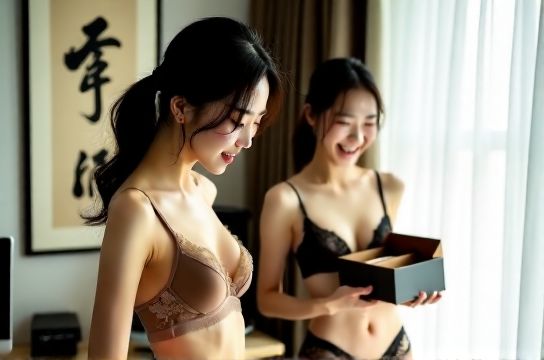
Chinese lingerie culture is no longer defined by secrecy or shame — nor is it simply mimicking global ‘body positivity’ scripts. It’s emerging as a site where workplace identity and private expression converge, sometimes frictionlessly, often tensely. What’s distinctive isn’t the garments themselves, but *how* and *why* they’re worn, shared, discussed, and sold — all within tightly calibrated social boundaries.
Let’s start with the numbers. The China lingerie market reached ¥48.7 billion RMB in 2025, growing at 12.3% YoY — outpacing apparel overall (7.1%) and even sportswear (9.8%). But growth isn’t uniform. Functional, comfort-first bras (e.g., wireless, seamless, cotton-blend) now account for 61% of online sales volume on Tmall and JD.com — up from 44% in 2021 (Updated: April 2026). Meanwhile, ‘intimacy-focused’ pieces — those marketed explicitly for romantic or sensual contexts — represent only 8.2% of units sold, yet drive 22% of revenue. That premium reflects intentionality: buyers aren’t stockpiling; they’re selecting deliberately, often with narrative weight.
That narrative is what we call ‘intimacy stories’ — first-person accounts, WeChat Moments posts, Xiaohongshu (RED) notes, and Douyin voiceovers describing how a particular bra made someone feel seen, capable, or quietly rebellious. These aren’t marketing slogans. They’re micro-testimonies: *‘Wore this under my internship suit — no one knew, but I did.’ ‘Bought it before my first date in three years. Not for him. For the version of me who still trusts touch.’*
These stories rarely mention ‘sex’. Instead, they orbit consent, continuity, and control — themes that resonate deeply in a context where personal space is physically compressed (e.g., 60% of urban renters live in <60m² apartments), workplace hierarchies remain rigid, and family expectations around marriage persist. Intimacy, in this framing, becomes less about partnership and more about *self-recognition*. A well-fitting, aesthetically coherent bra isn’t vanity. It’s infrastructure for interior coherence.
Which brings us to aesthetic trends — the visible grammar of this shift. Three patterns stand out:
1. **The ‘Office-to-Bedroom Gradient’**: Designers avoid overt sex appeal (e.g., fishnet, garter straps, extreme cut-outs) in favor of tonal layering — ivory over charcoal, heather grey with brushed gold hardware, matte satin that reads professional from 3 meters but reveals texture up close. NEIWAI’s ‘Cloud Series’, launched Q2 2025, uses double-layered Tencel™ with zero elastic binding — comfortable enough for an 8-hour workday, refined enough to photograph well in natural light for a RED post.
2. **Material Storytelling**: Cotton is no longer ‘basic’. It’s branded as ‘breathable integrity’. Modal blends signal ‘considered softness’. Even recycled nylon gets narrative treatment: ‘Ocean yarn, re-spun — like second chances, but tangible.’ Consumers don’t just buy fabric specs; they buy the ethics-and-aesthetics package. A 2025 consumer survey by CIC Group found 68% of women aged 22–35 said material origin mattered ‘as much as fit’ when choosing bras (Updated: April 2026).
3. **Quiet Symbolism Over Loud Messaging**: Logos are small or absent. Packaging is reusable — often a drawstring cotton pouch repurposed as a makeup bag or travel organizer. One popular Ubras launch included a QR code linking to a 90-second audio essay on ‘what holding space means, literally and otherwise’. No hashtags. No influencer cameos. Just voice, silence, and a pause button.
This aesthetic restraint isn’t apolitical. It’s adaptive. In China’s regulatory environment, overt sexualization triggers platform moderation — Douyin removes videos tagged lingerie if skin exposure exceeds 30% frame area; RED suppresses posts using terms like ‘seductive’ or ‘naughty’ unless paired with medical or wellness context (e.g., ‘postpartum intimacy support’). So brands pivot: ‘chinese intimacy’ becomes coded in texture, hue, and ritual — not pose or provocation.
That coding extends to retail. Physical stores avoid ‘lingerie’ in signage. NEIWAI uses ‘Bodywear’. Ubras opts for ‘Innerwear’. Shelves are organized by *function + feeling*: ‘All-Day Calm’, ‘First Date Clarity’, ‘Post-Work Unwind’. Staff training emphasizes active listening over upselling: ‘What does “support” mean to you today?’ not ‘Do you want padded?’
Online, the intimacy story thrives in semi-private spaces. WeChat ‘Moments’ posts with lingerie shots are almost always cropped to torso-only, no face, background blurred to a neutral wall or folded duvet. Captions are poetic fragments: *‘Stitched where I needed holding.’ ‘Soft armor.’ ‘Not hiding. Aligning.’* Engagement is high — but comments stay supportive, never suggestive. This isn’t censorship; it’s co-regulation. Users police tone instinctively because they understand the stakes: a misstep could trigger algorithmic shadow-banning or, worse, familial scrutiny if shared outside intended circles.
Social changes are both accelerant and constraint. Urbanization has given young adults physical privacy (even if tiny) for the first time — a room of one’s own, however modest. Yet economic pressure (rising housing costs, job market volatility) delays traditional milestones like marriage and cohabitation. The result? Intimacy gets decoupled from partnership and relocated inward. ‘Chinese bras’ increasingly serve dual roles: ergonomic tools for daytime performance *and* tactile anchors for nocturnal self-reconnection.
Manufacturers respond. Dongguan-based suppliers report a 40% YoY increase in orders for ‘dual-density foam’ — firm support where needed (under bust), plush softness where skin contacts (cup edges). Seam placement is optimized for invisible wear under thin knits — critical for office wear in summer. Even sizing logic shifts: instead of traditional A–G cup ranges, brands like ManiMani now use ‘Level 1–5 Support’ descriptors, paired with posture diagrams (slouch vs. upright) — making fit feel less medical, more behavioral.
None of this is frictionless. Limitations are baked in. First, accessibility remains narrow. Premium domestic brands average ¥299–¥499 per bra — 3.2x the price of mass-market alternatives. While financing options exist (e.g., installment plans via Alipay), uptake is low among lower-income buyers who cite ‘not worth the debt for something unseen’. Second, size inclusivity lags. Only 12% of domestic brands offer sizes beyond 85F (EU)/36F (US), despite 27% of Chinese women aged 20–40 wearing larger cup sizes (Updated: April 2026, Kantar China Body Data Report). Third, male partners remain largely absent from the discourse — not as purchasers (they account for <5% of direct sales), but as cultural participants. Intimacy stories rarely include them, reflecting ongoing asymmetries in emotional labor and expectation.
Still, the momentum is structural, not cyclical. Consider the supply chain: in 2023, only 3 domestic mills produced certified OEKO-TEX® Standard 100 modal for intimate apparel. By 2025, that number is 11 — all investing in closed-loop dye systems. Or look at talent: Tsinghua University’s Industrial Design program added a ‘Intimate Product Ethics’ elective in 2024; enrollment hit capacity in 72 hours. These aren’t vanity projects. They’re infrastructure investments in a category maturing beyond novelty into necessity.
For practitioners — designers, marketers, retailers — the implication is clear: success hinges on respecting the boundary between public composure and private resonance. Don’t sell ‘sexy’. Sell *continuity*. Don’t promise transformation. Promise fidelity — to the body’s needs, the day’s demands, and the quiet stories users carry but rarely broadcast.
Below is a comparative snapshot of how three leading domestic brands approach core design and messaging levers — not as competitors, but as distinct nodes in the same evolving ecosystem:
| Feature | NEIWAI | Ubras | ManiMani |
|---|---|---|---|
| Primary Fit Philosophy | Posture-aligned support (focus on scapular stability) | Zero-pressure comfort (wire-free, seam-free) | Anatomical cup engineering (3D-molded, multi-panel) |
| Avg. Price Point (RMB) | ¥399 | ¥299 | ¥469 |
| Key Material Innovation (2025) | Tencel™ + recycled elastane (biodegradable band) | Ice-silk knit (phase-change cooling) | Bamboo-derived rayon + medical-grade silicone grip |
| Intimacy Story Channel | WeChat audio essays + printed zines in-store | Xiaohongshu ‘Real Day’ series (no retouching) | Douyin ‘Unbutton’ ASMR soundscapes (fabric rustle focus) |
| Pros | Strongest brand trust for long-term wear; high repeat rate (68%) | Broadest distribution (offline + e-commerce); fastest logistics | Best technical fit for fuller busts; niche but loyal community |
| Cons | Slower new-product cycles; limited color variety | Lower perceived durability; higher return rate (19%) | Premium pricing limits trial; minimal offline presence |
None of these approaches is ‘correct’. Each serves a different facet of the same reality: Chinese lingerie culture is less about garments and more about permission — to prioritize sensation, to claim quiet agency, to align outer presentation with inner calibration. That permission isn’t granted top-down. It’s negotiated daily, in dressing rooms, DMs, and the split-second glance in a subway window reflection.
For teams building in this space, the most actionable insight isn’t about fabric or fit — it’s about framing. Avoid positioning products as ‘liberation’ (too loaded) or ‘luxury’ (too exclusionary). Instead, anchor communication in verbs that reflect lived behavior: *hold, adjust, soften, recognize, continue.*
And remember: the most powerful intimacy stories aren’t told aloud. They’re worn — then taken off, folded carefully, placed beside a phone charging overnight. A ritual. A rhythm. A quiet insistence.
For teams scaling operations while preserving narrative integrity, our full resource hub offers vendor scorecards, regulatory checklists, and real-world campaign tear-downs — all grounded in on-the-ground execution, not theory. You’ll find the complete setup guide at /.