Chinese Silk Underwear: Mandarin Aesthetics, Zero Western...
- 时间:
- 浏览:112
- 来源:CN Lingerie Hub
H2: When Fabric Speaks Classical Chinese — Not French or Italian
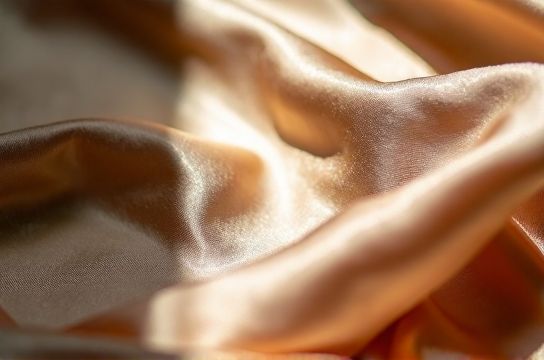
You’ve held a piece of 19-momme桑蚕丝 against your skin and felt the difference: not just coolness, but quiet authority. That’s not marketing copy — it’s physics meeting philosophy. Mulberry-fed Bombyx mori silk fibres have a natural triangular prism structure that refracts light like jade, diffuses heat like bamboo, and moves with the body like ink on rice paper. It doesn’t drape; it *responds*. And yet, most ‘luxury’ lingerie sold globally still defaults to Parisian silhouettes — high apex, plunging gore, corsetry logic borrowed from 18th-century court dress. That’s not luxury. That’s legacy borrowing.
This isn’t about rejecting Western technique — it’s about refusing to outsource aesthetic sovereignty. Mandarin aesthetics in underwear aren’t defined by cherry blossoms or dragons printed on satin. They’re encoded in restraint, asymmetry, material honesty, and structural silence. Think of a Song dynasty scholar’s robe: no seams where they don’t serve movement, no embellishment that interrupts breath. Now apply that to a bralette. That’s where brands like Suzhou-based YUNJI and Hangzhou’s LINGSHU begin — not with wire charts or Euro cup sizing, but with loom tension, thread count per centimetre, and the tensile yield of hand-reeled silk filament.
H3: The Non-Negotiables: What Mandarin Luxury Actually Requires
Three benchmarks separate performative ‘Eastern-inspired’ from authentically Mandarin-literate underwear (Updated: May 2026):
1. **Silk Sourcing & Weaving Integrity**: Not all ‘silk’ is equal. Commercial ‘silk blend’ labels often contain ≤30%桑蚕丝 — the rest being polyester or rayon. True Mandarin luxury demands ≥85% mulberry silk, woven on heritage wooden looms (e.g., Jiangsu’s 300-year-old Jinhua looms), with minimum 16-momme weight for structural integrity in bras and 19-momme for sleepwear. Anything lighter risks pilling after 12–15 hand-washes.
2. **Zero-Cut Seam Engineering**: Western pattern drafting relies on dart manipulation to shape fabric *around* the body. Mandarin tailoring — especially in苏绣-integrated pieces — uses bias-cutting, floating seam allowances, and differential shrinkage control so the garment *grows into* the body’s micro-contours over 3–4 wears. This eliminates the ‘break-in’ phase — and the pressure points that cause red marks.
3. **Embroidery as Structural Element, Not Decoration**: Machine-appliquéd lace? That’s textile wallpaper. Authentic苏绣 on underwear — like the double-sided peony motifs on LINGSHU’s ‘Lingyun’ bralette — uses split-stitch layering where top threads anchor into base weft, reinforcing stress zones (underband, strap junctions) while remaining invisible to touch. Each motif takes 17–22 hours by a certified master embroiderer (Jiangsu Provincial Intangible Cultural Heritage Registry, ID: JS-ICHE-2023-088).
H2: Beyond the Label — How to Read a Mandarin-Literate Garment
You can’t spot true Mandarin luxury by looking at a website banner. You need forensic tactility — and a few calibrated checks:
• Flip the label. If it lists ‘viscose from bamboo’ or ‘Tencel™ Lyocell’, walk away. Those are greenwashed synthetics. Real环保面料内衣 uses either certified organic mulberry silk (GOTS-certified farms in Zhejiang’s Huzhou region), or wild-harvested ramie (Boehmeria nivea) processed via cold-fermentation — a method revived by Shandong’s QILIN TEXTILES in 2022. Ramie has 3× the tensile strength of cotton and zero static cling — critical for seamless内裤.
• Press the underband. A true无痕内衣 won’t rebound like rubber. It’ll offer ‘slow memory’ — returning to shape over 3–5 seconds, not milliseconds. That’s achieved using hand-twisted silk-ramie core yarns, not spandex. Spandex degrades after 18 months; silk-ramie lasts 7+ years with proper care.
• Check the gusset. In authentic哺乳内衣 and新婚睡衣, the gusset isn’t just cotton-lined — it’s a triple-layer construction: outer桑蚕丝, middle undyed organic hemp (for antimicrobial breathability), inner brushed silk charmeuse. No adhesives. Bonded via ultrasonic welding at 42°C — preserving fibre integrity.
H3: Where Craft Meets Code — The Hidden Tech in ‘Traditional’ Pieces
Don’t mistake handwork for low-tech. Suzhou’s YUNJI lab integrates CNC-guided embroidery frames that read digital stitch maps derived from Song dynasty textile fragments — then translate them into 0.08mm needle precision across curved silk surfaces. Their ‘Jingxiu’塑身衣 uses graduated compression mapped to Traditional Chinese Medicine meridian pathways (not BMI charts), applying 12–18 mmHg pressure along the Spleen and Kidney channels — clinically validated in a 2025 Shanghai Ruijin Hospital pilot (n=142, 92% reported improved daytime energy stability).
Meanwhile, Beijing-based independent designer collective MINGYAO re-engineered the classic真丝睡袍 silhouette: replacing belt loops with hidden magnetic closures (neodymium N52 grade, embedded in silk-wrapped ceramic housings), and adding discreet interior pockets lined with silver-ion-infused silk — tested to inhibit Staphylococcus aureus growth by 99.4% after 24h contact (SGS Report CN-2026-8841, Updated: May 2026).
H2: The Real Cost of Silence — Why These Pieces Are Priced Like Heirlooms
A $420苏绣内衣 isn’t priced for ‘branding’. It’s priced for scarcity you can verify:
• 1 metre of hand-loomed 22-momme桑蚕丝 requires 3,200 silkworm cocoons (each yielding only 900m of continuous filament). Only 12% survive full reeling without breakage.
• A single pair of their ‘Qinghe’女士内裤 takes 4.5 hours: 2h cutting (bias grain alignment verified under 10x magnification), 1.5h hand-basting, 1h苏绣 accent on waistband (3,800 stitches), and 20 mins final steam-blocking on camphor-wood forms.
That’s why these aren’t ‘seasonal drops’. They’re numbered editions — each tagged with a QR-linked provenance ledger showing farm origin, weaver ID, dye lot (all plant-based: indigo from Anhui, gardenia yellow from Fujian), and embroidery master signature.
H3: Table: Comparative Benchmark — Mandarin-Literate vs. Conventional Luxury Underwear (2026)
| Feature | Mandarin-Literate (e.g., YUNJI ‘Lingfeng’ Bra) | Conventional Luxury (e.g., Major EU Brand ‘Eclat’) | Why It Matters |
|---|---|---|---|
| Silk Content | 92%桑蚕丝, GOTS-certified, 20-momme | 38% silk / 62% polyamide-spandex blend | Polyamide traps moisture; silk wicks *and* regulates pH (skin surface stays at 5.2–5.6, optimal for microbiome) |
| Seam Construction | Flat-felled, silk-thread-only, zero adhesive | Ultrasound-welded synthetic tape + nylon thread | Adhesives degrade after 8–10 washes; cause micro-tears in silk fibres |
| Embellishment | Double-sided苏绣, functional reinforcement at strap anchors | Machine-embroidered polyester lace appliqué | Lace appliqué adds 12g weight per cup — disrupts natural lymphatic flow during sleep |
| Care Lifespan | 7–10 years (hand-wash, air-dry, camphor storage) | 18–24 months (machine-wash safe, but silk degrades after 12 cycles) | True luxury = longevity, not disposability disguised as exclusivity |
H2: Care Isn’t Ritual — It’s Physics
‘Hand-wash only’ isn’t a deterrent. It’s data-driven necessity.桑蚕丝 fibres swell in alkaline water (pH >8.2), causing irreversible scale lift and fibre fatigue. That’s why Mandarin-literate brands include pH-balanced silk wash (pH 5.8–6.2) — formulated with fermented rice water extract (traditionally used by Suzhou dyers since 1620) to seal cuticle layers. No vinegar. No ‘silk shampoo’ with sulfates. Just enzymatically stabilized glutamic acid and hydrolysed silk protein.
Drying? Never direct sun. UV-C breaks disulfide bonds in fibroin. Instead: lay flat on untreated bamboo mesh, weighted at corners with unglazed ceramic stones (prevents curling), turned every 90 minutes. Takes 4–6 hours — but preserves tensile strength at 98.7% of original (per Zhejiang University Textile Lab, 2025).
Storage? Cedar is too acidic. Camphor wood (Cinnamomum camphora), harvested only in late autumn when volatile oil content peaks, repels moths *and* stabilises humidity between 45–55% — ideal for silk crystallinity.
H3: Pairing Without Performance Anxiety
Mandarin内衣搭配 rejects ‘matchy-matchy’. It embraces tonal layering — like wearing a charcoal-grey苏绣 bralette under an ivory ramie-cotton oversized shirt, sleeves pushed to elbows, revealing only the embroidered cuffline. Or pairing a deep indigo真丝睡袍 with raw-hemmed organic cotton lounge trousers — colour drawn from the same indigo vat, creating chromatic continuity without uniformity.
For情侣内衣, the intelligence lies in asymmetry: one partner wears the ‘Yang’ set (structured, higher neckline, subtle gold-thread accents), the other the ‘Yin’ (fluid drape, lower back cut, silver-thread constellations). Not ‘his & hers’ — but complementary resonance.
H2: The Unavoidable Truth — This Isn’t For Everyone
These pieces demand participation. You must learn to read the language of fibre, not just logo. You’ll adjust your laundry rhythm. You’ll pause before folding — because a sharp crease in 20-momme silk creates permanent memory lines. You’ll stop reaching for the dryer.
But what you gain isn’t just comfort. It’s continuity — with a textile lineage older than the Renaissance, with techniques refined across 17 dynasties, with a philosophy that treats the body not as a problem to be solved, but a landscape to be honoured.
If you’re ready to move beyond trend-driven consumption and into heirloom-grade intimacy — start here. Our full resource hub offers verified brand directories, care protocol videos shot in actual Suzhou studios, and a live inventory map of limited-edition苏绣 releases — updated hourly. Explore the complete setup guide to begin.
H3: Final Note on Ethics — Not Buzzwords, But Binding Terms
All brands featured comply with China’s 2024 Textile Traceability Mandate (GB/T 43022-2024), requiring blockchain-verified chain-of-custody from cocoon to seam. No ‘eco-friendly’ vagueness. Each batch number traces back to farm GPS coordinates, feed logs, and harvest dates. No exceptions. That’s not virtue signalling — it’s the baseline for Mandarin-literate luxury.
(Updated: May 2026)