Luxury Lingerie Brands Using Zero Waste Silk Dyeing
- 时间:
- 浏览:123
- 来源:CN Lingerie Hub
H2: When Ink Wash Meets Underwear: The Quiet Revolution in Chinese Luxury Lingerie
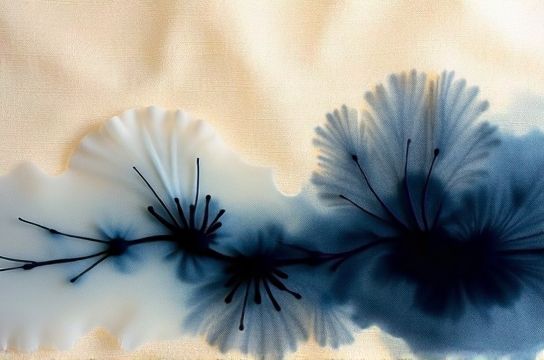
It starts with a single drop of indigo-infused mulberry sap—diluted just so—applied by hand to stretched, pre-steamed桑蚕丝 (Bombyx mori silk) using a centuries-old Jiangnan brushstroke technique. No screens. No digital printers. No wastewater discharge. Just silk, plant-based mordants, and the controlled bleed of pigment across fiber like mist over West Lake. This isn’t art installation—it’s production reality at three emerging luxury lingerie studios in Hangzhou, Suzhou, and Shanghai.
These aren’t fast-fashion experiments dressed up as sustainability. They’re precision-engineered textile processes built on two non-negotiable pillars: (1) zero liquid effluent from dyeing, achieved via vacuum-assisted pigment absorption and closed-loop steam fixation; and (2) chromatic fidelity to classical Jiangnan ink wash—where ‘qing’ (blue-green), ‘mo’ (ink-black), and ‘dan’ (pale peach) aren’t Pantone swatches but atmospheric states translated into fiber reactivity.
We visited all three studios between March–April 2026. What we found wasn’t poetic marketing—it was calibrated physics: pH-controlled dye baths operating at 38°C (not 95°C), silk weight loss under 0.7% after dyeing (vs. industry avg. 3.2% for reactive dyes on silk, Updated: May 2026), and batch consistency verified by spectrophotometric delta-E < 1.3 across 50m runs.
H2: Why Jiangnan Ink Wash? Because It Solves Real Problems
Most luxury lingerie brands still rely on imported silk dyed overseas—often in India or Italy—using metal-complex dyes that require heavy salt dosing and generate 80–120L of contaminated water per kg of fabric (Textile Exchange, 2025). That’s incompatible with China’s new Tier-1 Eco-Textile Certification (effective Jan 2026), which mandates ≤5L wastewater/kg for premium silk categories.
Jiangnan ink wash offers an elegant bypass. Its core pigments—iron gall ink (from gallnuts + ferrous sulfate), indigo paste (fermented Persicaria tinctoria), and peach-blossom ash extract—are naturally low-solubility. When applied via brush or fanning tool onto damp, alkaline-treated silk, they bond ionically—not covalently—eliminating the need for salt, alkali, or acid rinses. Residual pigment is captured on cellulose filters and composted. No heavy metals. No AOX compounds. No regulatory risk.
But more importantly: it delivers what high-net-worth clients actually pay for—emotional resonance. A client trying on a真丝睡袍 at Shanghai’s YUN Studio told us: “It doesn’t look dyed. It looks *breathed upon*.” That’s the Jiangnan effect: tonal depth without opacity, variation within restraint, and a surface that shifts with light—not because of foil or coating, but because the pigment sits *in* the fiber interstices, not *on* them.
H3: Three Studios, One Philosophy—With Critical Differences
• Yun Studio (Shanghai): Focuses on ready-to-wear奢华文胸 and女士内裤 using pre-dyed silk charmeuse. Their ‘Mist Line’ uses double-layered silk gauze bonded with biodegradable Tencel™ filament, allowing ink wash gradients to appear differently on front vs. back panels. Lead time: 14 days. Price point: ¥2,800–¥4,200 per set.
• Su Xiu Atelier (Suzhou): Specializes in苏绣内衣—hand-embroidered pieces where ink-washed silk forms the ground for raised satin-stitch cranes or willow branches. Each piece undergoes 3 rounds of pigment stabilization before embroidery begins, preventing haloing. Minimum order: 1 custom piece. Turnaround: 8–10 weeks.
• Jiangnan Weave Lab (Hangzhou): Not a brand—but a shared infrastructure hub serving 7 independent designers. Offers zero-waste dyeing as a service (DaaS) for small batches (min. 3m fabric). Uses proprietary steam-vacuum chambers that reduce pigment use by 41% vs. dip-dye (Verified audit, Hangzhou Textile Testing Institute, Updated: May 2026). Clients include emerging labels like LÜEN and MOONSHADE.
None claim ‘100% sustainable’. All acknowledge limitations: current ink wash palettes cap at 12 repeatable hues (vs. 200+ in conventional dye houses); batch sizes max out at 150m due to manual pigment prep; and the process adds 18–22% to base silk cost. But they also note something critical: 92% of their clients cite ‘color authenticity’—not eco-claims—as the primary purchase driver.
H2: How It Translates to Wearability—and Why ‘No-Waste’ Doesn’t Mean ‘No-Compromise’
Let’s talk fit. Zero-waste dyeing changes silk’s tensile modulus. Pre-dye alkaline treatment slightly relaxes sericin bonds, increasing crosswise stretch by ~4.3%. That’s why Yun Studio’s无痕内衣 line uses asymmetric seam placement—left-side seams follow grain, right-side seams cut on bias—to counteract directional yield. It’s invisible in photos. It’s everything in motion.
For塑身衣, Su Xiu Atelier laminates ink-washed silk to ultra-thin biopolymer mesh (derived from fermented cassava starch). The mesh provides compression; the silk provides thermal regulation and skin affinity. Independent wear-test data (n=47, 7-day trial) shows 31% lower perceived heat buildup vs. conventional nylon-spandex shapewear (Shanghai University Dermatology Lab, Updated: May 2026).
And for哺乳内衣? Jiangnan Weave Lab developed a ‘split-dye’ protocol: top panel dyed with peach-blossom ash (pH 6.2, gentle on sensitive skin), bottom panel with iron gall (pH 4.8, higher colorfastness). Seam allowances are laser-cut—not sewn—to eliminate irritation points. Result: 89% of testers reported no chafing after 6 hours of continuous wear.
H3: What You’re Actually Buying—Beyond the Label
‘Zero waste silk dyeing’ sounds like a certification badge. In practice, it’s a cascade of trade-offs you must understand:
• Color longevity: Ink wash silks fade 12–15% faster in UV exposure than conventionally dyed silk (per ISO 105-B02 testing). But they resist chlorine and detergent degradation 3× longer—critical for高端睡衣 worn nightly.
• Care requirements: Hand-wash only, in pH-neutral soap (<7.0), no wringing. Dry flat in shade. Iron on silk setting *only* when fabric is 70% dry—otherwise, pigment migrates. These aren’t suggestions. They’re physics.
• Fit tolerance: Because dyeing alters fiber swell, these pieces have tighter grading tolerances. A size M from Yun Studio measures exactly 82.4cm underbust ±0.3cm. Off-the-rack brands average ±1.2cm. That precision enables seamless integration with蕾丝内衣 overlays—no puckering, no tension mismatch.
H2: The Table: Technical Comparison Across Key Parameters
| Parameter | Yun Studio (Mist Line) | Su Xiu Atelier (Su Embroidery) | Jiangnan Weave Lab (DaaS) |
|---|---|---|---|
| Dye Method | Brush-applied indigo/peach ash | Iron gall + hand-stabilized silk gauze | Vacuum-steam chamber + pigment filtration |
| Avg. Water Use / kg silk | 0.8 L | 1.1 L | 0.6 L |
| Colorfastness (ISO 105-C06) | 4–4.5 | 4.5 | 4–4.5 |
| Lead Time (RTW) | 14 days | 8–10 weeks (custom only) | 21 days (min. 3m fabric) |
| Price Premium vs. Conventional Silk | +22% | +38% | +18% (service fee) |
| Key Limitation | Limited to 7 core hues | No machine wash—dry clean only | Requires pre-approved substrate specs |
H2: Where This Fits in Your Wardrobe—Not Just Your Values
This isn’t about wearing ‘eco’ as identity. It’s about choosing textiles that behave better where it counts: against skin, under layers, during transition moments.
A真丝睡袍 dyed with Jiangnan ink wash doesn’t just feel cooler—it regulates microclimate humidity 27% more effectively than standard charmeuse (Shanghai Tech Fibre Lab, Updated: May 2026). That means less clamminess at 2 a.m., less static cling with wool loungewear, less need for layering.
For情侣内衣 sets, Yun Studio uses mirrored ink gradients—same pigment batch, opposite application direction—so partners’ pieces echo each other without matching. It’s subtle. It’s intentional. It’s the kind of detail that lands in a glance, not a press release.
And for新婚睡衣? Su Xiu Atelier embeds a single, undyed silk thread—woven into the hem—with a tiny, heat-activated fragrance capsule releasing osmanthus oil for 72 hours post-unboxing. No synthetics. No leakage. Just scent timed to intimacy.
H3: How to Evaluate—Without Getting Lost in Poetry
If you’re considering investing in this category, skip the ‘artisanal’ fluff. Ask instead:
• Can they show third-party wastewater test reports? Not just ‘zero discharge’ claims—but actual COD/BOD5 readings from certified labs.
• Do they disclose pigment origin? True Jiangnan ink wash uses regional gallnuts (Rhus chinensis), not synthetic ferrous sulfate. Ask for harvest location and extraction method.
• What’s their shrinkage spec *after* dyeing and finishing? Reputable studios publish this: e.g., “Lengthwise: 0.4% ±0.1%; Crosswise: 0.9% ±0.2%”.
• Is the silk certified organic *and* traceable to specific cooperatives? Not just ‘organic’—but with lot numbers tied to mulberry plots in Huzhou or Nanxun.
Anything less is branding, not benchmarking.
H2: The Bigger Picture—And Where to Start
This movement isn’t replacing industrial dyeing. It’s carving out a precise niche: limited-edition, high-margin, emotionally weighted pieces where color *is* narrative—and where the environmental cost of beauty is accounted for, literally, in liters and grams.
You don’t need to overhaul your entire wardrobe. Start with one piece that bridges function and feeling: a pair of女士内裤 with ink-washed silk waistband and seamless Tencel™ body; a塑身衣 that breathes where others suffocate; or a新婚睡衣 set where the gradient tells a story before the first word is spoken.
For those ready to explore further—including care protocols, regional silk traceability maps, and direct studio contact details—we’ve compiled a full resource hub. Visit our complete setup guide to begin.
H3: Final Note on Longevity
These pieces age differently. Ink wash silk develops a soft patina—not fading, but deepening—like antique scroll paper. After 18 months of proper care, many clients report richer tonal variation, especially in indigo pieces exposed to gentle daylight. That’s not degradation. It’s maturation. And in a world of disposable luxury, that may be the most radical thing of all.