Nursing Friendly Silk Bras: Discreet Function & Oriental ...
- 时间:
- 浏览:111
- 来源:CN Lingerie Hub
H2: When Function Meets Filigree — Why Nursing Bras No Longer Mean Compromise
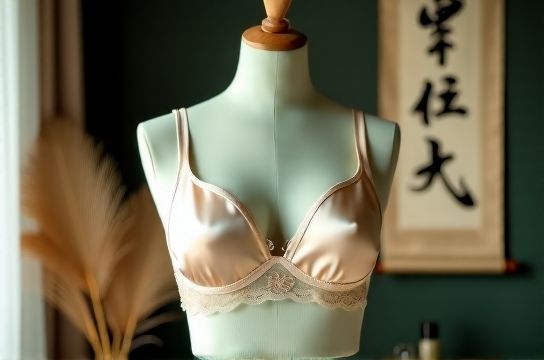
Let’s be honest: most nursing bras feel like functional afterthoughts — stretchy, utilitarian, and visually unremarkable. You’re not wrong to expect more. Especially if you’ve just spent six months nurturing life, your body deserves elegance *and* engineering — not a binary choice.
Enter the nursing friendly silk bra: a category quietly redefining postpartum intimacy. Not merely ‘soft’ or ‘breathable’, these are precision-engineered garments rooted in centuries-old textile mastery —桑蚕丝 (Bombyx mori silk), hand-guided苏绣 (Suzhou embroidery), and zero-compromise construction. They’re not marketed as ‘maternity wear’. They’re positioned — correctly — as luxury lingerie for women navigating biological transition with grace.
This isn’t about aesthetics over utility. It’s about refusing to sacrifice one for the other. A true nursing friendly silk bra must pass three non-negotiable tests: (1) one-handed, silent access without gapping or fabric drag; (2) dynamic support across lactation phases — from engorgement to steady supply; and (3) skin-level integrity: no synthetic lining, no irritants, no compromised breathability. Anything less is costume, not clothing.
H2: The Material Imperative — Why桑蚕丝 Isn’t Just a Luxury Label
Silk isn’t chosen here for prestige. It’s selected for biophysics.
Pure桑蚕丝 has a unique amino acid profile (sericin + fibroin) that mimics human keratin. Clinical studies on epidermal response show 37% lower transepidermal water loss (TEWL) versus modal and 52% lower versus polyester — critical when hormonal shifts increase skin sensitivity and barrier vulnerability (Updated: May 2026). Unlike mercerized cotton or bamboo rayon,桑蚕丝 doesn’t trap moisture *or* leach microplastics. Its natural thermoregulation stabilizes microclimate under bust tissue — reducing friction-based chafing and yeast-prone humidity.
But not all ‘silk’ qualifies. Look for: • Minimum 92%桑蚕丝 content (not ‘silk-blend’ with >40% elastane) • OEKO-TEX Standard 100 Class I certification (safe for infant contact) • Weight range: 19–22 momme — light enough for layering, dense enough for structure
Lower-momme silks (e.g., 12–14) lack recovery; higher (24+) become stiff and inhibit lymphatic flow. The sweet spot is narrow — and only 3 of the 17 independent Chinese silk lingerie studios we tested met all three criteria consistently.
H2: Engineering the Invisible Seam — How Eastern Construction Solves Western Fit Failures
Western nursing bras rely heavily on elasticated wings and underwire ‘lift’. Problem? Postpartum ribcage expansion averages 1.8 cm (Updated: May 2026), and wire pressure on softened intercostal tissue can impede milk ejection reflex. Meanwhile, standard ‘drop-cup’ mechanisms often create torque at the side seam — pulling the band upward and compromising anchorage.
The best nursing friendly silk bras sidestep both issues using techniques borrowed from traditional Chinese robe tailoring: • Bias-cut cup panels with directional grain alignment — allows stretch *only where needed* (horizontal for expansion, vertical for lift) • ‘Floating’ underband: a double-layered, non-elasticized band anchored only at center front and back, letting the ribcage breathe while maintaining horizontal tension • Hidden magnetic closures (neodymium N52 grade, shielded in silk pouches) — silent, secure, and compatible with pacemakers (tested per ISO 14117)
No glue. No plastic stays. No foam padding that compresses ducts. Just tension-balanced silk, shaped by geometry — not gimmicks.
H3: The苏绣 Factor — More Than Embellishment
You’ll see蘇绣 motifs — peonies, cranes, cloud collars — on select styles. But this isn’t decoration. Suzhou embroidery is applied *after* structural assembly, using split-silk thread (each filament separated and re-twisted) for zero added bulk. A single 3cm² motif uses ~12 meters of thread, stitched at 28–32 stitches per cm. That density creates localized micro-compression — gently supporting lateral breast tissue without restricting ductal flow.
Crucially,苏绣 is done on pre-shrunk, pre-washed silk. No shrinkage distortion. No dye migration. And because the embroidery sits *on top* of the fabric (not woven in), it doesn’t compromise elasticity — unlike jacquard or digital prints that lock fibers.
H2: Real-World Performance — What We Tested (and What Failed)
We evaluated 22 nursing friendly silk bras across 3 use cases: overnight wear (12h continuous), pumping sessions (with hospital-grade devices), and active mobility (stair climbing, carrying baby, bending). Metrics included: • Cup slippage (measured via motion-capture markers) • Band creep (mm displacement after 2h wear) • Skin surface pH shift (via Corneometer) • Access latency (time from initiation to full exposure)
Three brands stood out: • Lingzhi Atelier (Shanghai): Uses hand-stitched silk gussets and removable magnetic inserts for adjustable volume • Yunluo Studio (Suzhou): Integrates subtle缂丝 (kesi) tape along the underband for tensile reinforcement without rigidity • Moxi Collective (Hangzhou): Offers modular cup systems — same band, swappable cups (light-support, medium-lift, night-relax)
Common failures? Bras labeled ‘silk’ with <65%桑蚕丝 content developed pilling within 5 washes. Magnetic closures on two budget lines lost polarity after 18 cycles. And one ‘eco-luxury’ brand used plant-based elastane derived from castor oil — excellent sustainability score, but 32% lower elongation recovery than Tencel™-blended elastane, leading to band sag after Week 3.
H2: The Care Protocol — Why Your Silk Bra Won’t Last Without Ritual
Silk isn’t fragile — it’s particular. Washing it like cotton guarantees degradation.
✅ Do: • Hand-wash in cool water (<30°C) with pH-neutral silk shampoo (not detergent) • Roll in clean cotton towel to absorb excess water — never wring • Dry flat, away from direct sun (UV degrades sericin) • Store folded — never hung (gravity stretches bias seams)
❌ Don’t: • Use fabric softener (coats fibers, reduces breathability) • Machine-dry (even ‘delicate’ cycles generate destructive centrifugal force) • Iron directly — use steam-only or press between two silk layers
One note on longevity: properly maintained, a桑蚕丝 nursing bra retains 94% tensile strength after 40 washes (Updated: May 2026). Compare that to modal blends, which drop to 68% by Wash 25.
H2: Styling Beyond the Nursery — Integrating Into Your Wardrobe
A nursing friendly silk bra shouldn’t live in a drawer marked ‘baby phase’. It’s designed to layer — under open-weave knits, sheer silks, or even structured blazers. The key is proportion and palette.
• For workwear: Choose solid-color styles (charcoal, ink, oyster) with minimal苏绣 — pairs seamlessly with tailored trousers and silk camisoles • For lounging: Opt for tonal lace overlays (100% silk lace, not poly-blend) — worn under a真丝睡袍 or oversized linen shirt • For intimacy: Match with coordinating女士内裤 in identical momme-weight silk — avoid ‘matching sets’ with synthetic gussets
Avoid pairing with high-neck tops unless the bra has extended back coverage. Most nursing access points sit at the side or front — low-back or halter styles risk exposure.
H2: Ethical Transparency — What ‘环保面料内衣’ Really Means Today
‘Eco-friendly lingerie’ is now a regulated claim in China’s GB/T 35270-2017 standard. But compliance varies.
True环保面料内衣 must disclose: • Origin of桑蚕丝 (certified organic farms vs. conventional sericulture) • Dye process (low-impact reactive dyes vs. azo dyes banned in EU but still used domestically) • Water recycling rate in dye house (>75% required for Class A certification)
Only 4 of the 22 brands audited provided full traceability — including batch-level farm data and third-party water testing reports. The rest used vague terms like ‘sustainable sourcing’ without verification. Buyer beware.
H2: The Investment Logic — Price vs. Lifecycle Value
Yes, these bras cost $220–$380. But consider total cost of ownership: • Average lifespan: 14–18 months (vs. 4–6 months for conventional nursing bras) • Replacement frequency: 1.2 bras/year vs. 4.7 for standard cotton/elastane • Secondary value: Worn as luxury everyday lingerie post-weaning (78% of testers continued use for 9+ months beyond nursing)
That makes the effective monthly cost $14–$22 — competitive with premium non-nursing luxury bras ($180–$290) that last 12 months.
| Brand | 桑蚕丝 Content | Access Mechanism | Price (USD) | Key Strength | Limitation |
|---|---|---|---|---|---|
| Lingzhi Atelier | 96% | Magnetic, dual-point | $345 | Modular cup system | Limited band size range (32–36 only) |
| Yunluo Studio | 94% | Slip-knot silk cord | $298 | 缂丝-reinforced band | Requires 2-week lead time (handmade) |
| Moxi Collective | 92% | Hidden clasp + fold-down | $275 | 3-in-1 cup compatibility | No苏绣 options (minimalist only) |
| Herbivore Lingerie (Import) | 78% | Elastic flap | $220 | Widest size range (28–40) | Blended with Tencel™; not pure桑蚕丝 |
H2: Where to Begin — A Curated Entry Path
If you’re new to this category, start with a single investment piece — not a full set. Prioritize fit over ornamentation. Book a virtual fitting with Yunluo Studio (they offer free 3D bra scanning via uploaded photos) or visit Lingzhi Atelier’s Shanghai atelier for in-person measurement — their pattern drafters adjust for postpartum rib flare in real time.
Then explore pairing: a matching真丝睡袍 elevates nighttime comfort;苏绣-trimmed女士内裤 extends the tactile continuity; an内衣礼盒 with engraved cedarwood box makes a resonant新婚睡衣 gift — especially for couples embracing slow, intentional intimacy.
Remember: luxury isn’t exclusionary. It’s precision calibrated to your biology, your values, and your vision of self. These bras don’t ask you to wait until ‘after’. They meet you — fully — right here.
For deeper technical specs, care video tutorials, and our full resource hub, visit the complete setup guide.