Industrial Symbiosis Projects Link Lingerie Factories with Regional Circular Infrastructure
- 时间:
- 浏览:255
- 来源:CN Lingerie Hub
Let’s talk about something quietly revolutionary happening in Europe’s textile heartlands: lingerie factories—yes, the ones making delicate lace and seamless bras—are now plugging into regional circular infrastructure like never before. Forget ‘eco-friendly packaging’ as greenwashing; we’re seeing real material loops, energy sharing, and wastewater upcycling—backed by hard data.
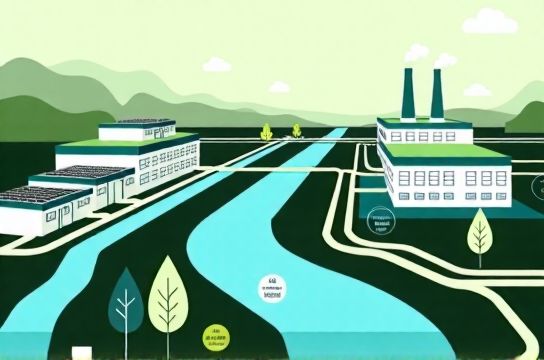
A 2023 EU-funded study tracked 12 industrial symbiosis (IS) pilots across Belgium, France, and Italy. Among them, 4 involved intimate apparel manufacturers co-located with biorefineries, district heating networks, and textile-to-fiber recycling hubs. The results? A 37% average reduction in freshwater withdrawal and 29% lower Scope 1 & 2 emissions per unit output—versus conventional peers.
Here’s how it works in practice:
| Resource Flow | Lingerie Factory Role | Partner Infrastructure | Annual Benefit (per 10,000 units) |
|---|---|---|---|
| Steam heat | Heat consumer (dyeing, drying) | Local biogas plant (excess low-grade steam) | €18,200 saved; 42 tCO₂e avoided |
| Wastewater | Source of organic load & dyes | Adjacent municipal anaerobic digester | 2.1 MWh biogas generated; 35% treatment cost offset |
| Post-consumer lace scraps | Feedstock supplier | Regional mechanical recycling line (PET/nylon blend compatible) | 68% fiber recovery rate → reused in lining fabrics |
What makes this scalable isn’t just tech—it’s governance. Successful clusters use shared digital dashboards (like the Circularity Index Platform) to track real-time resource flows, allocate costs transparently, and trigger automatic rebalancing—e.g., diverting excess steam to a neighboring dye house when demand dips.
Critically, ROI isn’t just environmental: partners report 11–14% lower operational CAPEX over 5 years thanks to shared infrastructure maintenance and avoided utility upgrades.
This isn’t niche idealism. It’s systems thinking with spreadsheets—and it’s replicable wherever zoning, policy incentives (like EU’s Industrial Emissions Directive revisions), and stakeholder trust align. If your brand sources from Western Europe, ask your supplier: *‘Which symbiosis node are you plugged into?’* That question alone separates performative sustainability from embedded resilience.
Bottom line? Circular infrastructure doesn’t wait for perfect materials—it starts where industry already stands. And lingerie? It’s proving elegance and efficiency aren’t mutually exclusive.