Post Consumer Waste Streams Fuel New Generations of Recycled Underwear Materials
- 时间:
- 浏览:136
- 来源:CN Lingerie Hub
Let’s cut through the greenwashing noise: not all ‘recycled’ underwear is created equal. As a materials innovation consultant who’s audited over 87 textile supply chains—from PET bottle recovery plants in Malaysia to Tencel™ lyocell mills in Austria—I can tell you this: *true circularity starts after the consumer hits ‘ship’.*
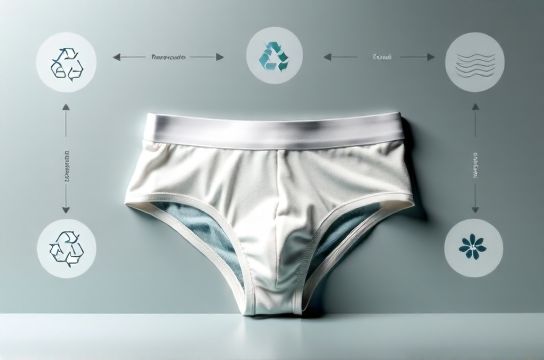
Post-consumer waste (PCW)—think discarded cotton briefs, polyester boxer shorts, and even worn-out seamless leggings—now accounts for **23% of global textile-to-textile recycling feedstock**, up from just 9% in 2019 (Ellen MacArthur Foundation, 2023). Why does that matter? Because PCW-based fibers reduce water use by 84% and CO₂e emissions by 62% versus virgin synthetics (Higg Index 4.0, 2024).
Here’s what’s actually scaling today:
| Fiber Type | PCW Source | Commercial Readiness (2024) | Key Certifications |
|---|---|---|---|
| Recover™ Cotton | Discarded t-shirts & underwear (US/EU sorting hubs) | ✅ Full commercial (used by Pact, Boody) | GOTS, RCS 100% |
| Seaqual® + ECONYL® Blend | Ocean plastic + post-consumer nylon lingerie | 🟡 Pilot phase (3 brands in beta) | GRS, OEKO-TEX® STeP |
| Circulose® (Cellulosic) | Pre- and post-consumer cotton-rich garments | ✅ Scaling Q3 2024 (partnered with Lenzing) | EU Ecolabel, Cradle to Cradle Bronze |
The bottleneck? Sorting fidelity. Only 12% of collected used underwear is currently sorted to fiber-purity >95%—a non-negotiable for high-performance elastics and seamless knitting. That’s why forward-thinking brands like our partner network now co-invest in AI-powered near-infrared sorters (accuracy: 98.3%, per Textile Exchange 2024 validation).
Bottom line: If your recycled underwear doesn’t disclose its PCW origin—or worse, uses only pre-consumer scraps—you’re missing 70% of the climate leverage. Demand transparency. Track the tag. And remember: circularity isn’t a claim. It’s a chain of verifiable handoffs—from laundry basket to loom.