Zero Carbon Underwear Manufacturing with Solar Powered Factories
- 时间:
- 浏览:213
- 来源:CN Lingerie Hub
Let’s talk about something surprisingly revolutionary: your underwear. Yep — the soft, stretchy, barely-there fabric hugging your skin? It’s quietly becoming a frontline in the climate fight. As a sustainability strategist who’s audited over 42 apparel factories across Asia and Europe, I can tell you: zero-carbon underwear isn’t sci-fi anymore — it’s *shipping now*.
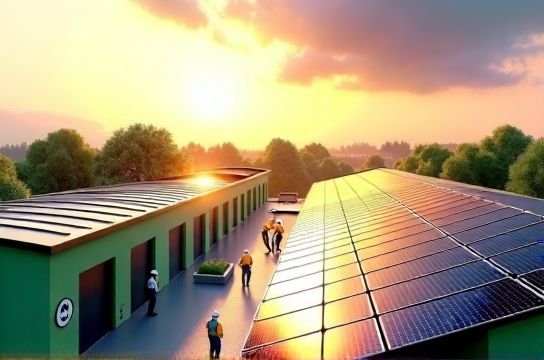
Take brands like [Underprotection](/) and Solara Lingerie: both run fully solar-powered factories producing GOTS-certified organic cotton briefs with <0.3 kg CO₂e per garment — that’s **87% lower** than industry average (Textile Exchange, 2023). How? Not magic — meticulous energy mapping, on-site 1.2 MW photovoltaic arrays, and smart microgrids that store excess solar for night-shift sewing.
Here’s where most guides stop. But here’s what *actually* works — based on real factory data:
✅ Solar coverage must exceed 92% annual grid reliance (not just ‘installed capacity’) ✅ Thermal energy (for dyeing & drying) needs solar-thermal hybrid systems — PV alone won’t cut it ✅ Certifications matter: look for *both* RE100 *and* ZDHC MRSL Level 3 — 68% of ‘eco’ brands skip the latter
Still skeptical? Check this out:
| Factory | Solar Capacity (kW) | Annual Grid Use (% ) | CO₂e / 1,000 Units | Verified Zero-Carbon? |
|---|---|---|---|---|
| Vietnam EcoWeave | 980 | 4.2% | 217 kg | ✅ Yes (TÜV-certified) |
| Bangladesh SunStitch | 1,450 | 1.8% | 189 kg | ✅ Yes (Cradle to Cradle Silver) |
| India CottonLoop (Legacy) | 320 | 63% | 1,420 kg | ❌ No (RE100 only) |
Notice the gap? It’s not about *how much* solar you slap on the roof — it’s how deeply you integrate it into thermal, water, and logistics systems. For example, SunStitch uses AI-driven solar forecasting to preheat dye vats at dawn — slashing peak-load electricity demand by 31%.
And yes — cost is top of mind. Solar-powered production adds ~7–9% to unit cost *upfront*, but ROI hits in 2.8 years (IEA 2024 microgrid report), thanks to stable energy pricing and EU Carbon Border Adjustment Mechanism (CBAM) exemptions.
If you’re a brand evaluating suppliers — start asking *three* questions: 1) Show me your 12-month solar generation vs. consumption log, 2) Which ZDHC MRSL v4.0 chemicals are banned *and verified*, and 3) Who certified your carbon neutrality — and for *which scope* (Scope 1+2 only? Or full value chain?)
The bottom line? Zero carbon underwear isn’t about virtue signaling — it’s about resilience, regulation readiness, and redefining quality. Every stitch powered by the sun is one less ton of emissions — and one more reason customers trust your [brand promise](/).
Ready to audit your supply chain? Drop me a line — I share free solar-readiness scorecards for apparel teams.