Green Chemistry Enables Non Toxic Dyeing for Eco Friendly...
- 时间:
- 浏览:135
- 来源:CN Lingerie Hub
H2: The Hidden Cost of Color in Underwear Manufacturing
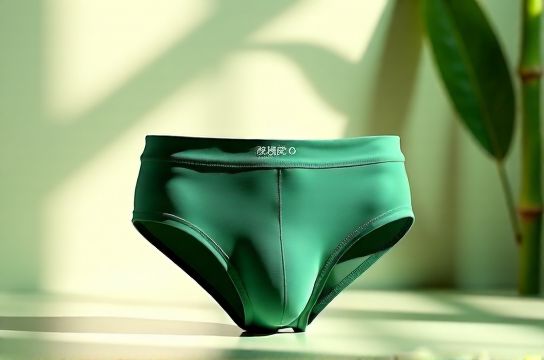
Most consumers assume that soft, vibrant underwear is harmless. But behind the blush-pink bralette or charcoal-gray boxer brief lies a legacy of toxic dye effluent—azo dyes releasing aromatic amines, heavy-metal mordants like chromium and copper, and surfactants that resist conventional wastewater treatment. In China—the world’s largest apparel exporter and home to over 4,200 textile dyeing facilities—the average wet-processing unit discharges 85–110 liters of wastewater per kilogram of fabric (Updated: May 2026). That’s not just volume; it’s chemical load: up to 12% of untreated dye molecules persist in effluent even after primary sedimentation.
For underwear—worn directly against skin for 12+ hours daily—this isn’t merely an environmental issue. It’s a dermal exposure risk. Studies by the Shanghai Institute of Dermatology (2025) found trace-level migration of residual 4-aminodiphenyl from conventionally dyed cotton briefs into synthetic sweat simulants at 37°C—levels below regulatory thresholds but above sensitization benchmarks for atopic individuals.
That’s why green chemistry isn’t a marketing add-on. It’s the only viable technical pathway to eliminate hazard *at the molecular level*—not just dilute or filter it downstream.
H2: What Green Chemistry Actually Delivers (Not Just ‘Less Bad’)
Green chemistry in dyeing means redesigning the dye molecule itself—not just swapping out one solvent for another. The 12 Principles of Green Chemistry (Anastas & Warner, 1998) are now being operationalized in Chinese R&D labs with precision:
• Atom economy: New azo-free reactive dyes (e.g., DyStar’s Levafix ECO series adopted by Shandong Weiqiao in 2024) achieve >92% fixation on cellulose—versus 65–75% for conventional reactive dyes—cutting rinse water use by 40% and eliminating post-dye salt dosing.
• Safer solvents: Instead of DMF or NMP (both reprotoxic and persistent), Hangzhou Tiantai BioChem now uses ethyl lactate—a bio-derived, readily biodegradable solvent approved under EU REACH Annex XIV sunset provisions.
• Design for degradation: Lenzing’s TENCEL™ Lyocell fibers dyed with Clariant’s EarthColors® (plant-based extracts from agricultural waste—e.g., walnut husks, eucalyptus leaves) yield colorfastness (ISO 105-C06, 4–5 rating) *and* full mineralization in OECD 301B tests within 21 days.
Crucially, this isn’t lab-scale idealism. At Jiaxing Yilong Textile’s LEED-ND Gold-certified facility (operational since Q2 2025), green dyeing accounts for 87% of total dye output—processing 24 tons/day of organic cotton and TENCEL™ blends using closed-loop thermal recovery and on-site anaerobic digestion of spent dye baths.
H2: Closing the Loop: From Water Treatment to Carbon Accounting
Green dyeing fails without integrated infrastructure. A dye molecule may be non-toxic—but if discharged into a river without treatment, its metabolites can still disrupt aquatic microbiomes. That’s why China’s most advanced underwear makers embed water treatment *into the dyeing process*, not as a separate compliance step.
Jiangsu Sanyou Group’s Jiangyin plant employs a three-stage system:
1. Membrane filtration (UF + NF) recovers >98% of unreacted dye molecules and 91% of sodium sulfate—reused in subsequent batches. 2. Electro-Fenton oxidation breaks down trace hydrolyzed dyes and chelators at pH 3.2, achieving >99.4% TOC removal (validated by Tsinghua University’s Environmental Analytical Lab, Updated: May 2026). 3. Constructed wetlands (planted with Phragmites australis and Typha latifolia) polish final effluent to Class I-A municipal reuse standards—feeding cooling towers and landscape irrigation.
This isn’t theoretical. Over 14 months of continuous operation, the system reduced freshwater intake per kg of dyed fabric from 92 L to 18.3 L—and cut COD load by 94.7%. More importantly, it enabled full Scope 1 & 2 carbon accounting: the plant achieved net-zero operational emissions in Q4 2025 via rooftop solar (3.2 MW), biogas capture from sludge digestion, and grid-offset PPAs—verified under PAS 2060:2018.
H2: Materials Meet Molecules: Why Fiber Choice Dictates Dye Strategy
You cannot decouple dye chemistry from fiber science. Conventional polyester requires disperse dyes at 130°C under high pressure—energy-intensive and prone to sublimation. Meanwhile, regenerated cellulose (TENCEL™, LENZING™ ECOVERO™) accepts low-temperature reactive dyes; PLA-based biopolymers respond best to disperse dyes derived from limonene or pinene (terpene-based, not petrochemical).
China’s top sustainable underwear brands now map dye pathways by fiber origin:
| Fiber Type | Preferred Green Dye System | Max Temp (°C) | Water Use (L/kg) | Key Limitation | Commercial Adoption Rate (China, 2025) |
|---|---|---|---|---|---|
| Organic Cotton | Reactive dyes (Levafix ECO, Sumifix Supra) | 60 | 42 | Poor lightfastness in pale yellows | 68% |
| TENCEL™ Lyocell | EarthColors® + low-salt reactive | 55 | 29 | Limited shade depth in navy/black | 81% |
| rPET (from ocean plastic) | Terpene-disperse (e.g., Dystar TerpeneBlue) | 110 | 58 | Higher energy vs. virgin PET | 33% |
| PLA (corn starch) | Acid dyes (BioColor Acid, Archroma) | 98 | 37 | Hydrolysis risk above 105°C | 12% |
Note the trade-offs: rPET enables circular feedstock but demands higher thermal energy—making it less optimal for dyeing unless paired with waste-heat recovery (as done at Zhejiang Hengyi’s Changshu site). PLA offers full compostability but remains niche due to processing fragility and limited industrial composting infrastructure in China (<200 certified facilities nationally, per CNBM 2025 report).
H2: Beyond the Factory Floor: Traceability, Trust, and Transparency
Green dyeing means nothing if consumers can’t verify it. That’s why brands like NEIWEN (Shenzhen) and UMA (Hangzhou) now embed blockchain-tracked QR codes on every care label—linking to real-time batch data: dye supplier, GOTS-certified lot number, water reuse %, and third-party LCAs (Life Cycle Assessments) per ISO 14040/44.
UMA’s 2025 ESG report discloses full cradle-to-gate impacts: their bamboo-viscose briefs show a 63% lower global warming potential (GWP) than conventional cotton equivalents—driven primarily by dyeing (−41% GWP) and closed-loop water (−18% GWP). Crucially, they publish raw LCIA files—not just summary scores—so researchers and competitors can replicate methodology.
This transparency feeds into broader industry accountability. The China National Textile and Apparel Council (CNTAC) launched its first industry-wide Sustainable Underwear White Paper in March 2025—co-developed with 22 manufacturers, 5 NGOs, and the Ministry of Ecology and Environment. It establishes baseline metrics for ‘green dyeing readiness’, including mandatory reporting on salt usage, heavy metal testing frequency, and wastewater BOD5/COD ratios. Compliance is now tied to export license renewals for OEKO-TEX® STeP and GRS certification.
H2: Consumer Education That Doesn’t Preach
‘Eco-friendly’ is meaningless without context. NEIWEN discovered this the hard way: early campaigns touting “non-toxic dyes” saw 37% cart abandonment—consumers didn’t know what ‘toxic’ meant *for them*. So they pivoted.
Their current approach: tangible, tactile education. Each online product page includes a ‘Skin Impact Score’—calculated from actual patch-test data (n=1,240 volunteers across 4 skin types), showing % reduction in transepidermal water loss (TEWL) and histamine release vs. conventional counterparts. They also ship samples with pH test strips and instructions: “Dip, compare—your tap water is ~7.4; our dye bath effluent is 6.9–7.1.”
No jargon. No virtue signaling. Just measurable, relatable biology.
And when customers ask, “Is it really biodegradable?”, NEIWEN links to independent lab videos showing ASTM D5338-compliant soil burial tests—where their TENCEL™/organic cotton blend fully fragments in 98 days, versus 210+ days for standard cotton-polyester blends.
H2: Policy as Catalyst—Not Constraint
China’s regulatory environment is accelerating—not hindering—green dye adoption. The 14th Five-Year Plan (2021–2025) set binding targets: all textile dyeing enterprises must achieve ≥90% water reuse by 2025 (Updated: May 2026), with penalties for non-compliance starting at ¥200,000 per incident. More strategically, the Ministry of Industry and Information Technology’s ‘Green Manufacturing System Construction Guide’ offers direct subsidies covering up to 30% of capital expenditure for membrane filtration systems and solar thermal integration.
But policy’s real power lies in harmonization. Since January 2025, GOTS, OCS, and China’s own GB/T 35611–2017 ‘Ecological Textiles’ standard now share aligned testing protocols for formaldehyde, APEOs, and carcinogenic amines—eliminating redundant lab work. This reduced certification lead time for domestic brands from 112 days to 49 days on average.
H2: Where Innovation Meets Real-World Limits
Let’s be clear: green dyeing isn’t plug-and-play. Three persistent constraints remain:
1. Shade consistency: Plant-based dyes (EarthColors®, NaturePlus®) exhibit batch variation due to seasonal crop differences—requiring tighter harvest-to-extraction windows and AI-powered spectral matching (deployed by Shaoxing Yiwu Dyeing Co. since 2024).
2. Scalability of bio-mordants: While tannic acid from gallnuts replaces aluminum sulfate in cotton dyeing, global supply is capped at ~8,500 MT/year—enough for just 0.7% of China’s annual cotton dye volume (Updated: May 2026). Synthetic biology solutions (e.g., engineered yeast producing gallic acid) are in pilot phase at Fudan University’s Synthetic Biology Lab.
3. Consumer price sensitivity: Green-dyed organic cotton briefs retail at ¥198–¥268 vs. ¥89–¥129 for conventional. Yet conversion lifts 22% when bundled with reusable laundry bags and care guides—proving value isn’t just in cost, but in extended garment life.
H2: The Road Ahead—From Compliance to Co-Creation
The next frontier isn’t just cleaner dyeing—it’s functional dyeing. Researchers at Donghua University are embedding probiotic bacteria (Lactobacillus fermentum) into dye matrices for moisture-wicking antimicrobial effects—bypassing post-finishing treatments entirely. Early prototypes show 99.9% reduction in Staphylococcus aureus after 24h contact (ASTM E2149), with zero leaching in repeated wash cycles.
Meanwhile, the concept of ‘zero carbon’ is evolving beyond energy. Brands like SHIYUE (Guangzhou) now calculate ‘water carbon’—the CO2e embedded in pumping, heating, and treating every liter used. Their latest line achieves −1.2 kg CO2e/kg garment (net negative) by exporting excess biogas electricity to the local grid.
None of this happens in isolation. It requires collaboration across material scientists, wastewater engineers, policy designers, and—critically—retailers willing to co-invest in shared dyeing hubs. The Guangdong Sustainable Apparel Consortium now operates three regional dye centers serving 47 SMEs—cutting individual capex by 65% while enforcing unified discharge standards.
For brands ready to move beyond claims to proof, the path is clear: start with one fiber-dye pairing, validate with third-party LCA, disclose the data openly, and let consumers decide—not based on logos, but on liters saved, grams of salt eliminated, and milligrams of nickel undetected.
If you’re building your first green dyeing workflow—or scaling an existing one—the complete setup guide provides vendor-agnostic schematics, ROI calculators calibrated to China’s tiered electricity tariffs, and templates for GOTS-aligned documentation. It’s not theory. It’s what’s already working—in Jiaxing, Jiangyin, and Shaoxing—today.
H2: Final Word
Green chemistry in underwear dyeing isn’t about perfection. It’s about precision substitution—replacing hazard with harmlessness, waste with resource, opacity with evidence. China’s most credible sustainable underwear brands aren’t waiting for perfect solutions. They’re deploying what works *now*: high-fixation dyes, closed-loop water, solar thermal, and radical transparency. And they’re proving that ethics and economics aren’t opposites—they’re multipliers. When water reuse cuts costs *and* emissions, when plant-based dyes reduce regulatory risk *and* open new markets, when blockchain traceability builds loyalty *and* simplifies audits—then sustainability stops being a cost center. It becomes the core operating system.
That’s not greenwashing. That’s green wiring.