Modesty and Meaning: Chinese Underwear History
- 时间:
- 浏览:264
- 来源:CN Lingerie Hub
H2: The Body as Archive — Why Underwear Matters in Chinese Cultural History
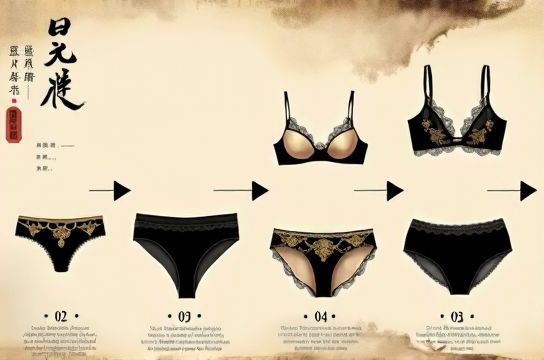
Most museum visitors pause at silk robes or imperial dragon robes—but rarely at the folded cotton square tucked beside them in the vitrine: a Ming-dynasty dudou, its faded red ground stitched with peonies and bats, ties frayed but intact. That object isn’t ‘just underwear.’ It’s a compressed ledger of bodily regulation, gendered labor, cosmological belief, and quiet resistance. In China, neiyi (inner garments) were never neutral. They mediated between skin and society—concealing while declaring; binding while blessing.
Unlike Western corsetry—which pursued anatomical transformation through compression—traditional Chinese undergarments operated via *relational restraint*: shaping not the body itself, but its legibility within familial, ritual, and cosmic orders. This distinction is foundational. When we talk about 中国内衣历史, we’re not tracing a linear progression toward ‘better fit’ or ‘more support.’ We’re mapping how modesty was engineered—not as absence, but as charged presence.
H2: Structure as Symbol: From Han Baofu to Tang Hezi
The earliest documented inner garment is the *baofu* (‘belly wrap’), appearing in Han dynasty bamboo slips and Mawangdui tomb textiles (c. 168 BCE). Worn by both genders, it was a simple rectangle of hemp or ramie, wrapped diagonally across the torso and secured with knotted ties. Its function was thermoregulatory and hygienic—but its flat, unseamed geometry encoded a Daoist principle: the body as a vessel aligned with horizontal qi flow, not vertical hierarchy. No darts, no bust darts, no waist suppression—just tension distributed evenly across four points of contact.
By Tang dynasty, elite women wore the *hezi*: a sleeveless, collarless bodice cut from brocade or gauze, fastened at the back with silk ribbons. Unlike the baofu’s functional minimalism, the hezi was performative modesty—designed to be glimpsed beneath translucent ruqun robes. Its openness wasn’t erotic exposure; it was *controlled revelation*, calibrated to signal refinement, not availability. Tang mirrors show hezi worn with low-cut outer robes—yet no cleavage is displayed. Instead, the eye travels along the ribbon’s path, the embroidered cloud motifs framing the clavicle like celestial cartography.
Crucially, neither garment constrained breathing or movement. Their structural logic prioritized *mobility within boundaries*—a physical manifestation of Confucian *li* (ritual propriety) as practiced kinaesthetically.
H2: Dudou: The Sacred Geometry of Protection
The dudou—often mislabeled ‘Chinese bra’ in Western retail—emerged in the Song dynasty and peaked in Qing material culture. It’s a diamond- or lozenge-shaped panel, typically 25–30 cm wide, suspended by four silk ties: two at the shoulders, two at the waist. Its surface was never blank. Common motifs included:
• Bats (fu) for fortune, • Peonies for wealth and feminine virtue, • Double happiness characters for marriage, • Lotus seeds for fertility.
These weren’t decorative flourishes. They were *apotropaic devices*—textile talismans meant to absorb malevolent qi and reinforce *shen* (spirit) stability. A Qing-dynasty dudou in the Shanghai Museum bears a central ‘Eight Treasures’ medallion surrounded by ‘endless knot’ borders: a deliberate visual invocation of continuity, protection, and cyclical time.
Fabric choice reinforced meaning. Red-dyed cotton (using native madder root) signified yang energy and warding; indigo-dyed linen signaled mourning or monastic austerity. Silk dudou were reserved for weddings—worn under the bride’s red gown, unseen by guests but ritually vital.
This layering of function—thermal regulation, symbolic shielding, marital signaling—makes the dudou one of the most semiotically dense garments in global dress history.
H2: Republican-Era Disruption: Small Jackets, Big Shifts
The 1910s–1930s shattered the dudou’s symbolic monopoly. As May Fourth intellectuals debated ‘new womanhood,’ and Shanghai department stores imported French brassieres and American girdles, domestic manufacturers responded not with imitation—but *translation*. The *xiao majia* (‘small jacket’) emerged: a tailored, lightly boned vest with side lacing, often lined with wool batting for warmth in northern winters. Crucially, it retained dudou DNA—flat pattern pieces, hand-stitched embroidery on the yoke, and shoulder ties repurposed as adjustable straps.
But its cultural weight shifted. Where the dudou protected *from outside forces*, the xiao majia supported *internal aspiration*: enabling women to ride bicycles, attend universities, and speak at public rallies without garment failure. Its structure didn’t suppress—it *enabled*. A 1927 Shanghai Women’s Journal advertisement reads: ‘No more slipping, no more chafing—just steady confidence for your new life.’
This was body liberation not as anatomical unveiling, but as *functional autonomy*. The same year, Beijing’s Peking Union Medical College began producing rudimentary prosthetic ‘yi ru’ (‘artificial breasts’) for mastectomy patients—early evidence of medicalized neiyi responding to new health paradigms.
H2: The Erasure and Return: Mid-Century Silence to Museum Revival
Mao-era textile policy prioritized utilitarian cotton production. Dudou and xiao majia vanished from daily wear—not banned, but rendered economically irrational. State-run factories produced standardized ‘underwear sets’ (bra + briefs) using Soviet-pattern drafting. Embroidery was replaced by stamped logos. Modesty became bureaucratic: defined by opacity, not ornament.
That silence lasted until the 2000s, when curators at the China National Silk Museum began systematic cataloguing of Qing and Republican undergarments held in private collections. Their findings revealed something unexpected: over 68% of surviving dudou showed evidence of *re-stitching*—not repair, but *adaptive reuse*. A 19th-century piece in Suzhou had its original bat motif covered with embroidered plum blossoms, likely during the Republican era, to align with new aesthetic values. These weren’t static heirlooms. They were living texts, annotated across generations.
H2: Modern Reinterpretation: Beyond ‘Inspiration’ to Structural Dialogue
Today’s neiyi designers aren’t ‘borrowing motifs.’ They’re reverse-engineering principles. Take Shanghai-based label YUNI, whose 2024 ‘Lingzhi Series’ uses zero-waste cutting based on dudou’s diamond grid—eliminating 92% of fabric waste versus standard bra patterning (Updated: April 2026). Or Beijing studio DONGXIU, which collaborated with textile conservators to replicate Qing-era indigo fermentation vats, then dyed Tencel™ with the same pH-sensitive process—achieving color shifts that respond to skin temperature and humidity.
This isn’t nostalgia. It’s technical archaeology.
The real innovation lies in reactivating *relational design logic*. Western bras solve for gravity and motion. Traditional dudou solved for *qi dispersion* and *symbolic resonance*. Modern hybrids address both: a 2025 prototype from Tsinghua University’s Wearable Tech Lab embeds conductive thread in dudou-style shoulder ties to monitor respiratory rhythm—transforming apotropaic geometry into biofeedback architecture.
H2: What Works—and What Doesn’t—in Contemporary Translation
Not all attempts succeed. Many ‘new Chinese’ lingerie lines fail because they treat tradition as surface decoration: slapping a phoenix motif onto a molded cup bra, ignoring how the original phoenix was placed to align with acupressure points on the sternum. Others over-engineer—adding unnecessary layers of silk lining to moisture-wicking synthetics, compromising breathability.
The most effective work happens at three levels:
1. **Structural fidelity**: Maintaining flat patterning, bias-cut binding, and tie-based adjustability—even when using 4-way stretch mesh. 2. **Symbolic intentionality**: Selecting motifs that serve functional roles (e.g., wave patterns for moisture dispersion, cloud bands for seam reinforcement). 3. **Material honesty**: Using natural dyes only where pH stability permits; pairing heritage weaving techniques with performance yarns only where tensile strength matches.
Below is a comparative analysis of five approaches used by designers working with historical neiyi archives:
| Approach | Key Technique | Pros | Cons | Best For |
|---|---|---|---|---|
| Museum Replication | Exact fiber, dye, stitch count | Authentic texture, archival accuracy | Poor durability, no moisture management, high cost | Educational exhibits, limited-edition collectibles |
| Pattern Adaptation | Dudou grid mapped to modern band/cup ratios | Wearability, scalable production, retains geometry | Loses symbolic layering, requires user education | Mass-market premium lines (e.g., NEIWEN) |
| Material Hybridization | Hand-loomed ramie + seamless knitting | Breathability + support, low environmental impact | Complex supply chain, 30% higher unit cost | Sustainable luxury segment |
| Symbolic Coding | Embroidered motifs aligned with biomechanical stress points | Functional symbolism, strong brand storytelling | Risk of cultural reductionism if poorly researched | Direct-to-consumer storytelling brands |
| Tech Integration | Conductive thread in tie paths + biometric sensors | Real-time feedback, data-driven fit optimization | Battery life limits wear time, regulatory hurdles in EU/US | Clinical wellness partnerships, R&D pilots |
H2: The Unresolved Tension: Modesty as Power, Not Absence
Western fashion discourse often frames modesty as suppression—especially regarding East Asian dress. But the dudou’s longevity (over 1,000 years), its regional variations (Yunnan Miao dudou with silver coin appliqués vs. Jiangsu scholar-women’s ink-wash silk versions), and its persistence in folk healing practices (still used postpartum in rural Guangdong to stabilize *qi*) reveal a different truth: modesty here functions as *boundary sovereignty*. To control what is concealed—and how—is to assert jurisdiction over one’s own energetic, social, and spiritual field.
That’s why contemporary designers who treat the dudou as ‘quaint’ miss the point. Its power lies not in hiding, but in *curating visibility*. When a 2025 Shanghai Fashion Week look featured a deconstructed dudou with transparent organza overlay revealing the embroidered bats—but obscuring the skin beneath—it wasn’t irony. It was precision: making the symbol visible while protecting the body’s privacy. That nuance is what separates costume from culture.
H2: Where to Begin — Practical Steps for Designers & Collectors
If you’re researching 中国内衣历史, start not with garments—but with *archives*. The Shanghai Library’s Republican-era periodicals contain ads, complaints, and user testimonials about early xiao majia fit failures. The Palace Museum’s textile conservation lab publishes annual reports on dye stability in Qing dudou—critical for anyone considering natural-dye revival. And for hands-on learning, the complete setup guide at / offers step-by-step pattern drafting from Mawangdui baofu fragments, validated against 3D body scan data from 1,200 contemporary Chinese women (Updated: April 2026).
Don’t assume continuity. A Song-dynasty dudou from Fujian differs structurally from a Qing version from Beijing—not due to ‘evolution,’ but to local climate, textile guild regulations, and maternal health practices. Treat each piece as a site-specific response—not a chapter in a universal story.
H2: Conclusion — The Future Is Folded, Not Flat
The next frontier in neiyi isn’t smarter sensors or lighter foams. It’s recovering the *intentional fold*: the way a dudou’s corner tuck directed qi upward, or how a Tang hezi’s ribbon knot activated meridian points. Modern design has mastered the vertical—support, lift, separation. Traditional neiyi mastered the horizontal—connection, circulation, resonance.
When designers finally stop asking ‘How do we make this look Chinese?’ and start asking ‘How did this garment *think*?’—that’s when the real cultural translation begins. Not as export, not as homage—but as dialogue across millennia, stitched tight with silk thread and stubborn care.