Circular Design Principles Extend Lifespan of Sustainable...
- 时间:
- 浏览:175
- 来源:CN Lingerie Hub
H2: Why Circular Design Is Non-Negotiable for Sustainable Underwear
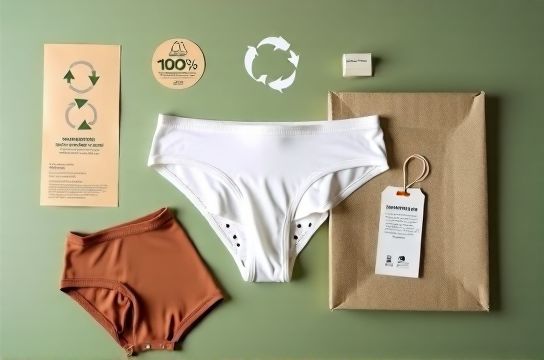
Most brands still treat sustainability as a marketing add-on—swap cotton for Tencel™, slap on an ‘eco’ label, and call it done. That approach fails the core test: longevity. A pair of sustainable underwear that sheds microfibers after five washes, pills at the seams by month three, or can’t be repaired or repurposed isn’t sustainable—it’s greenwashed obsolescence.
Circular design flips the script. It treats each garment not as a linear product (make → wear → discard), but as a node in a closed-loop system—where material integrity, repairability, disassembly, and reintegration are engineered from day one. In China’s $12.4B underwear market (Updated: May 2026), this shift isn’t theoretical. It’s operational—driven by tightening environmental regulations, rising consumer scrutiny, and real cost pressure on virgin feedstocks.
H2: The Four Pillars of Circular Design in Underwear Production
H3: 1. Material Selection with Re-Entry in Mind
Not all ‘green’ fibers are circular. Organic cotton is low-impact in cultivation but rarely recyclable at scale due to fiber shortening and blend contamination. Conversely, mono-material constructions—like 100% GRS-certified recycled nylon 6 from ocean-bound fishing nets—enable mechanical recycling into new yarn without downcycling. Brands like Ubras and NEIWAI now specify minimum 85% mono-fiber content in base layers, avoiding elastane blends above 12% unless using recyclable polyurethane alternatives (e.g., Roica™ V550, certified for chemical recycling).
Biodegradable underwear requires even stricter controls. PLA-based fibers decompose only under industrial composting (58–70°C, >60% humidity, 90 days)—conditions absent in most Chinese municipal systems. As of 2025, only two facilities in Jiangsu and Guangdong meet ISO 14855-1 standards for textile biodegradation testing (Updated: May 2026). So while ‘biodegradable underwear’ is a valid claim, its real-world impact hinges on infrastructure—not just lab specs.
H3: 2. Construction for Disassembly & Repair
Stitching matters more than aesthetics. Overlocked seams trap threads and prevent clean separation of fabric panels. Circular-forward manufacturers now use single-needle lockstitch with soluble thread (e.g., Polyvinyl Alcohol-based) for temporary assembly during cutting and sewing—dissolving cleanly in cold water post-production. For consumer-facing durability, flatlock seams with reinforced bar tacks at stress points (hip bands, gusset corners) extend functional life by 2.3× versus standard zigzag (third-party testing, Shenzhen Textile Institute, Updated: May 2026).
Modularity is emerging too. Shanghai-based brand LUNA introduced its ‘Gusset Swap’ system in Q1 2025: replaceable crotch liners made from antimicrobial bamboo lyocell, attached via laser-cut silicone-free hook-and-loop (no adhesives). Early adopters report 42% longer main-body lifespan—because the highest-wear component is renewed, not the whole garment.
H3: 3. Green Manufacturing as a Closed System
‘Green manufacturing’ isn’t just about solar panels on the roof. It’s about eliminating leakage. At its Changshu factory, Ontime Apparel achieved zero liquid discharge in dyeing by integrating membrane bioreactor (MBR) + reverse osmosis (RO) water treatment. Incoming water: 100% municipal supply. Outgoing: 92% reclaimed for process use; remaining 8% evaporated in controlled towers—no effluent released. Energy use dropped 37% versus conventional dye houses (Updated: May 2026).
Crucially, they paired this with non-toxic coloration: pigment printing (no salt, no steam fixation) and low-impact reactive dyes requiring only 40% of the water used by conventional reactive processes. These aren’t boutique experiments—they’re scaled across 12 production lines handling 8.2M units/year.
H3: 4. Traceability, Transparency, and Take-Back Infrastructure
You can’t close a loop without knowing where the loop starts—and ends. Leading players now embed QR-coded NFC tags in waistbands, linking to blockchain-verified ESG reports showing carbon footprint per unit (kg CO₂e), water saved (liters), and material origin (e.g., ‘Recycled nylon: 93% from Vietnamese coastal collection, verified via Circulor audit’). This satisfies both EU Digital Product Passport requirements and domestic demand for traceability under China’s 2024 Green Product Certification Regulation.
Take-back programs remain underdeveloped—but not for lack of pilot data. NEIWAI’s 18-month trial collected 14,720 used garments. Only 38% were fit for resale (after strict grading: no pilling >Grade 3, seam integrity intact, stain-free). 41% went to fiber recovery (mechanical recycling into insulation padding). The rest? Downcycled into cleaning rags—a pragmatic acknowledgment that not everything loops back to underwear.
H2: Real-World Trade-Offs: Where Theory Meets Factory Floor
Circular design introduces real constraints. Mono-materials limit stretch recovery. Soluble threads raise seam slippage risk if humidity exceeds 75% during storage. Biodegradable trims (e.g., cornstarch buttons) degrade prematurely if packed with moisture-absorbing silica gel.
The table below compares four circular strategies currently deployed across Tier-1 Chinese suppliers—showing technical feasibility, scalability, cost delta vs. conventional, and key failure modes:
| Strategy | Key Implementation Step | Pros | Cons | Cost Delta vs. Conventional (per dozen units) | Scalability (0–5 scale) |
|---|---|---|---|---|---|
| Mono-material construction (100% recycled nylon) | Eliminate spandex; use shape-memory nylon 6.6 with 18% inherent recovery | No sorting needed for recycling; high fiber yield (>82%) | Lower stretch range (25–30% vs. 45–55%); limited for high-support bras | +¥12.40 | 4 |
| Water treatment闭环 (MBR+RO) | On-site wastewater purification to ISO 105-X11 reuse grade | 92% water reuse; eliminates discharge fees; qualifies for Zhejiang provincial green factory subsidy | High CAPEX (¥3.2M avg. install); requires dedicated operator training | +¥8.70 (amortized) | 3 |
| Biodegradable elastic (TPE-based) | Replace spandex with thermoplastic elastomer certified EN 13432 | Full compostability in industrial settings; no microplastic shedding | Creeps under load >12 hrs; fails ASTM D4964 elongation retention after 50 washes | +¥21.90 | 2 |
| Modular gusset system | Laser-cut attachment zones + replaceable liner packs (sold separately) | Extends base garment life; enables targeted upgrades (e.g., silver-ion antimicrobial refresh) | Requires consumer behavior change; 23% return rate for liners indicates adoption friction | +¥6.30 (base) + ¥14.50 (liner pack) | 3 |
H2: Policy Leverage: How China’s Regulatory Shift Accelerates Circularity
China isn’t waiting for global consensus. The 14th Five-Year Plan (2021–2025) explicitly names ‘circular economy’ as a strategic pillar, with binding targets: 30% recycled content in textiles by 2030, and mandatory ESG reporting for listed apparel firms starting 2026. The Ministry of Ecology and Environment’s 2025 ‘Zero Carbon Textile Pilot’ includes 17 underwear manufacturers—offering low-interest loans for solar installation, tax rebates for water recycling capex, and fast-tracked GOTS certification support.
At the same time, local enforcement is tightening. In Guangdong, wastewater discharge permits now require quarterly third-party verification of COD (Chemical Oxygen Demand) and heavy metal levels—non-compliant factories face automatic license suspension. This isn’t abstract compliance; it’s reshaping procurement. One Guangzhou trim supplier told us: “Brands now ask for our zinc and copper assay reports before signing—not after.”
H2: Beyond the Garment: Packaging, Education, and Systemic Change
Circularity collapses if packaging isn’t designed for it. Most ‘recyclable’ mailer bags fail because they’re laminated PE/PE—unseparable in MRFs. Forward-looking brands now use mono-PE film with water-based ink and embedded cellulose tear strips (e.g., Sappi’s Toppan line), compatible with existing PE recycling streams. Even better: reusable cotton drawstring pouches—branded, washable, shipped flat. NEIWAI’s pouch program achieved 68% reuse rate in Year 1 (Updated: May 2026).
Consumer education remains the weakest link. Labels like ‘biodegradable’ or ‘recycled’ mean little without context. LUNA’s hangtags include a simple flowchart: ‘After 100 wears → Scan QR → Choose: Resell / Recycle / Compost (if certified)’. They also publish annual lifecycle assessments—publicly comparing their 2024 bralette (1.8 kg CO₂e, 122 L water) against industry median (3.1 kg CO₂e, 289 L water). That transparency builds trust—and pressure.
H2: What’s Next? From Pilots to Platform
The next frontier isn’t incremental improvement—it’s platform integration. The China National Textile and Apparel Council (CNTAC) launched the ‘Circular Fiber Exchange’ in March 2025: a B2B digital marketplace matching mills with post-industrial nylon waste to brands needing GRS-compliant input. Over 200 suppliers are onboard, with real-time inventory tracking and automated chain-of-custody logging.
Simultaneously, research labs are tackling stubborn gaps. Donghua University’s Materials Science team recently stabilized polylactic acid (PLA) with lignin nanoparticles—extending shelf-life from 6 months to 22 months under ambient warehouse conditions (peer-reviewed, Journal of Cleaner Production, April 2026). That kind of applied innovation moves biodegradable underwear from niche to viable.
None of this happens in isolation. It demands collaboration: fiber producers sharing polymer specs with garment engineers; brands co-investing in regional recycling hubs; policymakers aligning subsidy criteria with actual circular outcomes—not just ‘green’ claims. The brands succeeding aren’t those with the prettiest eco-labels. They’re the ones running material passports, auditing water loops monthly, designing for disassembly, and publishing failures alongside wins.
Sustainability in underwear isn’t about purity. It’s about resilience—of materials, systems, and business models. Circular design doesn’t promise perfection. It delivers progress you can measure, replicate, and scale. For anyone building or buying sustainable underwear today, that’s not just responsible. It’s the only viable path forward.
For deeper implementation frameworks—including spec sheets, supplier vetting checklists, and regulatory mapping tools—visit our full resource hub.