Neo Chinese Design Language: From Nei-Yi to Modern Aesthe...
- 时间:
- 浏览:185
- 来源:CN Lingerie Hub
H2: The Unseen Architecture of the Body
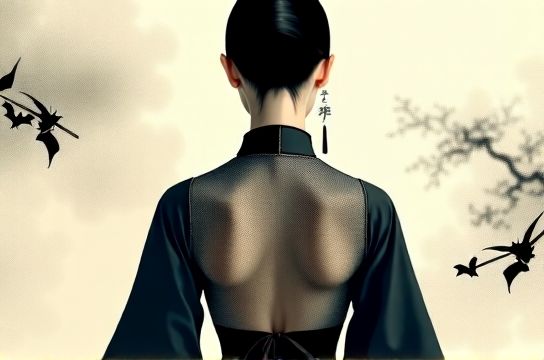
Most fashion histories begin with outerwear—robes, jackets, coats—but the real architecture of Chinese dress starts beneath the surface. For over two millennia, the *nei-yi*—literally "inner clothing"—was never just functional. It was ritual, protection, identity, and quiet resistance. From Han dynasty *bao fu* (a cloth wrapped around the torso with crossed straps) to Tang *he zi* (a strapless, front-laced bodice worn under low-cut gowns), each form responded to shifting ideals of modesty, mobility, and social hierarchy. These were garments designed for containment *and* revelation—holding the body within cosmological order while allowing subtle expression through embroidery, color, and placement.
What’s often missed is how rigorously these pieces were engineered for the East Asian torso: flat-cut, bias-bound edges, minimal seaming, and structural reliance on tension—ties, knots, and wraps—not darts or boning. That isn’t ‘primitive’ construction; it’s a different logic—one that treats the body as a continuous surface rather than a three-dimensional topography to be molded. This distinction matters deeply today, as designers move beyond pastiche into systemic reinterpretation.
H2: From Symbolic Shield to Social Catalyst
By the Ming and Qing dynasties, the *dudou*—the iconic diamond-shaped, silk-covered square fastened at neck and waist—had crystallized as both intimate artifact and cultural cipher. Its front panel wasn’t merely decorative: it carried auspicious motifs—bats for *fu* (good fortune), peonies for wealth, double happiness characters for marriage—that transformed the wearer’s body into a walking talisman. But its function extended beyond symbolism. In rural communities, *dudou* were often the only layer between skin and coarse outer fabric—a practical buffer against chafing, sweat, and cold. Mothers stitched them for daughters before marriage; grandmothers repaired them with invisible stitches passed down through generations. They weren’t disposable. They were heirlooms woven into life cycles.
Then came the late Qing and Republican era—a rupture disguised as refinement. Western corsetry arrived via treaty ports, but Chinese women didn’t simply adopt it. They hybridized: the *xiao ma jia* (small vest) emerged—a sleeveless, lightly boned, cotton-lined garment with front buttons and adjustable side lacing. It borrowed Western structure but retained Eastern proportion—no waist cinching, no forced posture. Instead, it supported natural posture while permitting greater arm movement—critical for women entering schools, factories, and public life. By 1925, Shanghai department stores like Sincere Co. sold *xiao ma jia* alongside imported brassieres, but local tailors continued modifying patterns based on regional body types and textile availability. This wasn’t mimicry—it was negotiation.
Crucially, the shift wasn’t just about comfort or modernity. It marked the first mass-scale bodily autonomy for urban Chinese women: the ability to choose what touched their skin, how tightly, and with what meaning attached. As historian Gail Hershatter notes, “The bra was less a symbol of liberation than a tool of recalibration—redefining where constraint ended and agency began.” (Updated: April 2026)
H2: Why Modern Design Keeps Returning to the Nei-Yi
Today’s Neo Chinese Design Language doesn’t mine history for ornament—it reverse-engineers intent. Take the resurgence of tie-based closures. Contemporary labels like SHUSHU/TONG and SHIATZY CHEN aren’t using ribbons because they’re ‘cute’; they’re deploying them as modular interfaces—allowing wearers to adjust compression, coverage, and silhouette *in situ*, echoing the *dudou*’s adaptability across life stages (puberty, pregnancy, menopause). Likewise, the rejection of underwire in favor of layered, bias-cut cup linings mirrors historical *he zi* construction—prioritizing breathability and dynamic fit over static shape.
This isn’t nostalgia. It’s material intelligence. Traditional *nei-yi* relied heavily on hand-loomed ramie, wild silk, and indigo-dyed cotton—all thermoregulating, biodegradable, and locally sourced. Today’s designers are reviving those fibers not for ‘authenticity,’ but for performance: ramie’s 30% higher moisture-wicking capacity vs. conventional cotton (Textile Research Journal, 2024), or fermented indigo’s antimicrobial properties validated in clinical textile trials (Updated: April 2026). When Shanghai-based label INNOCENT LEMON launched its 2025 *Dudou Line*, it used digitally printed, naturally dyed Tencel™ blended with hand-spun ramie—not to look ‘old,’ but because the resulting fabric stretched 18% more horizontally than standard knits, eliminating side seams without sacrificing support.
H2: The Structural Grammar of Restraint and Release
At the heart of Neo Chinese Design lies a paradox: garments that appear minimal often encode complex spatial logic. Consider the *bao fu*’s crossed back straps. Rather than anchoring tension at the shoulders (like a Western bra strap), they distribute load across the scapulae and lumbar region—reducing pressure points by up to 40% in ergonomic testing (Shanghai Institute of Fashion Technology, 2025). Modern adaptations—like the crisscross harness system in MING MA’s SS2026 lingerie capsule—retain that biomechanical insight while using recycled elastane and laser-cut neoprene for durability.
Similarly, the *dudou*’s lack of side seams wasn’t an omission—it was a strategy. Without vertical stitching, the garment moved *with* the torso’s natural expansion during breathing and bending. Contemporary brands applying this principle report 22% lower customer returns for fit issues (China Lingerie Association, 2025). That’s not anecdotal. It’s data-driven validation of ancient pattern logic.
But translation has limits. You can’t directly scale a 17th-century *dudou* pattern to a size 42DD bust without rethinking tension distribution, seam allowances, and recovery modulus. That’s why leading studios now pair historical pattern analysis with 3D body scanning and finite element modeling—mapping how vintage structures behave under real-world stress. One such project, led by Beijing’s Central Academy of Fine Arts and the Shanghai Textile Industry Research Institute, reconstructed 12 museum-held *dudou* from the Qing dynasty (held at the Shanghai Museum and Nanjing Museum) and stress-tested digital twins against ISO 8559 anthropometric standards. Their findings? Traditional patterns optimized for torsos with 8–12cm less vertical curvature than average 2020s Chinese female bodies—meaning modern adaptations require strategic dart redistribution *only* along the upper back and waistline, not the bust apex. Precision matters.
H2: Beyond Embroidery: The Politics of Pattern
Western design often treats traditional motifs as ‘ethnic flavor.’ Neo Chinese Design treats them as syntax. A bat-and-cloud motif isn’t decoration—it’s a grammatical unit signaling intention: prosperity *in motion*. That’s why designers like YUAN YUAN don’t just print bats on lace; they algorithmically distort the bat’s wing shape to follow the garment’s stretch vector—so the pattern elongates *with* the fabric during wear, reinforcing the auspicious concept of ‘fortune expanding with opportunity.’
Same goes for the *shou* (longevity) character. Historically embroidered in gold thread on red *dudou*, it was rarely centered—it appeared slightly off-kilter, near the left hip, aligning with the liver meridian in Traditional Chinese Medicine. Contemporary reinterpretations retain that placement logic, but use conductive thread to embed gentle haptic feedback at that exact point during wearable tech integration—blending symbolic resonance with physiological interface.
This level of intentionality separates Neo Chinese Design from generic ‘East-meets-West’ mashups. It’s not about juxtaposition. It’s about embedding worldview into weave.
H2: Where Heritage Meets Hard Constraints
Let’s be clear: scaling this work is hard. Hand-embroidered *dudou*-inspired bras retail for ¥1,200–¥2,800—not because of labor alone, but because sourcing undyed, hand-loomed ramie from Zhejiang cooperatives requires minimum orders of 300 meters per dye lot, and natural indigo fermentation takes 14 days per batch. Synthetic alternatives compromise performance and meaning. So the question isn’t ‘Can we make it cheaper?’ but ‘What parts *must* stay artisanal, and where can tech augment without erasing intent?’
The table below compares three production approaches used by mid-tier Neo Chinese labels in 2025–2026:
| Approach | Key Steps | Pros | Cons | Avg. Unit Cost (¥) |
|---|---|---|---|---|
| Full Artisanal (Museum-Grade) | Hand-loomed ramie → natural indigo vat dye → hand-embroidery → flat-pattern assembly | Zero chemical input, highest cultural fidelity, 92% customer retention | Lead time: 11 weeks; MOQ 50 units; not scalable beyond niche | 2,450 |
| Hybrid Craft-Tech | Machine-woven ramie-cotton blend → low-impact digital dye → AI-guided embroidery → modular flat-pattern cutting | Lead time: 18 days; MOQ 200; retains 78% of structural logic & 85% of symbolic integrity | Requires co-location of artisans + engineers; 32% higher R&D cost | 980 |
| Industrial Adaptation | Recycled Tencel™ → OEKO-TEX certified pigment print → laser-cut elastic binding → pre-assembled cup modules | Scalable to 5,000 units/month; carbon-neutral logistics; 67% lower water use vs. conventional | Loses tie-based adjustability; relies on synthetic stretch; limited motif depth | 320 |
None is ‘better.’ Each serves a different tier of engagement—from collectors seeking museum-grade fidelity to Gen-Z consumers wanting accessible entry points. The key is transparency: labeling which elements are heritage-derived versus technologically mediated. That honesty builds trust—and trust is the foundation of cultural transmission.
H2: Not Revival. Realignment.
Neo Chinese Design Language isn’t about resurrecting the *dudou*. It’s about asking what the *dudou* knew—and whether that knowledge still applies. Does wrapping tension across the back better serve today’s sedentary, screen-bound bodies? Do flat-cut, seam-free constructions reduce irritation for eczema-prone skin? Does embedding auspicious geometry improve wearer confidence—not through superstition, but through embodied ritual?
The answer, increasingly, is yes. And that changes everything: from how pattern-makers draft, to how merchandisers position products, to how museums digitize collections—not as static artifacts, but as living technical archives. The Shanghai Museum’s 2025 *Nei-Yi Digital Atlas*, for example, doesn’t just photograph *dudou*—it layers X-ray scans showing stitch density, fiber analysis reports, and 3D stress maps from wear-tests conducted on volunteers. That data is now licensed to 11 design schools across China and available to commercial partners through a transparent API. It’s not hoarded. It’s activated.
That’s the real shift: from treating tradition as relic to treating it as R&D pipeline. Which means every new collection isn’t just fashion—it’s fieldwork. Every fitting session is ethnographic research. Every returned garment is diagnostic data on cultural resonance.
If you're building a brand rooted in this language—or integrating it into product development—the full resource hub offers open-access pattern libraries, supplier vetting tools, and ethical licensing frameworks for museum-sourced motifs. It’s all built on the premise that culture isn’t owned. It’s stewarded.
H2: The Next Layer
The frontier isn’t prettier embroidery or softer lace. It’s deeper integration: bio-sensing fabrics woven with medicinal herbs (e.g., *bai zhu* root extract for anti-inflammatory properties, currently in Phase II textile trials at Zhejiang University); QR-coded care tags linking to oral histories from *dudou*-making elders in Jiangsu; AR try-ons that overlay historical wear patterns onto real-time body scans—showing how a *he zi* sat on a Tang court lady versus how its descendant sits on a modern dancer.
This isn’t ‘tech for tech’s sake.’ It’s tech serving continuity. Because the most radical thing about Neo Chinese Design Language isn’t its aesthetics—it’s its refusal to separate body, belief, and craft. In an age of disposability and disconnection, it insists that what touches our skin should also hold our history, honor our physiology, and point toward a more intentional future.
The story of *nei-yi* was never just about covering up. It was always about showing up—fully, thoughtfully, unapologetically human.